La Virgen, de pie, dando de mamar al Niño
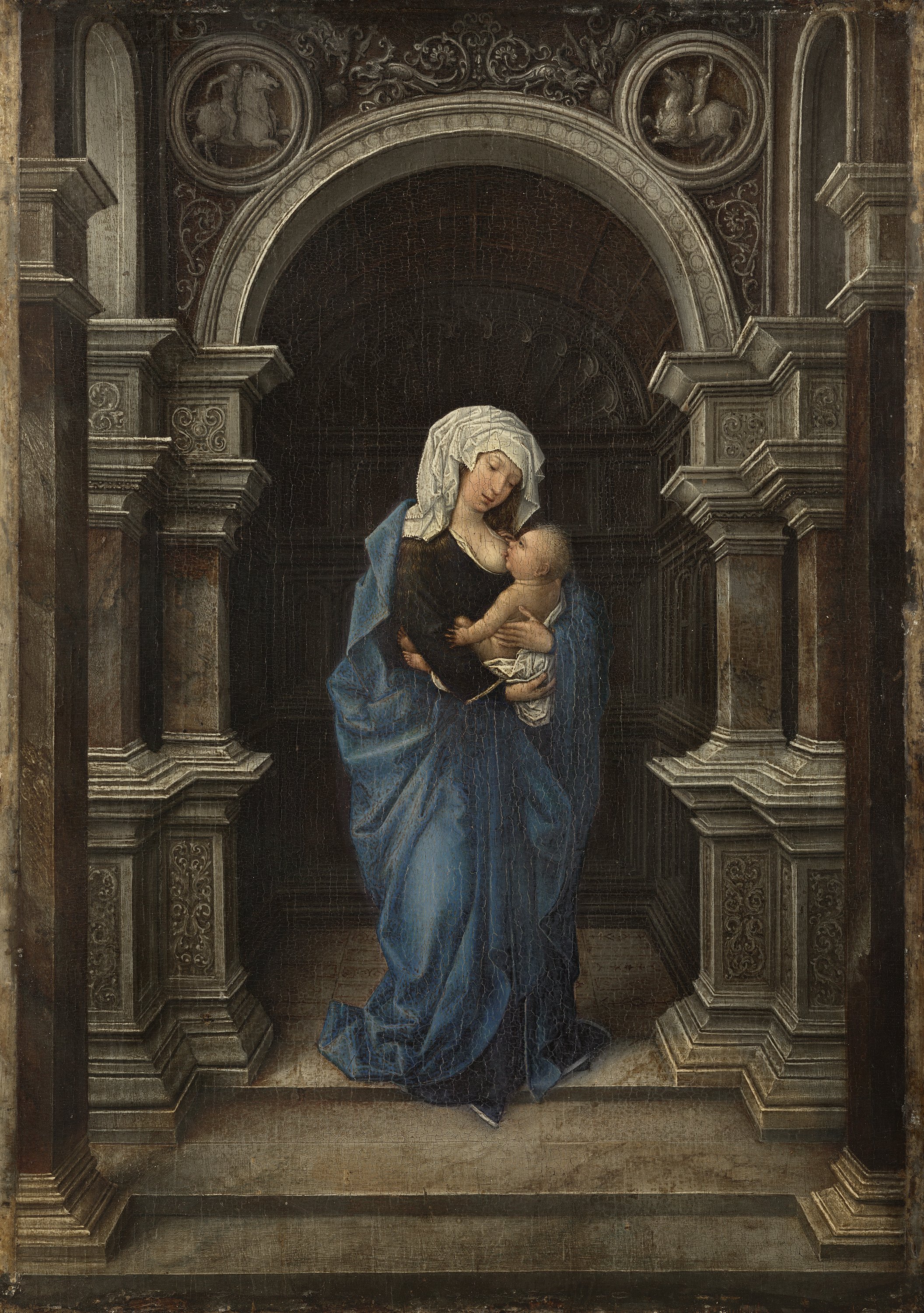
Esta pequeña tabla -no llega a los treinta centímetros de alto- nos muestra a la Virgen sosteniendo al Niño en sus brazos, mientras le da el pecho. Este maestro anónimo se inspiró en las obras de Robert Campin, como La Virgen y el Niño del Städelsches Kunstinstitut de Frankfurt, aunque a diferencia de ésta última en nuestra obra representa al Niño desnudo, más en la línea de la pintura italiana. María mira tiernamente a su hijo, al que envuelve entre su manto y cuyos pliegues caen siguiendo la tradición flamenca. Tanto el Niño como su madre aparecen sin sus halos de divinidad y sus figuras se enmarcan en un espacio arquitectónico, también de inspiración renacentista, que dota de gran profundidad a la composición. Se considera que fue pintada para la devoción privada por el reducido formato de la tabla.
Esta Virgen con el Niño forma parte de la colección Thyssen-Bornemisza desde 1975. La pintura fue adquirida a la galería Cramer de La Haya, donde estaba en 1974 y en la que figuraba como obra de Bernaert van Orley. Con anterioridad había pertenecido a la colección de Andreas Becker, en Dortmund, cuando participó en su primera ex posición, que se celebró en esa ciudad. El estudio más completo de la pintura, ya dentro del marco de la colección Thyssen-Bornemisza, se debe a Colin Eisler.
La tablita, de formato reducido, posiblemente pintada para la devoción privada, nos muestra una imagen tradicional de María donde descubre uno de sus senos para amamantar al Niño. El fondo en el que el pintor ha instalado la pareja es una arquitectura con la que consigue dar profundidad a la composición. La Virgen en este óleo permanece de pie, mirando a Jesús con ternura, vestida con el tradicional manto azul que envuelve su cuerpo y que cae con generosidad por los lados, quebrándose en los tradicionales y duros pliegues, típicos de la escuela flamenca. María sostiene con primor a su Hijo, al que arropa con un lienzo blanco y al que mira con dulzura. El artista ha modernizado esta popular representación al retirar a ambas figuras los nimbos que aluden a su divinidad y al emplear como escenario una arquitectura inspirada en modelos renacentistas italianos. La Virgen, que marca el eje central, se ha instalado encima de un escalón, bajo un arco de medio punto decorado, en sus enjutas, con medallones que contienen relieves con jinetes, y a los que acompañan una delicada decoración vegetal y animales fantásticos. Este arco, con sus pilastras escalonadas, da paso a un pequeño recinto decorado con una venera, casetones y otros elementos geométricos que van organizado los muros y que crean un espacio que alude al de una capilla.
El modelo en el que se ha inspirado el artista, como subrayó Colin Eisler, lo encontramos en la obra de Campin, fuente de la que derivan parte de estos grupos y del que es un claro ejemplo la Virgen conservada en el Städelsches Kunstinstitut de Frankfurt. En esta tabla, María, de pie, vestida con ropas claras, da el pecho a un Niño cuyo cuerpo se cubre con una túnica azul. En el caso de la obra del Museo, el artista ha optado por un Niño Jesús desnudo que sigue la corriente italiana. La Virgen dando el pecho al Niño es uno de los modelos iconográficos más antiguos dentro de las representaciones marianas.
Mar Borobia