Oskar Kokoschka
Pöchlarn, 1886-Montreux, 1980
Oskar Kokoschka was born in the small Austrian town of Pöchlarn, on the banks of the Danube, in 1886, and trained as an artist in the early 1900s in turn-of-the-century Vienna in the legendary period that witnessed an unprecedented flourishing of the arts during the final years of the agonizing Austro-Hungarian empire.
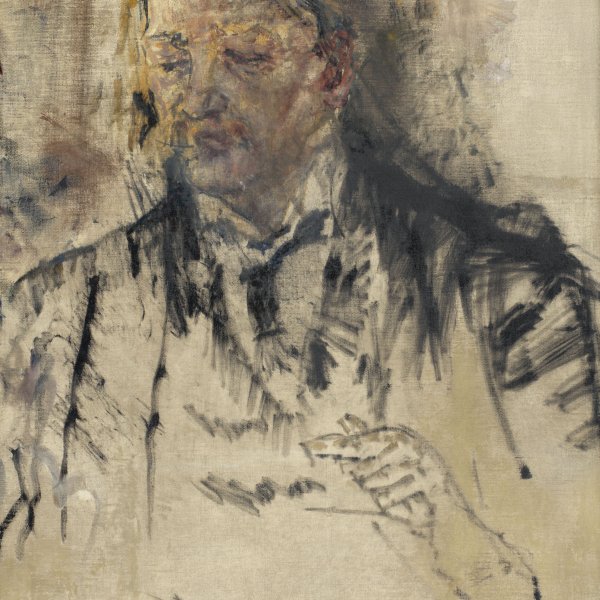
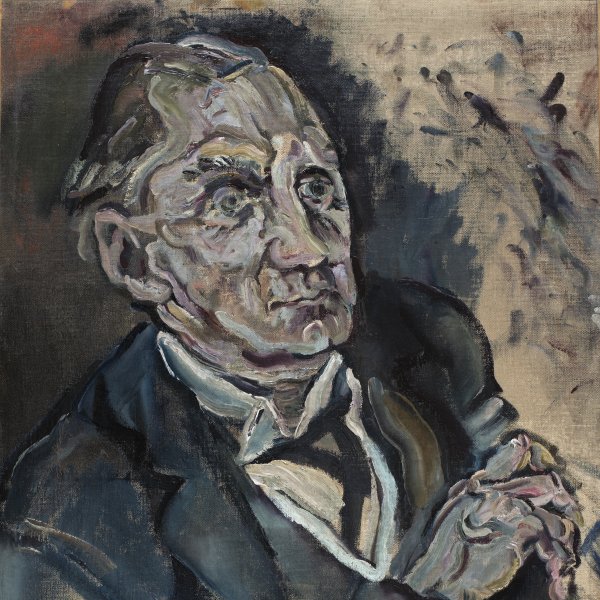
In 1904 Kokoschka enrolled at the Kunstgewerbeschule, an institution linked to the Jugendstil, where he stood out for his independent, rebellious spirit. In 1908 he began to collaborate with the Wiener Werkstätte, whose publishing company brought out his first illustrated book, Die träumenden Knaben (The Dreaming Boys), which featured texts and free verse and colour lithographs. During his youth he combined his activity as an artist, painting chiefly portraits of the Viennese intelligentsia, with that of a writer. His pictures and his two plays, Sphinx und Strohmann (Sphinx and Strawman) and Mörder, Hoffnung der Frauen (Murderer Hope of Women) — now considered to be the seminal works of German Expressionist theatre — caused a huge scandal at the Internationale Kunstschau of 1909.
In 1910 Kokoscha lived for a time in Berlin, where he contributed to Herwarth Walden’s review Der Sturm and had a tortuous love affair with Alma Mahler, which deeply marked him. During the First World War he suffered a serious injury from which he did not recover until years later. He lectured at the Dresden Kunstakademie from 1919 to 1922 and later travelled around Europe, Africa and the Orient. Around this time he began to be appreciated as an artist and his paintings started to be exhibited in prestigious museums. When the Nazis came to power his work was confiscated and declared “degenerate, ” as a result of which he went to live in Prague, where he met Olga Pavlovska, who later became his wife. The Nazi advance led him to flee to England in 1938 and he became a British citizen in 1947.
Kokoschka returned to Austria in 1953 and started up his Schule des Sehens (School of Seeing) in Salzburg, while his work recovered its lost prestige. That year he settled permanently in Villeneuve, by Lake Geneva, where he spent the rest of his life.
In 1904 Kokoschka enrolled at the Kunstgewerbeschule, an institution linked to the Jugendstil, where he stood out for his independent, rebellious spirit. In 1908 he began to collaborate with the Wiener Werkstätte, whose publishing company brought out his first illustrated book, Die träumenden Knaben (The Dreaming Boys), which featured texts and free verse and colour lithographs. During his youth he combined his activity as an artist, painting chiefly portraits of the Viennese intelligentsia, with that of a writer. His pictures and his two plays, Sphinx und Strohmann (Sphinx and Strawman) and Mörder, Hoffnung der Frauen (Murderer Hope of Women) — now considered to be the seminal works of German Expressionist theatre — caused a huge scandal at the Internationale Kunstschau of 1909.
In 1910 Kokoscha lived for a time in Berlin, where he contributed to Herwarth Walden’s review Der Sturm and had a tortuous love affair with Alma Mahler, which deeply marked him. During the First World War he suffered a serious injury from which he did not recover until years later. He lectured at the Dresden Kunstakademie from 1919 to 1922 and later travelled around Europe, Africa and the Orient. Around this time he began to be appreciated as an artist and his paintings started to be exhibited in prestigious museums. When the Nazis came to power his work was confiscated and declared “degenerate, ” as a result of which he went to live in Prague, where he met Olga Pavlovska, who later became his wife. The Nazi advance led him to flee to England in 1938 and he became a British citizen in 1947.
Kokoschka returned to Austria in 1953 and started up his Schule des Sehens (School of Seeing) in Salzburg, while his work recovered its lost prestige. That year he settled permanently in Villeneuve, by Lake Geneva, where he spent the rest of his life.