Amico Aspertini
Bologna, 1474/75-1552
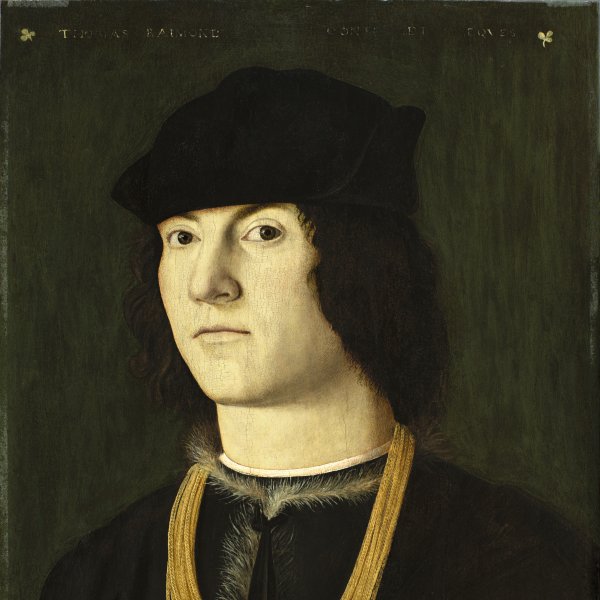
Amico Aspertini was born in Bologna between 1474 and 1475 into a family of painters. He was a versatile artist who devoted himself to painting, sculpture, printmaking and book illumination. Vasari described him as an eccentric painter who worked so rapidly that he could paint a façade in a single day. Aspertini is now considered an artist with a complex and eclectic style and one of the forerunners of Mannerism. His chronology is difficult to establish largely due to the fact that none of his painted façades have survived, a field in which he was the most active painter in Bologna. The first reference to Aspertini’s career relates to his trip to Rome between 1500 and 1503 where he made contact with the school of Pinturicchio. Aspertini was passionately interested in antiquity and during his time in Rome produced one of his sketchbooks of drawings of classical motifs, known as the Wolfegg Codex (VonWaldburg collection), which is a document of primary importance for a knowledge of classical art and architecture in the Renaissance.
In 1504 Aspertini returned to Bologna where one year later he worked with Lorenzo Costa and Francesco Francia on the fresco decoration of the recently restored oratorio of Santa Cecilia in the church of San Giacomo Maggiore. His next major commission was in Lucca in Tuscany where he executed the decorative programme for the chapel of Sant’Agostino in the church of San Frediano. Particularly outstanding is his depiction of Saint Frediano diverting the course of the River Serchio, based on a scene on Trajan’s Column. From 1510 to 1530 Aspertini focused exclusively on sculpture and among his works in this medium is part of the façade of San Petronio in Bologna. In 1529 Aspertini was one of the artists responsible for the decoration of the triumphal arch that celebrated the entry into Bologna of Pope Clement VII and the Emperor Charles V.
In 1504 Aspertini returned to Bologna where one year later he worked with Lorenzo Costa and Francesco Francia on the fresco decoration of the recently restored oratorio of Santa Cecilia in the church of San Giacomo Maggiore. His next major commission was in Lucca in Tuscany where he executed the decorative programme for the chapel of Sant’Agostino in the church of San Frediano. Particularly outstanding is his depiction of Saint Frediano diverting the course of the River Serchio, based on a scene on Trajan’s Column. From 1510 to 1530 Aspertini focused exclusively on sculpture and among his works in this medium is part of the façade of San Petronio in Bologna. In 1529 Aspertini was one of the artists responsible for the decoration of the triumphal arch that celebrated the entry into Bologna of Pope Clement VII and the Emperor Charles V.