Pablo Picasso
Málaga, 1881-Mougins, 1973
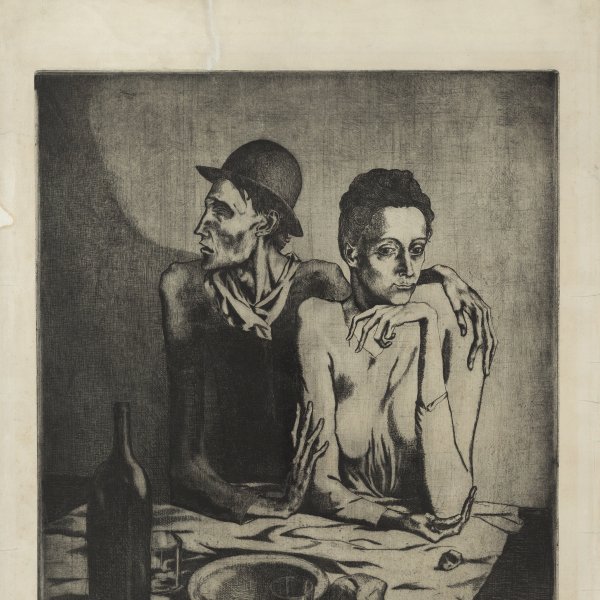
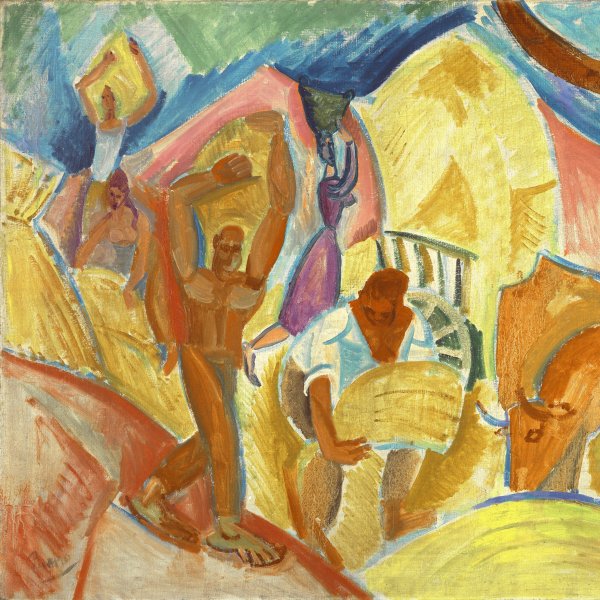
The Spanish artist Pablo Picasso not only invented Cubism, one of the earliest avant-garde movements, together with Georges Braque, but also established the image of the modern artist. He has gone down in history as the most significant artistic personality of the twentieth century. Picasso lived in Barcelona from 1895 to 1900, studied at the Llotja and was involved with the group known as Els Quatre Gats. Following his first trip to Paris, he moved to Madrid to study at the Real Academia de Bellas Artes de San Fernando, and settled permanently in the Frenchcapital in 1904. Thereafter, although he always remained very much a Spaniard, the neighbouring France became his permanent home. Having settled in the legendary Bateau-Lavoir in the Montmartre district, he met Guillaume Apollinaire, Max Jacob and André Salmon. His figurative beginnings of the Blue and Rose periods evolved under the influence of the Iberian sculpture in the Musée du Louvre and the African art in the Musée d’Ethnographie du Trocadéro. In 1907, his work Les Demoiselles d’Avignon (New York, The Museum of Modern Art) paved the way for the avant-garde movements.
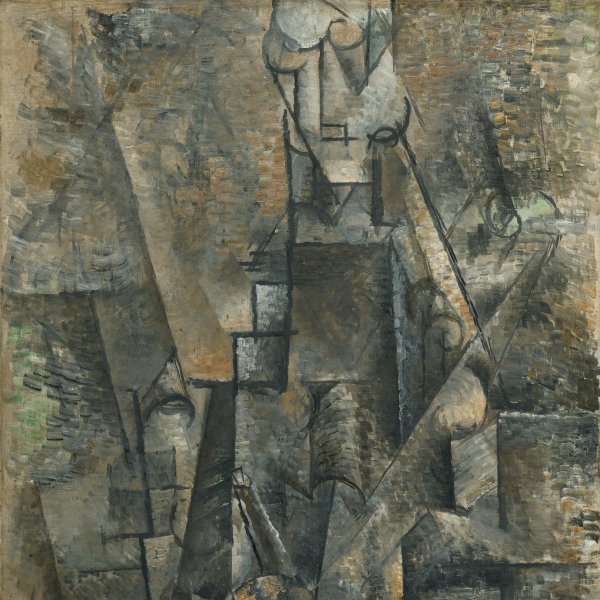
The outcome of Picasso’s close collaboration with Georges Braque was Cubism, a revolutionary style that did away with the traditional system of illusionistic representation of space and which continues to have consequences even today.
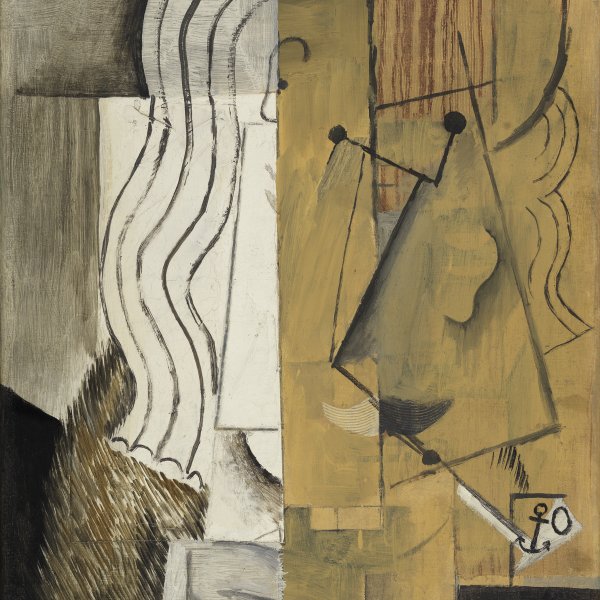
Departing from the teachings of Cézanne, the two artists invented a new language based on fragmentation and simultaneity in the representation of form and on the reinterpretation of objects, employing a very austere palette (analytical Cubism) which gradually became more abstract (synthetic Cubism).
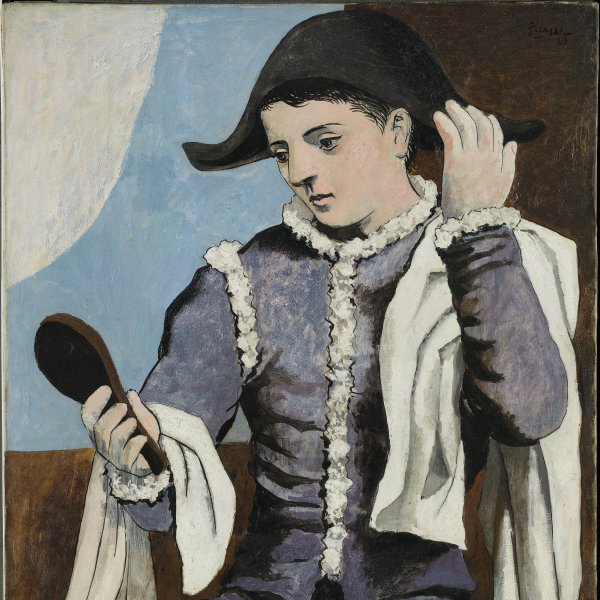
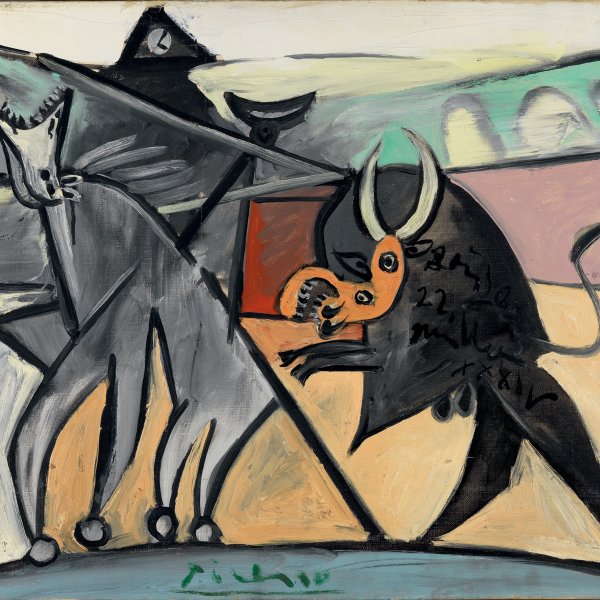
In the post-war period, after a trip to Italy Picasso returned to figuration and developed a type of painting featuring monumental figures, which he called “Classical, ” in keeping with a general trend towards a return to order that emerged in Europe following the period of avant-garde ferment. Under the influence of the Surrealist environment, in the second half of the 1920s the human figures in Picasso’s paintings were distorted and his themes gradually became more dramatic. Although he took part in the Surrealist exhibition of 1925, he never formally joined the group. Following the air raid on the Basque town of Guernica, he executed a large mural painting (Madrid, Museo Nacional Centro de Arte Reina Sofía) which was shown in the pavilion of the Spanish Republic at the Paris Exposition Internationale of 1937. In the 1950s he began to rework paintings by Great Masters such as Gustave Courbet, Eugène Delacroix and Diego Velázquez. During his final period he addressed themes related to death, suffering and love, attaching great importance to gestural and emotional subjectivity and employing very loose, expressionistic brushstrokes.
Picasso was also very active as an sculptor, ceramist and printmaker, showing the same creativity in each of these fields as in his painting.
The outcome of Picasso’s close collaboration with Georges Braque was Cubism, a revolutionary style that did away with the traditional system of illusionistic representation of space and which continues to have consequences even today.
Departing from the teachings of Cézanne, the two artists invented a new language based on fragmentation and simultaneity in the representation of form and on the reinterpretation of objects, employing a very austere palette (analytical Cubism) which gradually became more abstract (synthetic Cubism).
In the post-war period, after a trip to Italy Picasso returned to figuration and developed a type of painting featuring monumental figures, which he called “Classical, ” in keeping with a general trend towards a return to order that emerged in Europe following the period of avant-garde ferment. Under the influence of the Surrealist environment, in the second half of the 1920s the human figures in Picasso’s paintings were distorted and his themes gradually became more dramatic. Although he took part in the Surrealist exhibition of 1925, he never formally joined the group. Following the air raid on the Basque town of Guernica, he executed a large mural painting (Madrid, Museo Nacional Centro de Arte Reina Sofía) which was shown in the pavilion of the Spanish Republic at the Paris Exposition Internationale of 1937. In the 1950s he began to rework paintings by Great Masters such as Gustave Courbet, Eugène Delacroix and Diego Velázquez. During his final period he addressed themes related to death, suffering and love, attaching great importance to gestural and emotional subjectivity and employing very loose, expressionistic brushstrokes.
Picasso was also very active as an sculptor, ceramist and printmaker, showing the same creativity in each of these fields as in his painting.