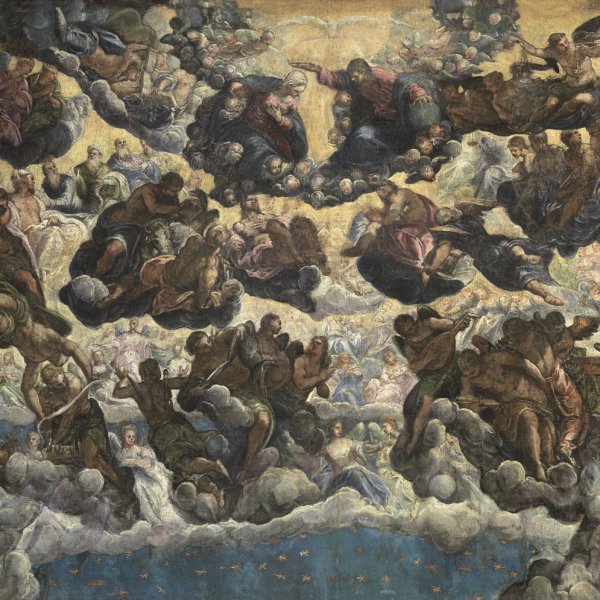
Tintoretto (Jacopo Comin)
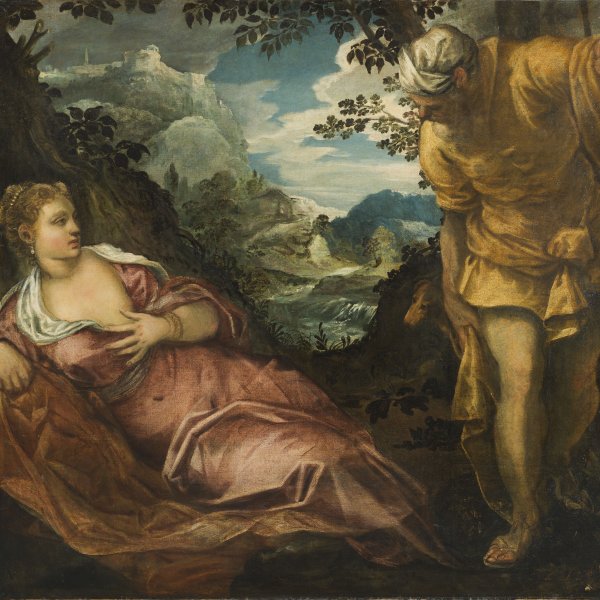
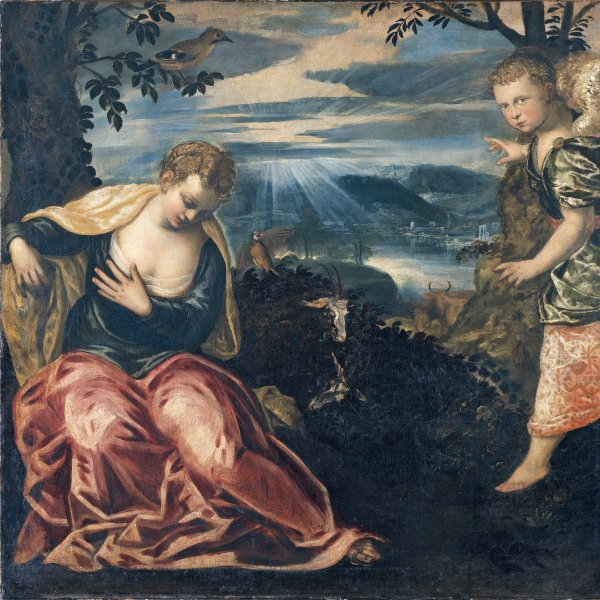
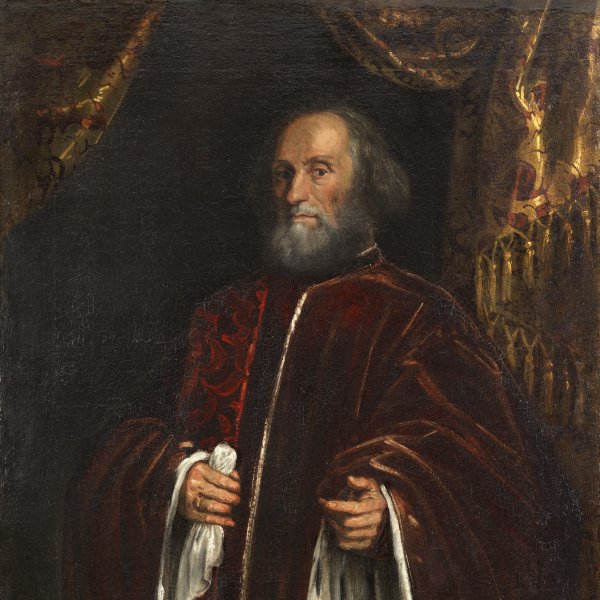
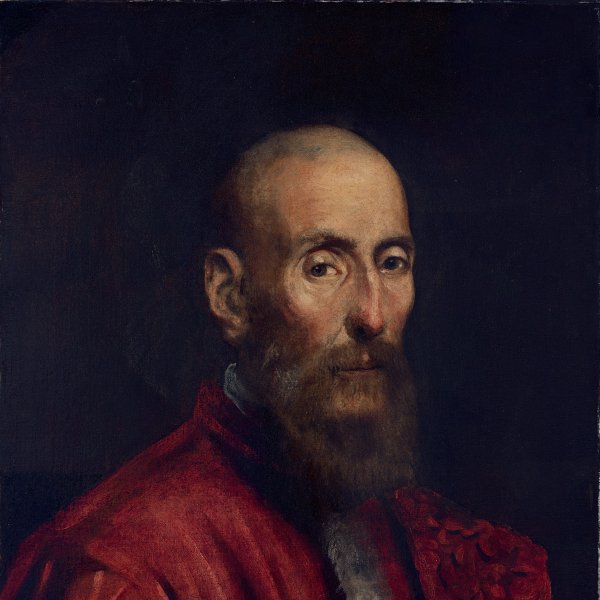
Little is known of the initial training of Jacopo Comin, son of a dyer, although some sources refer to a period in Titian’s studio. His early canvases reveal a knowledge of the work of Bonafazio de’Pitati, Paris Bordone and Andrea Schiavone. Tintoretto began to work as an independent master in 1539 and at this period executed religious and mythological scenes and portraits. The first canvas in a series on the life of Saint Mark, commissioned by the Scuola Grande di San Marco for its chapterhouse, dates from 1548 and depicts Saint Mark freeing a Slave. This masterpiece features elements that would reappear in his later works, including the daring foreshortening and artificial poses of the figures and the brilliant chromatic range. Tintoretto continued to work for the Scuola between 1562 and 1564. Among other major decorative cycles is the one for the Scuola di San Rocco, painted at intervals from 1565 to 1567 and 1575 to 1588. It comprises scenes from the lives of Saint Roch, Christ, the Virgin, and the Passion. This series of large-format canvases is characterised by daring and innovative effects of colour and light. Tintoretto worked alongside Veronese on the redecoration of the Doge’s Palace in Venice between 1574 and 1577. His most prolific phase corresponds to the last two decades of his life, during which time he executed numerous works in Venice as well as commissions for the courts of Prague and Mantua and for El Escorial, Spain. Tintoretto lived and worked throughout his life in Venice, which he only left to visit Mantua in 1580. He ran a large workshop in which three of his eight children, Domenico, Marco and Marietta, were employed. Tintoretto’s work reflects his passionate temperament and reveals a highly dramatic approach to his compositions, which are painted with a controlled and masterful use of chiaroscuro. After Titian he is considered the most important 16th-century Venetian painter. Aside from family members, Tintoretto’s most important followers include Andrea Vicentino and Antonio Vasilacchi, known as L’Aliense.