Titian (Tiziano Vecellio)
The date of Titian’s birth is not known, but can be located between 1485 and 1490. According to Dolce, Titian trained in Venice with Sebastiano Zuccati as a painter and mosaic designer. He continued his studies in the workshop of Gentile and Giovanni Bellini and later collaborated with Giorgione on the decoration of the frescoes for the Fondaco dei Tedeschi. His first important commission was for the frescoes in the Scuola del Santo in Padua of 1511. In 1516, following Giovanni Bellini’s death, Titian was appointed official painter to the Republic. During that same decade he painted Sacred and Profane Love (Villa Borghese, Rome) and The Assumption for the church of Santa Maria dei Frari in Venice, a work that brought him his first recognition in the city. Titian’s early works retain the influence of Giorgione but he soon developed a distinctive use of light and colour and his paintings are bathed with a tonal atmosphere while making use of innovative compositions.
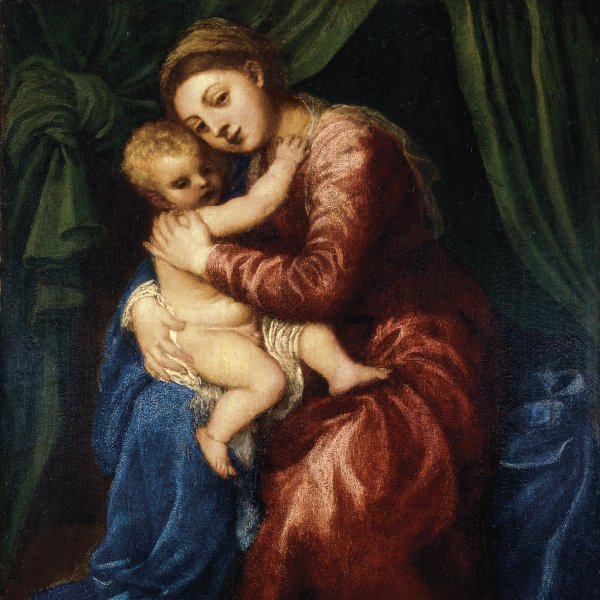
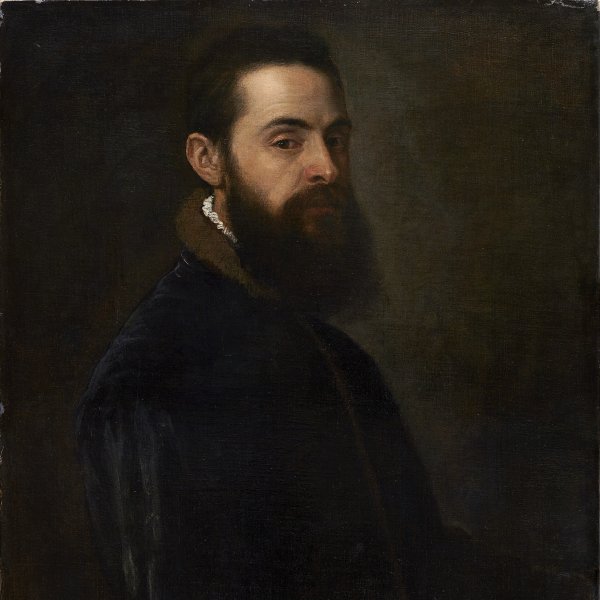
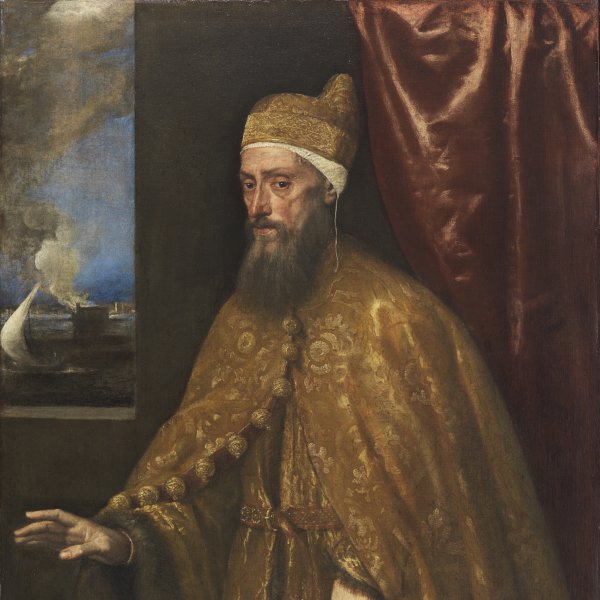
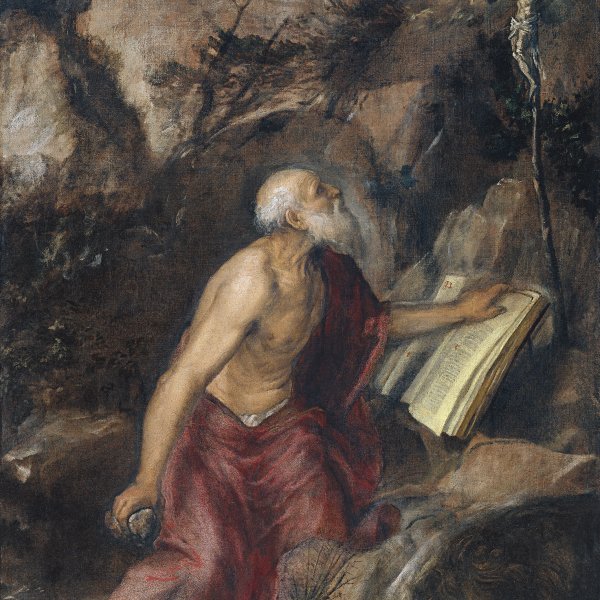
A prolific painter, Titian was outstanding in a range of genres including religious and mythological paintings and portraiture. His long career involved a stylistic and technical evolution that moved from the highly finished handling of his first works to the use of a loose, free brushstroke and broken technique evident in his late paintings. Titian was in demand from the courts of Ferrara (from 1516) and Mantua, while the Emperor Charles V appointed him court painter and in 1533 made him Count Palatine, an honour never previously granted to a painter. The most important patron of his later career was Philip II of Spain. Titian is considered the greatest Venetian painter of his day and would be highly influential for later painting. Vasari devoted a lengthy chapter to him in his Lives, considering him “a man chosen by God, as he received from him all the gifts a mortal man could desire”.