Veronese (Paolo Caliari)
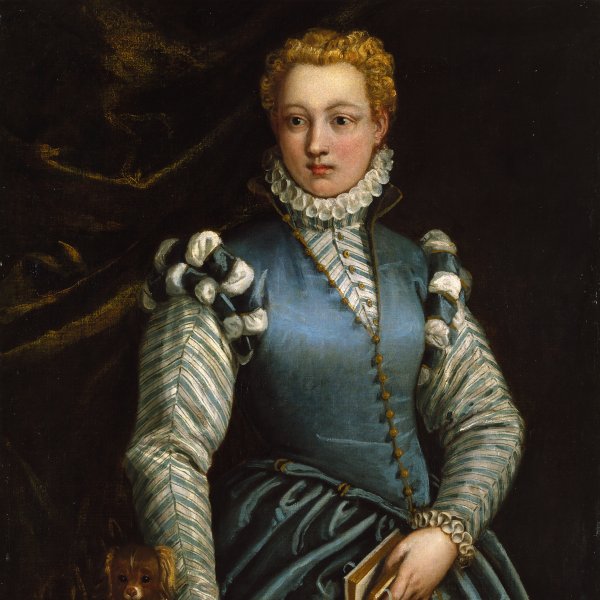
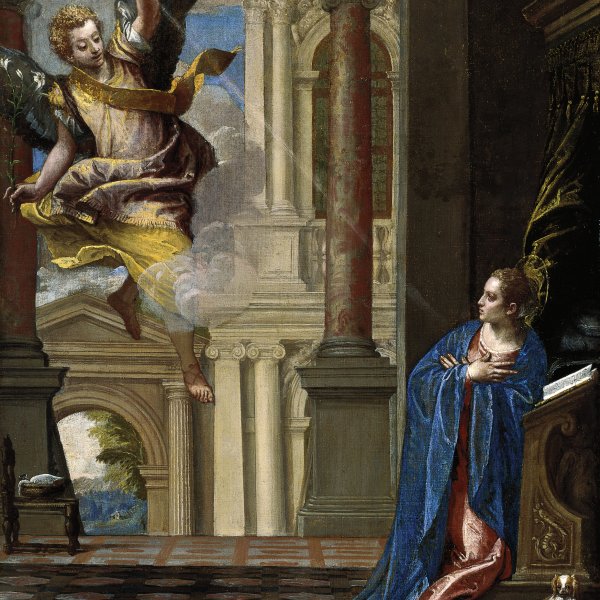
Paolo Caliari, known as Veronese, was born in Verona in 1528. He trained with Antonio Badile and subsequently with Giovanni Caroto. Veronese’s early works conform to artistic trends in his native city. His first work outside the city was a series of frescoes painted for the Villa Soranzo in 1551, which reveals the influence of Giulio Romano and Parmigianino, particularly in the figures. Between 1553 and 1555 Veronese decorated the Sala del Consiglio dei Dieci in the Doge’s Palace, for which project he moved to Venice. He began to achieve recognition following the execution of canvases for the Biblioteca Marciana, including the Allegory of Music for which he received a prize. Among his most notable portraits is A Woman with her Son and a Dog (Musée du Louvre, Paris). In 1560 Veronese travelled to Rome where he studied the works of the Renaissance masters. At this period he embarked on the fresco decoration of Palladio’s Villa Barbaro in Maser, near Treviso. Among his masterpieces is The Marriage at Cana (Musée du Louvre, Paris), which includes a series of portraits of Francesco Bassano, Jacopo Tintoretto, Titian and Veronese himself in the guise of musicians. The complexity of the composition and the architectural setting in this work reveal the influence of Raphael’s projects in the Vatican. In 1573 Veronese executed another major canvas, The Feast in the House of Levi (Gallerie dell’Accademia, Venice). During the last phase of his career he worked on the Doge’s Palace in Venice, in particular the Sala del Maggior Consiglio, for which he painted The Triumph of Venice. An interesting work from the viewpoint of its use of chiaroscuro is The Miracle of Saint Pantaleon, in the Venetian church of that name. Veronese ran an active studio in which his brother Benedetto and his two sons Carlo and Gabriele worked, alongside other apprentices including Alvise dal Friso. Together they continued the studio’s activities after Veronese’s death in 1588.