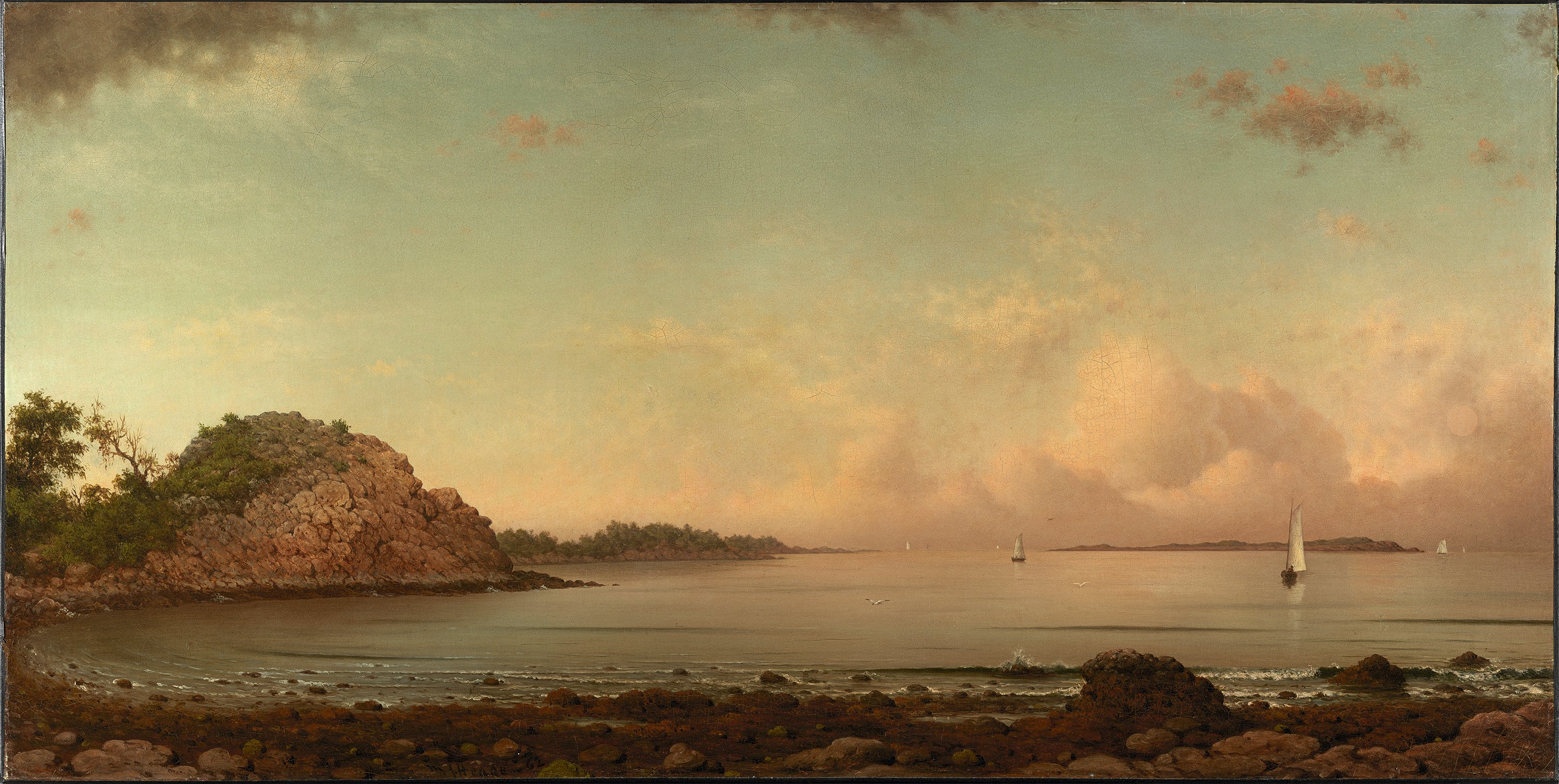
Singing Beach, Manchester
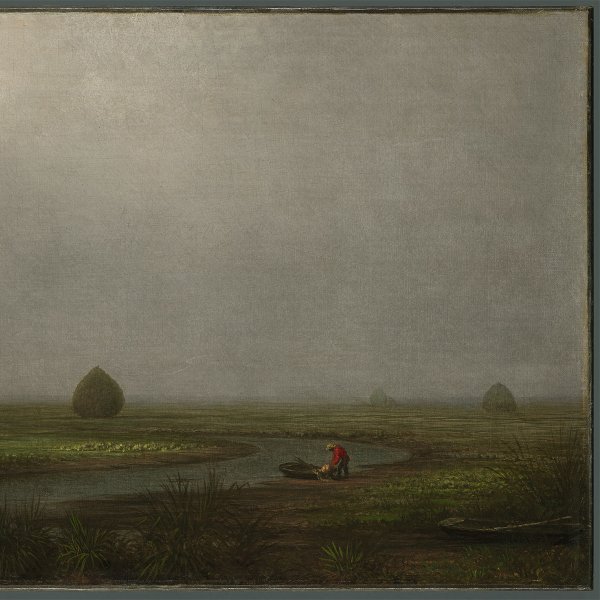
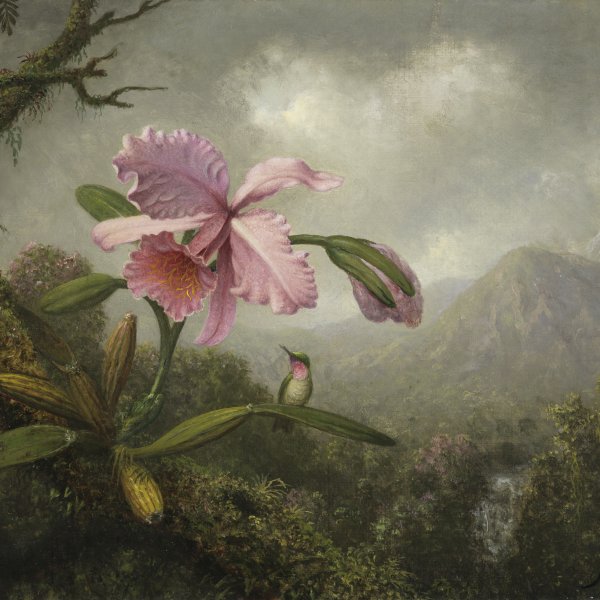
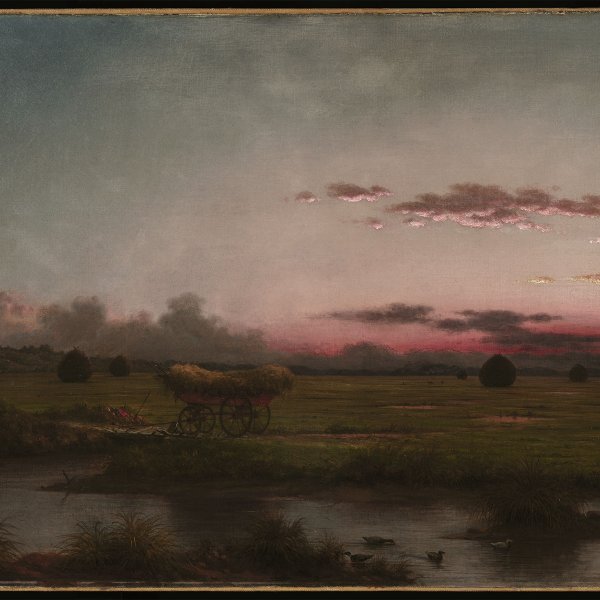
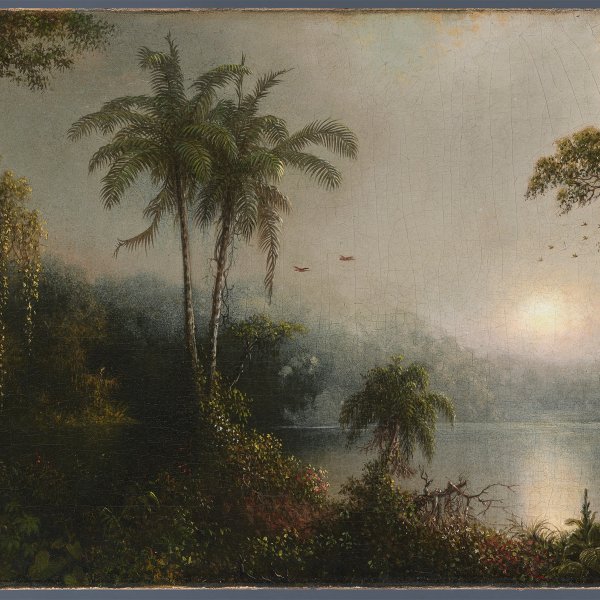
Martin Johnson Heade became one of the leading names of American Luminism. In addition to his scenes of the New Jersey coastline and marshes, Heade subsequently became known for the depictions of tropical landscapes with flowers and hummingbirds that he began to paint following his travels in Central and South America.
Three other depictions by Heade of the Manchester coastline from Singing Beach are known, dating between 1861 and 1863. This area became extremely popular with wealthy Boston society, which made it its summer resort. It is likely that Heade painted it on the suggestion of one of his clients. In the present canvas the composition emphasises the Eagle Head promontory that closes the composition on the left. The water is dotted with sailing boats, an island and other more distant spits of land. The pinkish clouds on the horizon are reflected in the calm sea.
CM
Although until a very short time ago Singing Beach, Manchester was mistakenly entitled Spouting Rock, Newport, it has recently been discovered that it does not depict the beach of this town on Rhode Island but a view of the coast near Manchester. In the 1860s Heade often visited Newbury Port, to the north of the state of Massachusetts, where he painted his famous marsh pictures and occasionally went from there to Manchester, where he executed at least four paintings of the famous Singing Beach: Singing Beach, Manchester, Dawn, Twilight, Singing Beach and the landscape in the Thyssen-Bornemisza collection. This set of works in horizontal format, which are very similar in composition, differ only in size and in a few foreground details. All four depict a very open scenery, built up from successive parallel planes, with the gleaming surface of the sea and scarcely any trace of the brushstrokes. In all of them Heade shows a view of this beach from inland, with Kettle Island on the horizon, but the paintings in the Thyssen-Bornemisza and Karolik collections furthermore feature the famous promontory called Eagle Head on the far left.
Heade’s coastal scenes, which he cultivated chiefly between 1859 and 1863, generally fit into two categories: in the first, such as Thunder Storm, the waters turn dark and gloomy at the threat of the black clouds that announce a storm; in contrast, in the second, such as these scenes of Singing Beach, the sea’s surface, scarcely disturbed by the gentle waves of the low tide, is golden and glowing, bathed in the low light of sunset.
In the catalogue raisonné of the artist’s oeuvre, Theodore Stebbins considers that these paintings, begun in the summer of 1861, bear some resemblance to the depictions of the New England coast by the Luminists John Frederick Kenssett, Francis A. Silva and Fitz Henry Lane. This author states that the luminosity and rigorous geometry of the landscape also recall German romanticism and even mentions the possibility that Heade may have seen works by Friendrich during his European travels in 1848 and 1849.
Paloma Alarcó