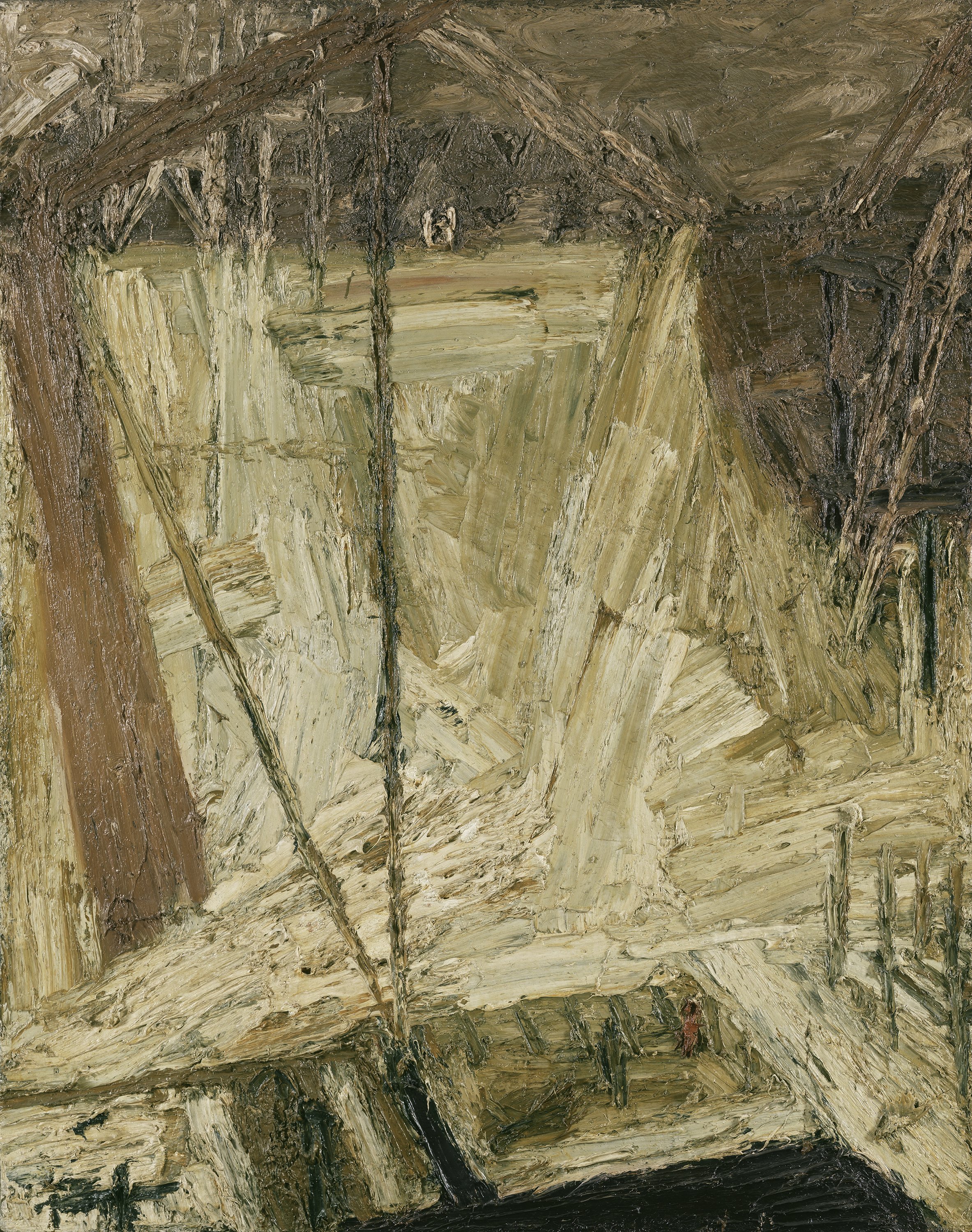
The Shell Building Site, from the Thames
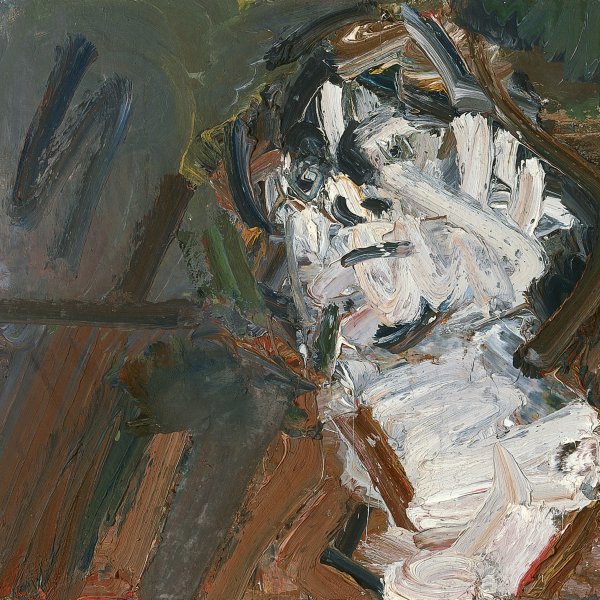
The components of the School of London shared the same interest in the figurative content of painting, to which Frank Auerbach added a plastic language linked to material abstraction. He stated in a radio interview with Richard Cork, “I don’t disapprove of abstraction [as] all painting is abstraction.” As the critic David Sylvester remarked in 1955, the most obvious difference between the art of the second half of the century and that of the interwar period was “that rough surfaces have taken the place of smooth ones” and “the present age delights in texture and irregularity exploits the accidental, courts imperfection.” This transformation also reflected a shift in the whole approach to art: from the previous pursuit of order and depersonalisation to the yearning for freedom and singularity.
Executed in 1959, this gloomy image of The Shell Building Site, from the Thames, one of the two Auerbachs belonging to the Museo Thyssen-Bornemisza collection, shows the deep depression dug out for the Shell company skyscraper, of which Auerbach made numerous sketches from life. The composition is a good example of his interest in transforming an everyday scene into a painting exclusively through form and colour — an almost monochromatic colour applied very hastily in heavy impasto. This manner of converting a motif that is so unusual, unattractive even, into the subject of a picture is Auerbach’s way of symbolising through painting man’s relationship with the materials with which he builds the world. For the artist, the very essence of painting thus lies in the creative process, in his struggle to define in art his internal assimilation of outward appearances. “While I’m painting, ” he declared, “I’ve had a thousand other sensations in the course of painting than the one I finally pin down. I don’t regard the painting as finished till it is locked geometrically for me in a way I had not foreseen.”
Paloma Alarcó