Street in Rouen
1884
Oil on canvas.
73 x 92 cm
Museo Nacional Thyssen-Bornemisza, Madrid
Inv. no.
552
(1988.15
)
Room 33
Level 1
Permanent Collection
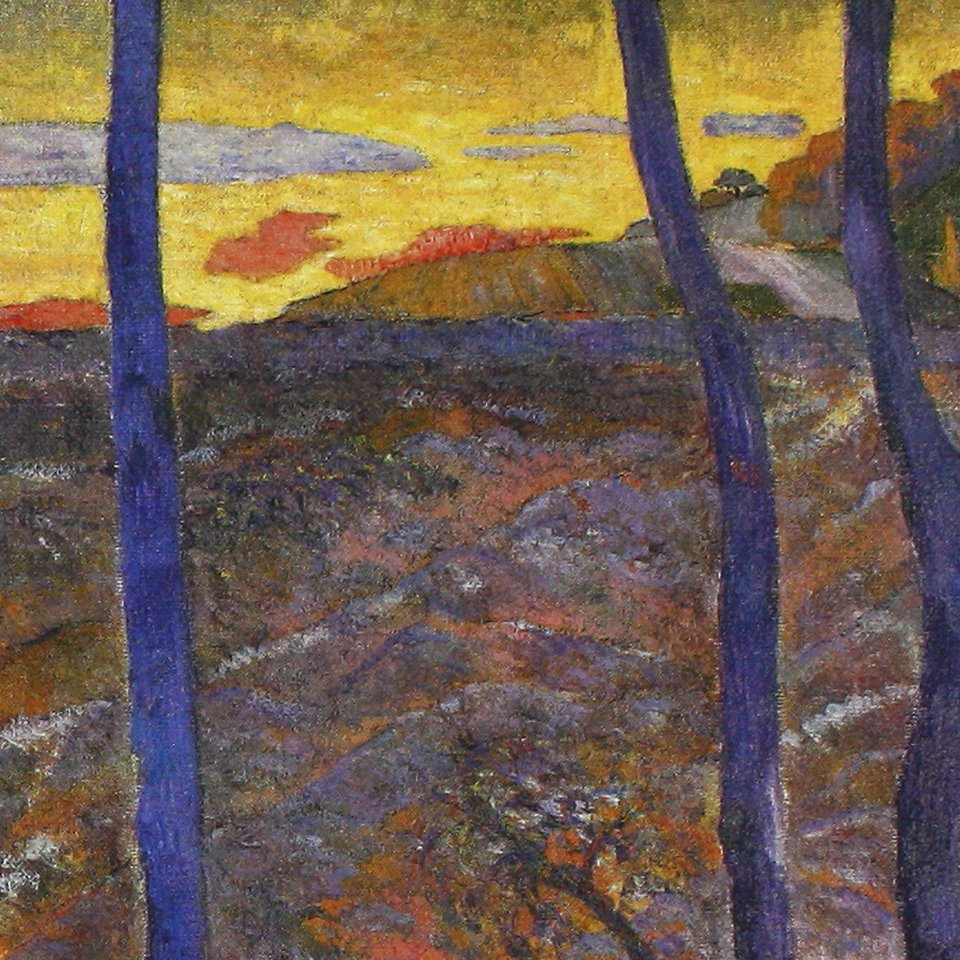
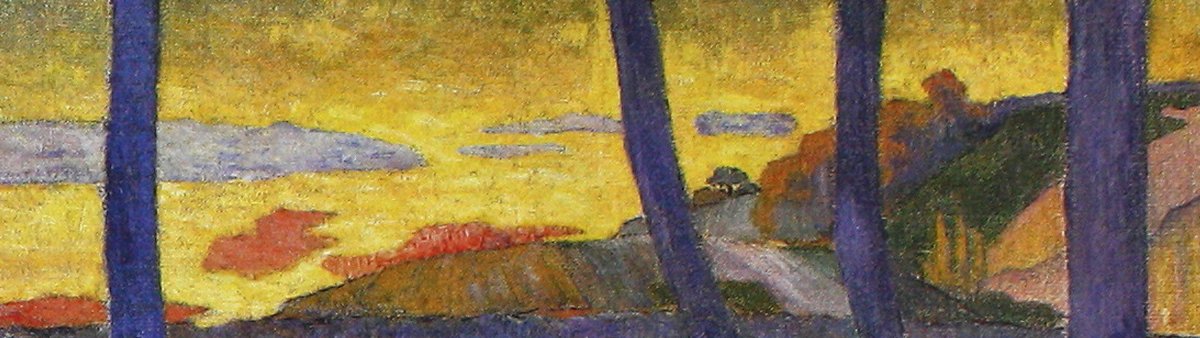
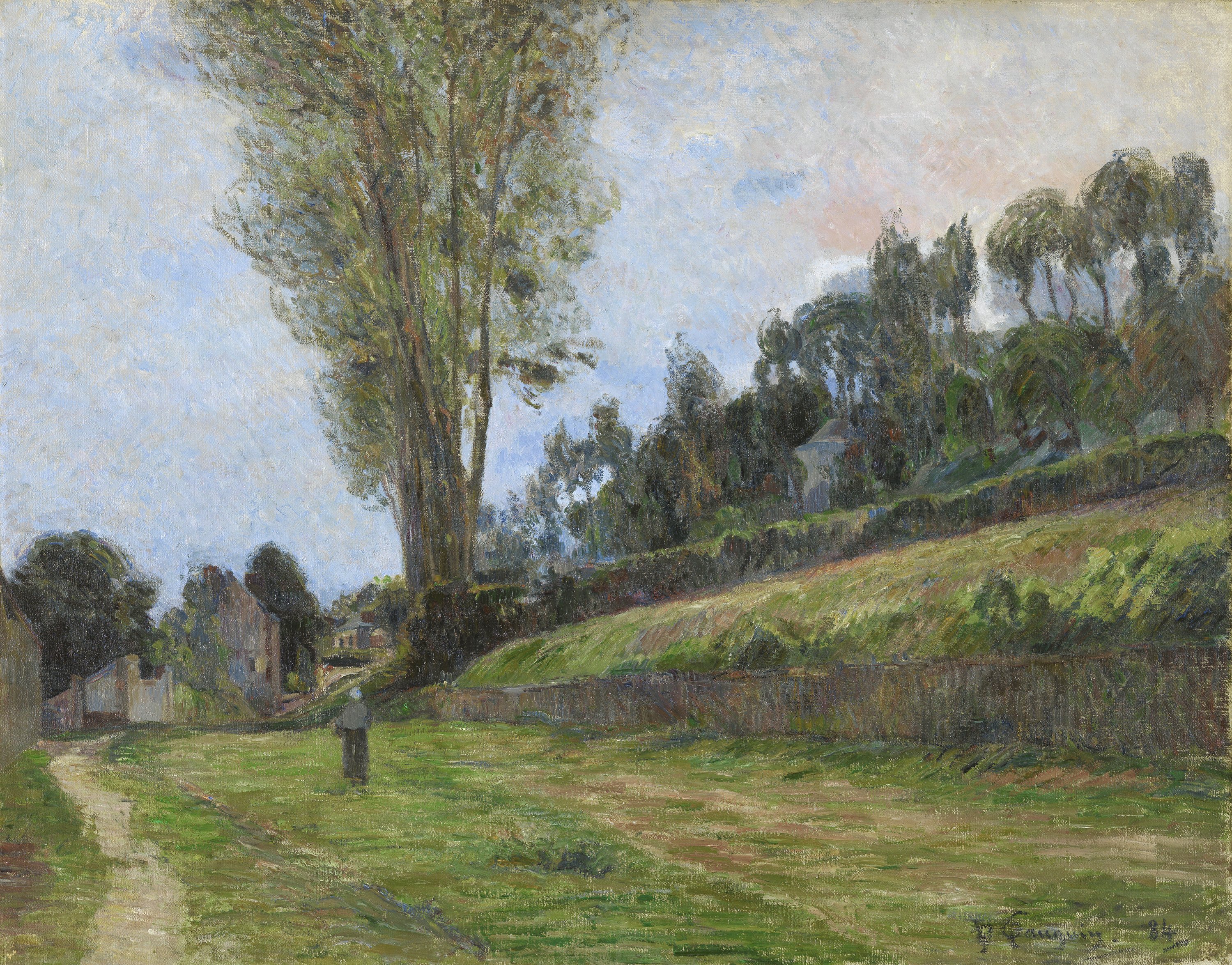
Street in Rouen is one of the most ambitious — and largest —landscapes painted by Gauguin while living in this town in northeast France between January and November 1884. During this period, in which he ceased to be an amateur artist and began to devote himself fully to painting, Gauguin produced numerous landscapes and a few portraits and still-life pictures. Painted in an Impressionist style, with broken brushstrokes applied with very uniform touches, in which the influence of Cézanne and Pissarro is still apparent, it shows a solitary street in the outskirts of the town and not a purely country landscape as might seem at first sight. According to the recent catalogue raisonné by Daniel Wildenstein, the trees on the right of the composition could be identified as those of Rouen’s monumental cemetery located very close to the districts of Bihorel and Sapins, where the artist lived.
The perspectival treatment of paths and streets was one of the Impressionists’ chief concerns in 1884, but as Ronald Pickvance points out, “Gauguin plays a piquant variation on the potential cliché by selecting a motif with a sharp turn in the road that destroys the inevitable sweep into depth, helping to close off the deeper space.” Anchored to this vanishing point are the lofty black poplars, which provide a vertical contrast to the accentuated oblique line of the path and next to which a group of houses can be made out. According to Guillermo Solana, Gauguin uses this manner of “(not) looking at the city from the country” to emphasise the bucolic solitude of this female figure with her back to the viewer, the only human in the scene. This manner of conveying solitude through the handling of the landscape, particularly in the wide open space in the foreground, is interpreted by Sarah Whitfield as a first step towards the more expressive and Symbolist painting of the subsequent years.
The painting’s size, subject matter and style lend plausibility to the hypothesis that it is the work Gauguin showed at the eighth and last Impressionist exhibition of 1886 entitled Street in Rouen. Gauguin exhibited nineteen paintings and a small relief that had been a gift to Pissarro in 1882. The works met with considerable indifference from critics, though they received a few mentions, such as that of the critic Gustave Geffroy, who wrote that “M. Gauguin has shown nineteen works on canvas, among which there are a few still lifes but above all landscapes. He has painted willows, small pools, surrounding areas of farms, paths, and has sketched a view of Rouen. There is great consistency in most of these studies and harmony is the dominant effect.”
Paloma Alarcó
The perspectival treatment of paths and streets was one of the Impressionists’ chief concerns in 1884, but as Ronald Pickvance points out, “Gauguin plays a piquant variation on the potential cliché by selecting a motif with a sharp turn in the road that destroys the inevitable sweep into depth, helping to close off the deeper space.” Anchored to this vanishing point are the lofty black poplars, which provide a vertical contrast to the accentuated oblique line of the path and next to which a group of houses can be made out. According to Guillermo Solana, Gauguin uses this manner of “(not) looking at the city from the country” to emphasise the bucolic solitude of this female figure with her back to the viewer, the only human in the scene. This manner of conveying solitude through the handling of the landscape, particularly in the wide open space in the foreground, is interpreted by Sarah Whitfield as a first step towards the more expressive and Symbolist painting of the subsequent years.
The painting’s size, subject matter and style lend plausibility to the hypothesis that it is the work Gauguin showed at the eighth and last Impressionist exhibition of 1886 entitled Street in Rouen. Gauguin exhibited nineteen paintings and a small relief that had been a gift to Pissarro in 1882. The works met with considerable indifference from critics, though they received a few mentions, such as that of the critic Gustave Geffroy, who wrote that “M. Gauguin has shown nineteen works on canvas, among which there are a few still lifes but above all landscapes. He has painted willows, small pools, surrounding areas of farms, paths, and has sketched a view of Rouen. There is great consistency in most of these studies and harmony is the dominant effect.”
Paloma Alarcó