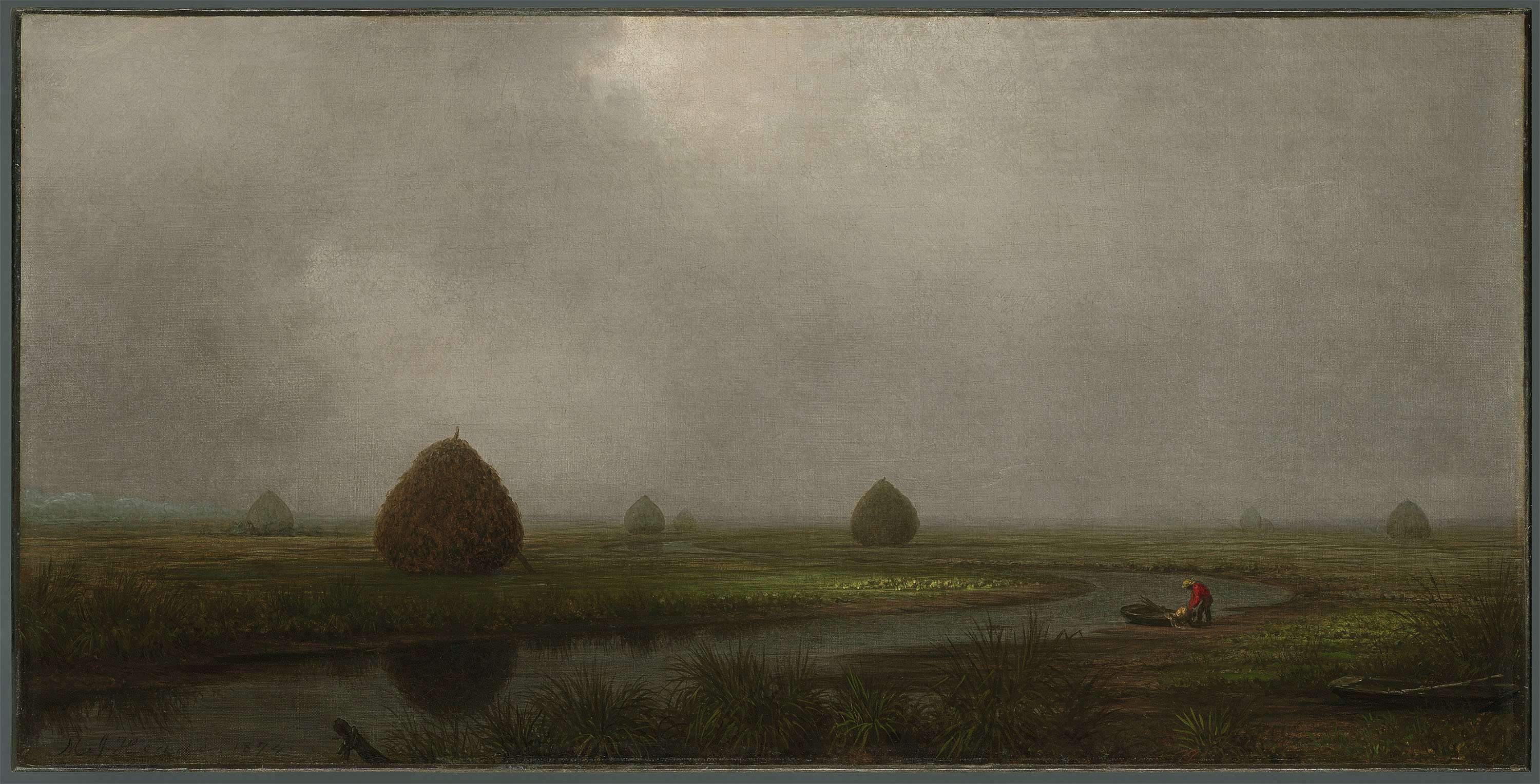
Jersey Marshes
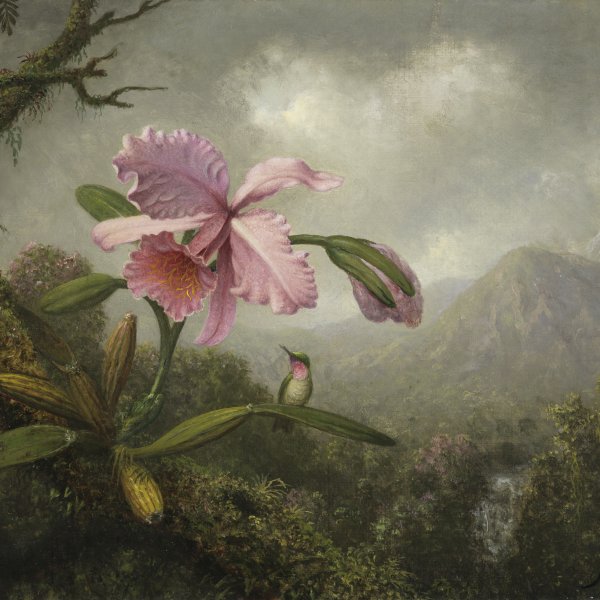
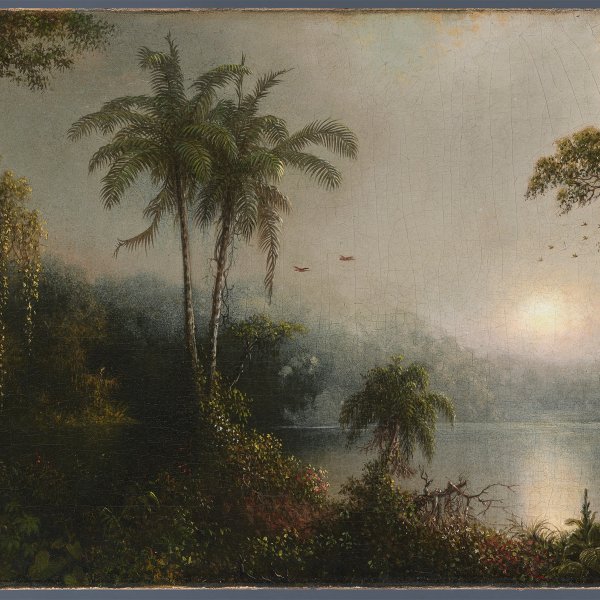
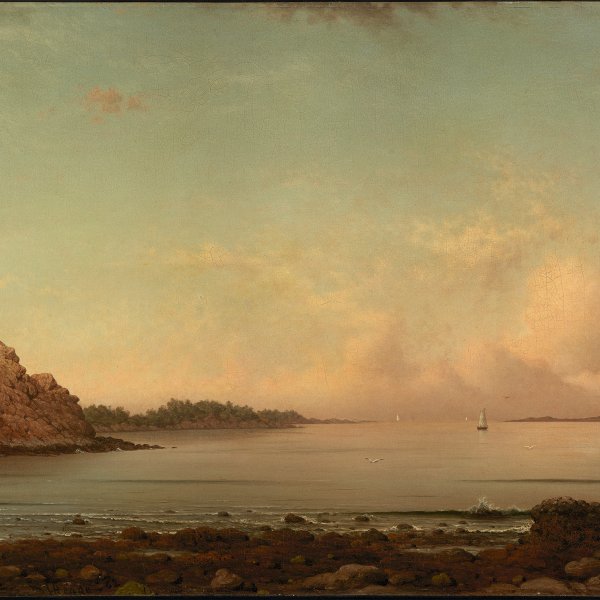
Martin Johnson Heade marched to a different drummer from most American painters in the second half of the 19th century. When confreres explored mountain ranges, he discovered marshlands; when they settled in New York City to establish reputations, he continued a peripatetic existence; when others were repeating tired variations on a single theme, he struck out in new directions. His marsh scenes, storm paintings, orchid and hummingbird pictures, late reclining floral still lifes: these are American originals. In fact, Heade can lay claim to a more diverse and creative body of work than almost any of his contemporaries.
He began his career as an itinerant painter of portraits, competent if uninspired. By 1858 he had moved to New York City, where he prophetically declared: "I feel as if I'd opened on a sort of new life!" There he promptly set about reinventing himself as a landscapist, finding quarters in the new Tenth Street Studio Building-then the bastion of the Hudson River School-and forging a lifelong friendship with Frederic Church. True to his pen name of Didymus, the twin, Heade found outlets for the dualism in his nature by complementing his landscape studies with still life painting, from floral arrangements in Victorian vases to the sensuous blossoms laying on tabletops.
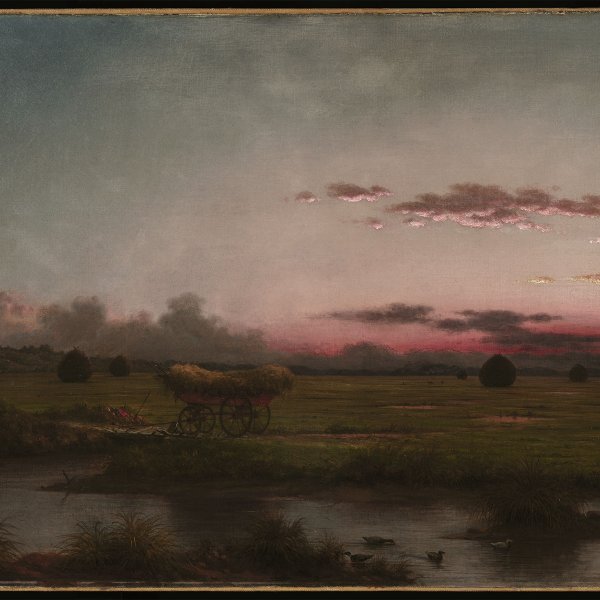
Heade's marsh scenes, however, brought him the greatest popular success. Critic Henry T. Tuckerman noted in 1867 that he "especially succeeds in representing marsh-lands, with hay-ricks, and the peculiar atmospheric effects thereof." Almost twenty years later Clement and Hutton reported in Artists of the 19th Century (1884): "He has been very successful in his views of the Hoboken and Newburyport meadows, for which the demand has been so great that he has probably painted more of them than of any other class of subjects." Like all his mature marsh pictures, Jersey Marshes is composed of several essential elements: a strongly horizontal view of the changing landscape, cut by a winding ribbon of water and dotted with haystacks receding in the distance. The golden luminosity is reflective of Heade's sensitivity to the fleeting effects of light in the moist atmosphere. As Barbara Novak's classic comparison with Monet's haystack series demonstrates, however, Heade's study of light never allowed the dissolution of object achieved by his French Impressionist counterparts. Heade treats his subject in essentially "luminist terms-with smoothness of surface, ordered relations of forms, and preservation of object identity through shape and solidity."
Though he painted marshes in Massachusetts, Connecticut, Rhode Island, and New Jersey during the 1870s and Florida during the later years of his career, they are not really place-specific. It was the overall character of marsh life, not the particularities of individual locale, that concerned him. As Heade was aware, "salt haying as a historical agricultural process is one in which man has successfully interfaced with his natural habitat over a long span of time; he has reaped without damaging the natural balance of the marsh ecology." The small human figures and flat-bottomed boats are tucked neatly into the land's contours in a manner that barely disturbs these natural cycles.
The aesthetic categories of the sublime and the picturesque had a strong hold on American painters; it has been argued, however, that the salt marsh prompted Heade to abandon picturesque conventions to create a fresh mode of landscape art. He depicted their flat, open expanses and uniform appearance to create pictures of daring simplicity. Canvases are differentiated by time of day, season of the year, or particular configurations of stacks, and demonstrate Heade's remarkable sensitivity to weather and above all light.
Katherine E. Manthorne