Paul Cézanne
Aix-en-Provence, 1839-1906
Paul Cézanne, one of the most significant French painters of the second half of the nineteenth century, is generally held to be “the father of modern art.” He started out studying law at Aix, but moved to Paris in 1861 to become a painter. In the French capital he enrolled at the Académie Suisse, copied many paintings in the Louvre and befriended Camille Pissarro, with whom he began to paint outdoors. He showed his work with the Impressionists in the first exhibition held in Nadar’s studio in 1874, and in the group’s third show in 1877. The critics’ reviews led Cézanne to decide not to show his works in the group’s subsequent exhibitions and to distance himself from the art circuits in order to find his own path. In 1878, the year he went to live with his companion Hortense in L’Estaque, near Marseilles, he began to drift apart from the Impressionist aesthetic and to develop a personal style. Throughout his life he divided his time between Paris and the south of France, until retiring permanently to Aix-en-Provence, his city of birth, in 1900.
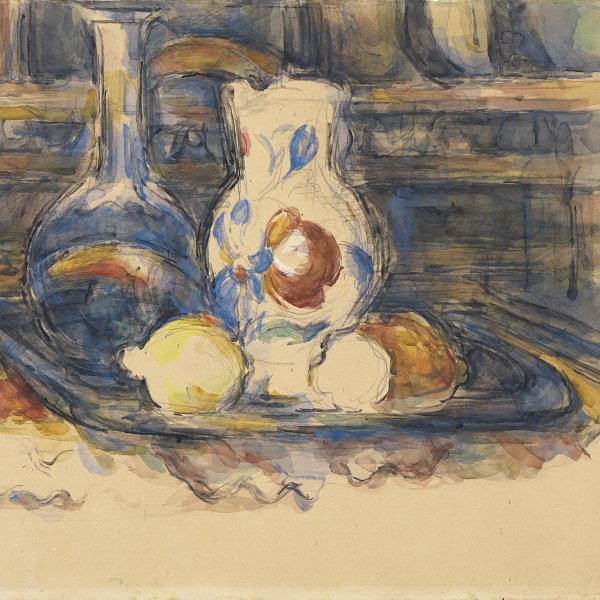
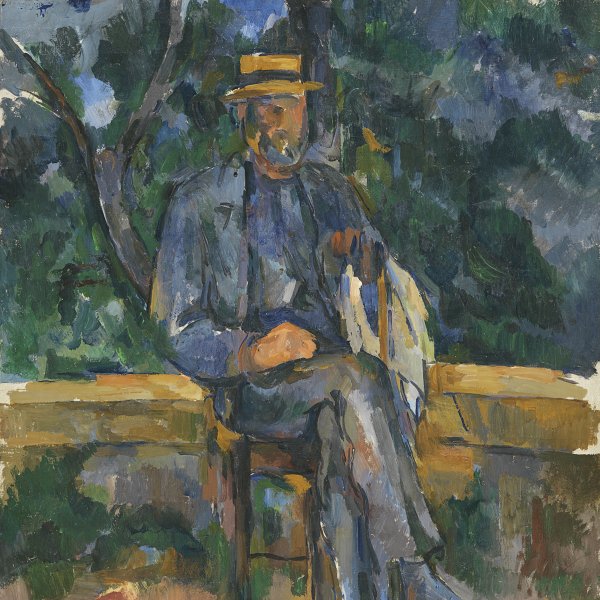
Cézanne considered form and colour to be inseparable. His pictorial language is characterised by the use of flat areas of colour applied with geometric brushstrokes that gradually shape the surface of the painting. His landscapes, still lifes and portraits break with the traditional conception of depth as defined by successive planes and strive to capture in painting the inner structure of things.
For most of his life Cézanne was misunderstood, a failure even, like Claude Lantier, the main character in Émile Zola’s novel L’Oeuvre, in whom Cézanne recognised himself, causing him to fall out with his childhood friend. Only in the last years of his life did he again show his works at Ambroise Vollard’s gallery in 1895, in what was his first solo exhibition. Thenceforward his work was shown in other exhibitions and began to be appreciated and to influence the young Fauvists and the future Cubists. The posthumous exhibition of his work, held in Paris in 1907, was a genuine revelation and triggered the beginning of Cubism.
Cézanne considered form and colour to be inseparable. His pictorial language is characterised by the use of flat areas of colour applied with geometric brushstrokes that gradually shape the surface of the painting. His landscapes, still lifes and portraits break with the traditional conception of depth as defined by successive planes and strive to capture in painting the inner structure of things.
For most of his life Cézanne was misunderstood, a failure even, like Claude Lantier, the main character in Émile Zola’s novel L’Oeuvre, in whom Cézanne recognised himself, causing him to fall out with his childhood friend. Only in the last years of his life did he again show his works at Ambroise Vollard’s gallery in 1895, in what was his first solo exhibition. Thenceforward his work was shown in other exhibitions and began to be appreciated and to influence the young Fauvists and the future Cubists. The posthumous exhibition of his work, held in Paris in 1907, was a genuine revelation and triggered the beginning of Cubism.