Jean Baptiste Siméon Chardin
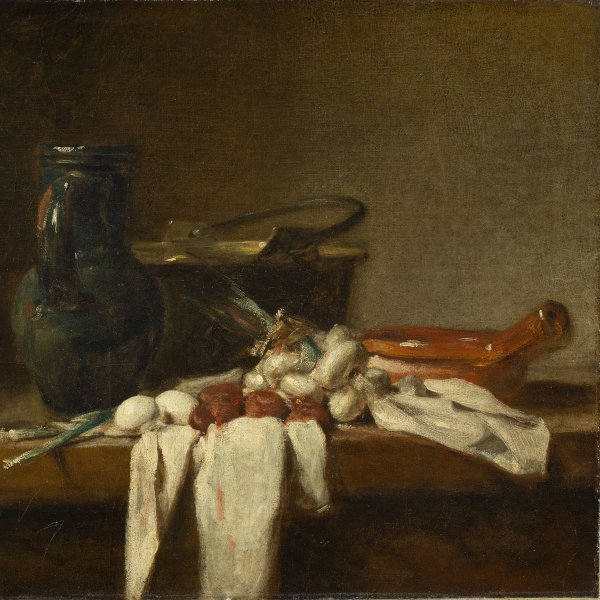
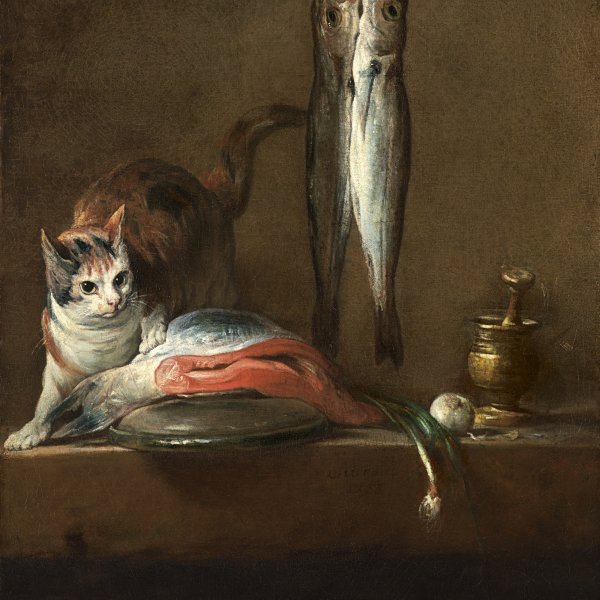
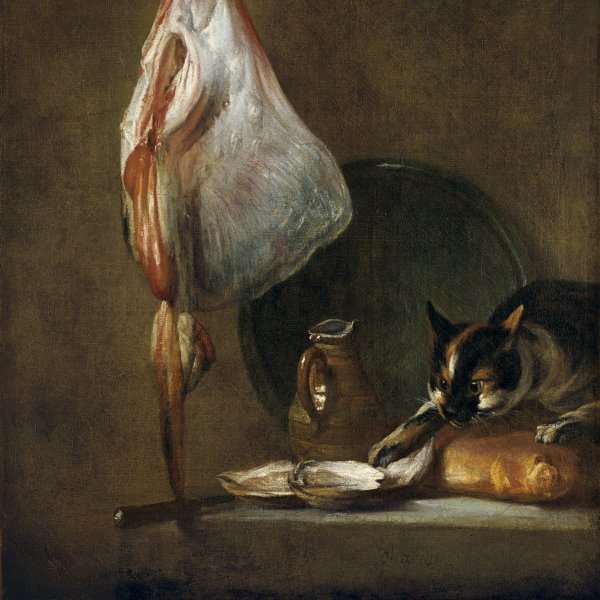
Following his apprenticeship with the history painter Pierre-Jacques Cazes, Chardin spent time in the studio of Noël-Nicolas Coypel studying 17th-century Dutch and Flemish painting, whose influence is evident in his early still lifes. In 1728 he participated in the Exhibition of Young Artists in the Place Dauphine, showing works that included The Rayfish (Musée du Louvre). Chardin’s work was praised by Largillière and that artist was influential in Chardin’s admission to the Académie that year. Chardin entered as a painter of animals and fruit, presenting his famous Rayfish and The Sideboard (also in the Louvre). The artist again took part in the Exhibition of Young Artists in 1732 and 1734. From the 1730s he began to produce his first compositions with figures depicted at home and engaged in their everyday tasks. These simple but dignified scenes offer a record of the life of one sector of French society. Among them are The Governess (Galerie Nationale du Canada, Ottawa), The Scullery Maid and The Tavern-keeper (both Hunterian Art Gallery, Glasgow). With the reopening of the Salon in 1737, Chardin regularly exhibited his work there. In 1755 he was unanimously elected as treasurer of the Académie, a position he occupied until 1774. In 1756 he returned to still-life painting. In 1770 and as a result of his failing sight, Chardin began to focus on pastel, a technique in which he produced various portraits, among them those of his wife and a Self-portrait. They were exhibited in the Salon in 1775 and are now in the Louvre. Chardin’s work was a reference point for artists such as Manet, Cézanne and Morandi.