Francesco Foschi
Ancona, 1710-Rome, 1780
Francesco Foschi was born in Ancona in 1710 into a wealthy family. Some of his brothers were also painters, of which the best known was Carlo Foschi who specialised in marine views. Francesco began his training in the studio of Francesco Mancini in Fano. At the outset of his career he enjoyed the support of Count Raimondo Bonaccorsi, whom Foschi helped to assemble a magnificent art collection that included twelve episodes from Ovid’s Metamorphoses by Foschi himself.
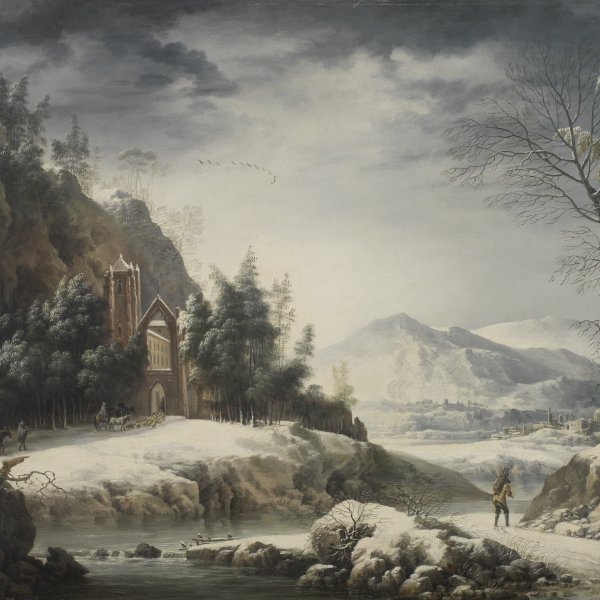
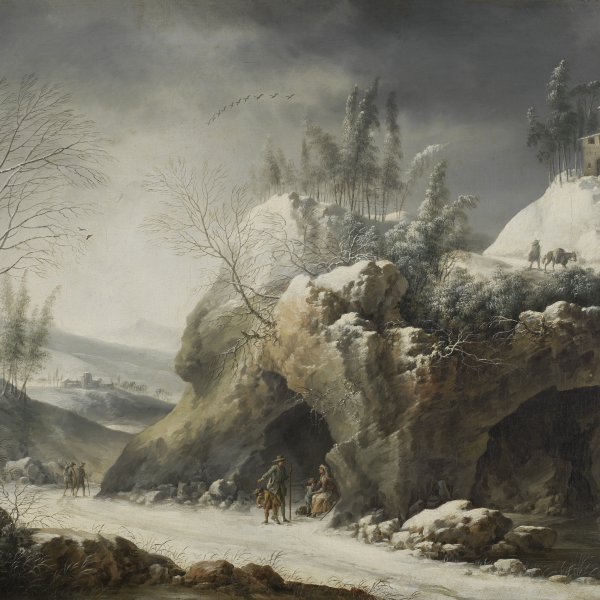
In 1729 the artist’s family moved to Rome where the 19-year-old Francesco paid careful attention to the urban view paintings of Panini and Vanvitelli. The influence of the latter’s panoramic scenes is readily evident in View of Loreto with papal Portraits (Palazzo Apostolico, Loreto), a work that also reveals the influence of his master Mancini in the treatment of the figures. In 1744 Foschi married Constanza Scirman in Rome, with whom he had a daughter. In 1750 the artist signed and dated a Winter Landscape (Musée de Grenoble), the first known example of a sub-genre that would become his speciality. In 1755 Foschi moved to Pesaro where he lived until 1764, at which date he returned to Rome for the remainder of his life. His obituary, published in the newspaper Ordinario Cracas (11 March 1780), describes him as the “famous painter of winter landscapes”, reflecting his focus on this type of work in his latter years.
In 1729 the artist’s family moved to Rome where the 19-year-old Francesco paid careful attention to the urban view paintings of Panini and Vanvitelli. The influence of the latter’s panoramic scenes is readily evident in View of Loreto with papal Portraits (Palazzo Apostolico, Loreto), a work that also reveals the influence of his master Mancini in the treatment of the figures. In 1744 Foschi married Constanza Scirman in Rome, with whom he had a daughter. In 1750 the artist signed and dated a Winter Landscape (Musée de Grenoble), the first known example of a sub-genre that would become his speciality. In 1755 Foschi moved to Pesaro where he lived until 1764, at which date he returned to Rome for the remainder of his life. His obituary, published in the newspaper Ordinario Cracas (11 March 1780), describes him as the “famous painter of winter landscapes”, reflecting his focus on this type of work in his latter years.