El Greco (Doménikos Theotokópoulos)
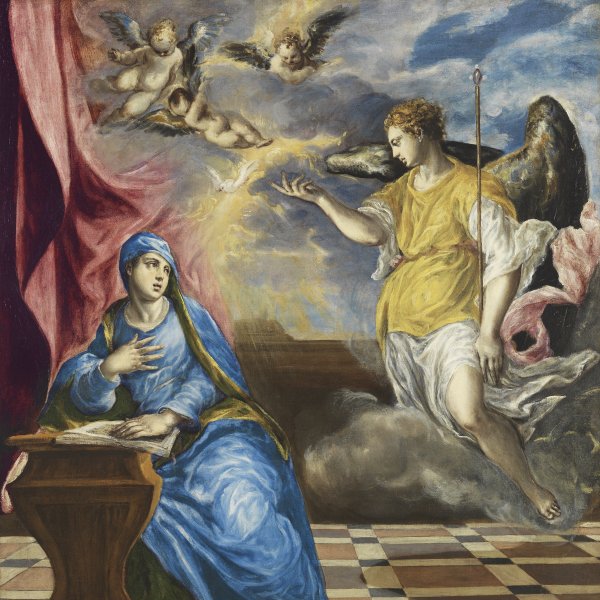
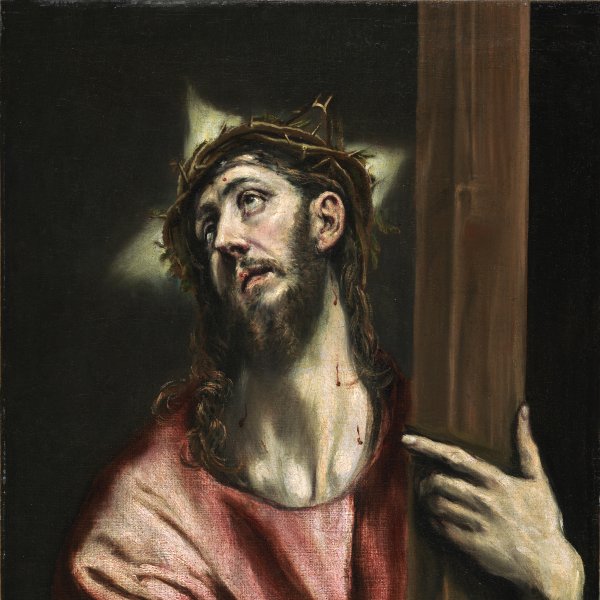
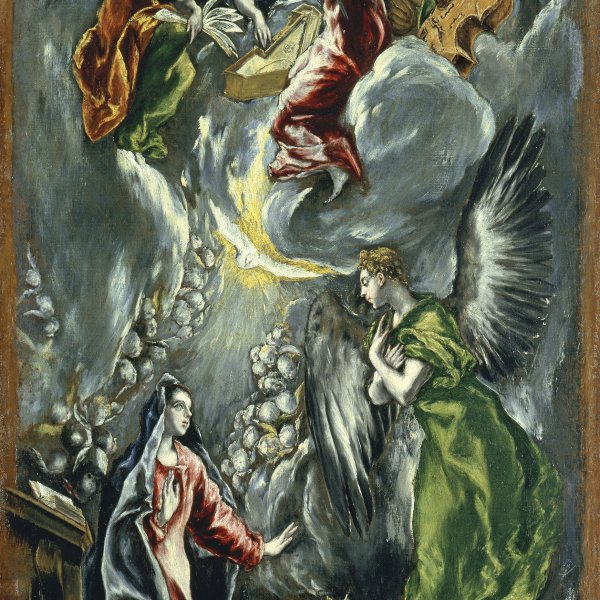
Doménikos Theotokópoulos, known as El Greco, is one of the most original and interesting artists of the 16th century. He was born in 1541 in Candia on the island of Crete, which was at that point under Venetian rule. Little is known of his training. He worked in his native city until 1567, using a post-Byzantine style and recent research has suggested that his training equipped him to work in both the traditional eastern and the more modern western modes. In early 1567 El Greco moved to Venice with the aim of becoming a western painter. He studied the work of Veronese, Tintoretto and Titian, among others. In 1570 the artist moved to Rome, living in the Palazzo Farnese. There he was able to study the collection of Cardinal Alessandro Farnese, and he became part of a select circle of scholars and academics including Giulio Clovio. In 1577 El Greco is documented in Toledo in Spain where he arrived in the hope of working on the decoration of El Escorial outside Madrid. In Toledo El Greco produced his most original work. His first commissions, such as the Altarpiece for Santo Domingo el Antiguo (1577–79), reveal his use of numerous Italian borrowings. His style matured and evolved, resulting in paintings such as The Disrobing of Christ for Toledo cathedral (1579), The Martyrdom of Saint Maurice (1580–82), and The Burial of the Count of Orgaz for the chapel of the church of Saint Tomé (1586–88). Around the end of the century El Greco’s style became more personal, as can be seen in the now dispersed group of works painted for the altarpiece of the Colegio de doña María de Aragón. In these late works the figures became more elongated, the space is distorted, and the light gives the compositions a spectral appearance, while the doctrinal elements within the compositions are emphasised. El Greco died in Toledo in 1614 and his son and assistant Jorge Manuel Theotokópoulos took over the running of his workshop.