Edward Hopper
The American painter Edward Hopper was one of the foremost exponents of twentieth-century Realism. Although he did not attract the attention of critics or the public for much of his life and was forced to work as an illustrator to earn a living, his works are now icons of modern life and society.
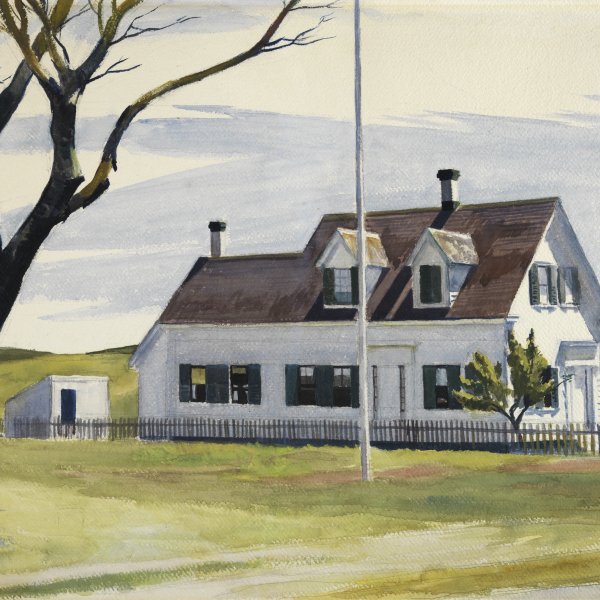
Hopper studied at the New York School of Art with William Merrit Chase and Robert Henri. He made several trips to Europe and was interested in European culture and art from a very early age, particularly the work of Edgar Degas and Édouard Manet. In 1910 he settled permanently into his New York home in Washington Square, which he left only during his summer sojourns in New England, from 1930 onwards chiefly in Cape Cod, where he had a house built. In 1924 he married Jo Nivison, who not only posed for him on numerous occasions but furthermore kept a detailed record of his work throughout his life.
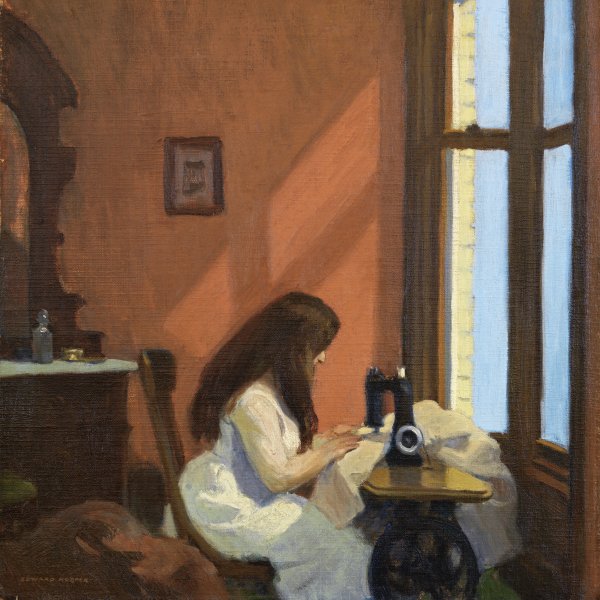
Hopper’s artistic output is relatively small, as he painted at a slow, leisurely pace. He was initially connected with the so-called American Scene, a heterogeneous group of artists who shared the same interest in typically American themes, but Hopper soon developed his own personal style of painting. His taciturn nature and austere manner were powerfully reflected in his oeuvre, which is characterised as a whole by its simplified depiction of reality and mastery at capturing contemporary man’s solitude. His painting provides an insight into the America of the Great Depression, which for him symbolised the crisis of modern life.
Hopper’s cinematic handling of scenes and personal use of light are the main features that set his painting apart. Although he painted a few landscapes and outdoor scenes, most of his works feature public places — such as bars, motels, stations and trains — that are practically empty in order to underline the loneliness of the person depicted. Hopper further heightens the dramatic effect by means of powerful contrasts of light and shadow.
Hopper’s fame spread considerably towards 1930 as a result of isolationism, though his critical fortunes did not start to grow until his death in 1967, when he began to be acknowledged as one of the Great Masters of twentieth-century art and not just as an example of American realist painting.