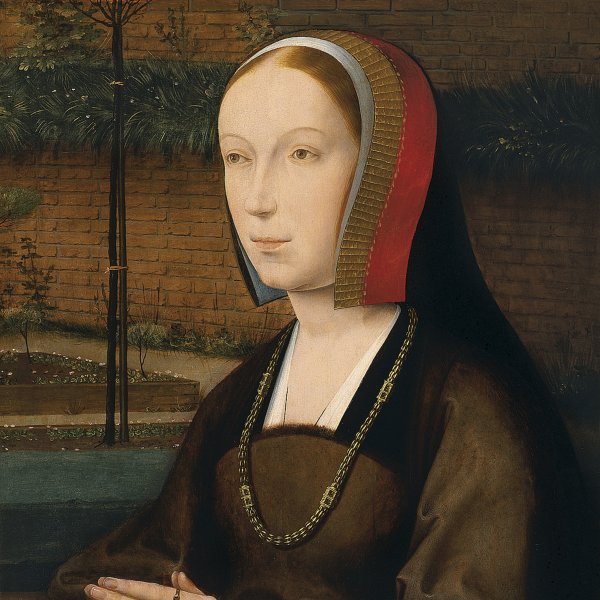
Jan Provost
Jan Provost was born in Mons around 1465. He moved to Valenciennes and before 1491 married Jeanne de Quaroube, widow of Simon Marmion, who may have been his teacher. In 1493 Provost left for Antwerp where he registered in the guild of Saint Luke, and one year later became a citizen. Provost’s work was extremely well received in Bruges and he became a prestigious and celebrated artist, receiving numerous civil and ecclesiastical commissions. He also played an important role in the painters’ guild, occupying senior positions within it until the end of his career. In 1520 he was involved in the decorations to celebrate the triumphal entry of Charles V into Bruges. He returned to Antwerp that same year where he met Dürer during that artist’s trip around the Low Countries. Provost is probably the “Jan Prost van Prück” with whom Dürer stayed during his time in Antwerp in the spring of 1521 and the model for one of the portraits that he executed during his time there. Provost’s most important work is The Last Judgement (Groeningemuseum, Bruges), painted between 1524 and 1526 for the City Council of Bruges. It is considered one of the most outstanding examples of the transition from the Gothic to the Renaissance style in the Low Countries. Provost’s work combined a painstakingly detailed technique derived from the Netherlandish tradition with a new, Renaissance mentality. His panels are characterised by a delicate use of colour, fine modelling and an increasingly realistic and narrative approach to the subjects. Along with Massys, Provost is the most important early Renaissance painter in the Low Countries. After the death of his first wife in 1506 he re-married on three more occasions. Two of his sons followed their father’s footsteps: Adriaen became a painter and Thomas a master stained-glass maker, both active in Bruges.