The Apotheosis of Hercules
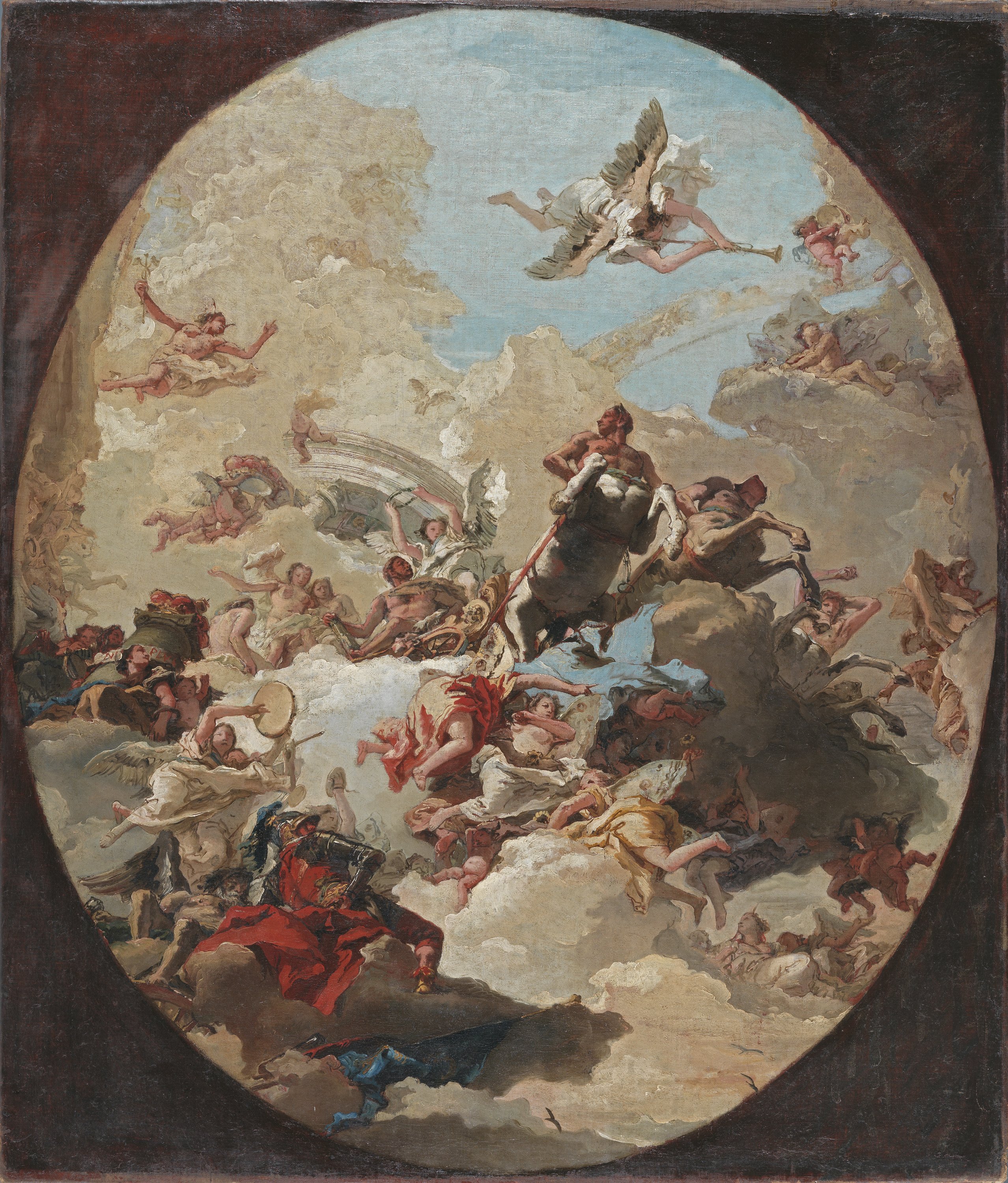
The Apotheosis of Hercules, along with other similar scenes of figures elevated into the heavens, was a commonly depicted subject in Baroque art, used for decorative cycles and in particular for ceiling paintings. The death and subsequent elevation of Hercules to the heavens on the wish of Jupiter is recounted by Ovid in The Metamorphoses. According to the text, the other gods approved Jupiter’s decision as Hercules lay on the funerary pyre, at which point Jupiter commented: “Hercules, who conquers all, will conquer the fire you see there: only the human part, which he owes to his mother, will feel Vulcan’s power. What he derives from me is immortal, beyond the reach of death, and not to be overcome by any flames. When that part has fulfilled its time on earth, I shall receive it into the realms of heaven, confident that my action will be a source of rejoicing to all the gods”. Thus, when Hercules “had put off his mortal shape, the better part of him grew vigorous, and he began to appear greater than before, a majestic figure of august dignity. Then the omnipresent father swept him up through the hollow clouds in his four-horse chariot”. In Giandomenico’s composition the horses are replaced by centaurs, mythical beasts with the head and torso of a man and the body of a horse, symbolising a lower form of human nature.
Within an oval format, Giandomenico located the triumphal chariot to the left of the composition’s vertical axis. In it sits Hercules, symbol of valour and physical force with his body covered with the pelt of the Nemean lion and holding his club. A winged, female figure places a crown on his head while other women follow behind the triumphal retinue. Among the figures accompanying Hercules to his celestial destination, Giandomenico individualized gods such as Mercury with his winged helmet and caduceus, floating on the left, and Time, represented by an old man next to a warrior in armour. The rest of the retinue is made up of a multitude of figures with musical instruments, steering and holding up the clouds on which Hercules proceeds, or simply accompanying him. Most of this preliminary sketch is painted with pale, creamy shades with the more saturated tones such as red and blue used for details such as the draperies.
The sketch entered the Thyssen-Bornemisza collection in 1930 and was attributed in its early catalogues to Giambattista Tiepolo. The canvas has been related to a series of four designs for ceilings for the Russian court. These ceilings survive in the form of prints, one of which has an inscription that refers to Giandomenico as the artist of the work. The present sketch reveals his talents but also reflects the influence of his father in its use of details that had previously appeared in works by Giambattista.
Mar Borobia