Flower-Shell
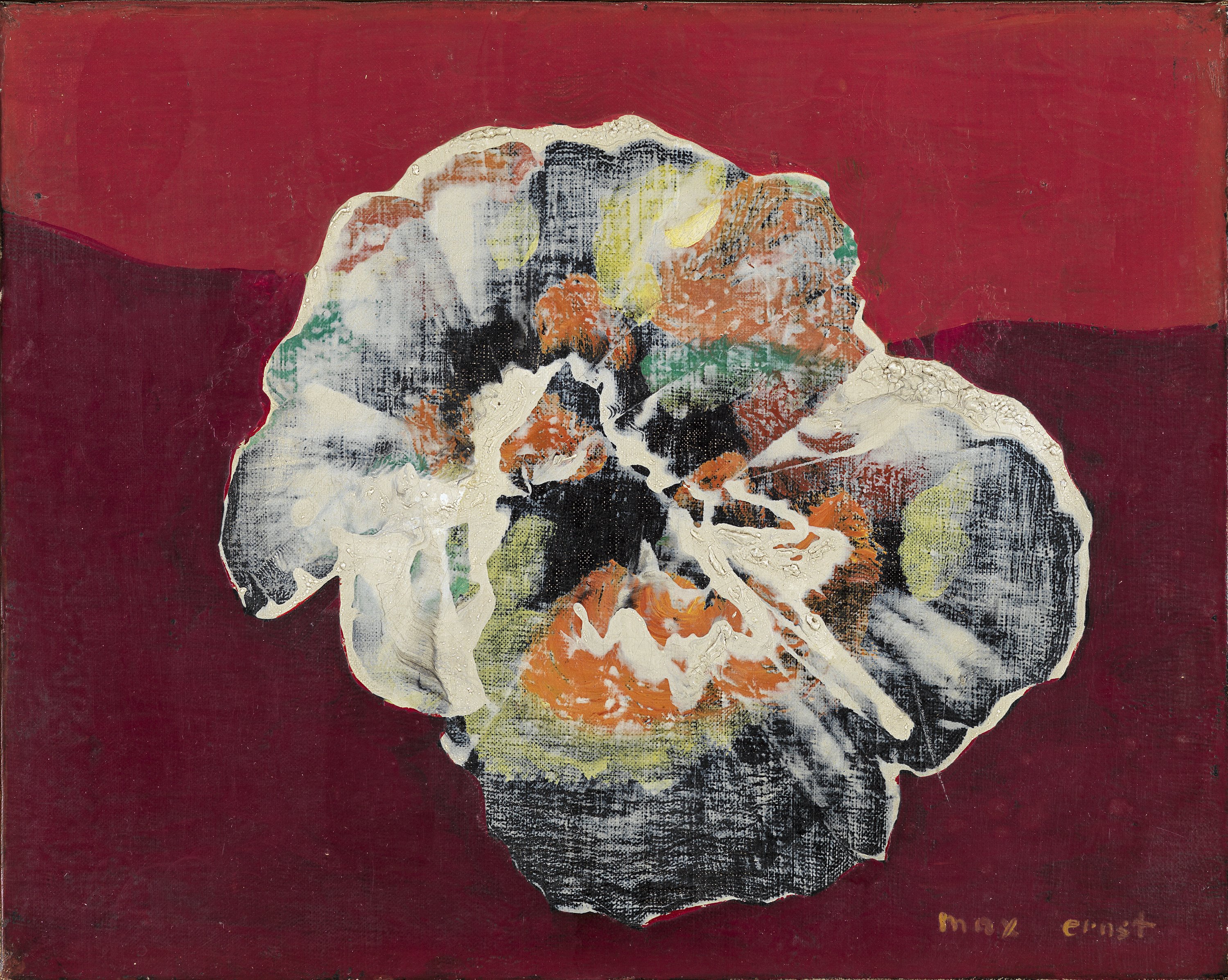
The present Flower-Shell belongs to a set of canvases on the same theme executed between 1927 and 1929, when Max Ernst was at the height of his recognition as one of the leading Surrealist artists. This strange specimen, which is non-existent in nature and springs from the painter’s imagination, recalls a few examples of the frottages featured in Ernst’s Histoire naturelle, which relate to his Dadaist experiments. In 1927, the year the present work is dated, Ernst had contributed a series of texts to the Surrealist theories including “Beyond painting, ” in which he expounded his idea that the artist should free human imagination and described frottage as the “intensification of [his] visionary capabilities.”
For Ernst collage, frottage, grattage and decalcomania were technical devices for liberating the creative powers of the unconscious. In this small canvas he uses grattage, a technique that is similar to frottage but instead of rubbing a pencil over a sheet of paper placed over a rough surface, he scrapes the oil paint with various objects to obtain different textures that blend into the final image.
Paloma Alarcó