Thyssen-Bornemisza Museo Nacional Search Ir al contenido principal

Navegación superior (EN)

About Us Support Friends Shop Tickets
Español
Visit Collection Exhibitions Activities Education Search
  • Visit
  • Collection
  • Exhibitions
  • Activities
  • Education

Thyssen - Navegación superior (EN)

About Us Support Friends Shop Tickets
Español
©
The Estate of Robert Rauschenberg/ VAGA, NY/ VEGAP, Madrid
Robert Rauschenberg

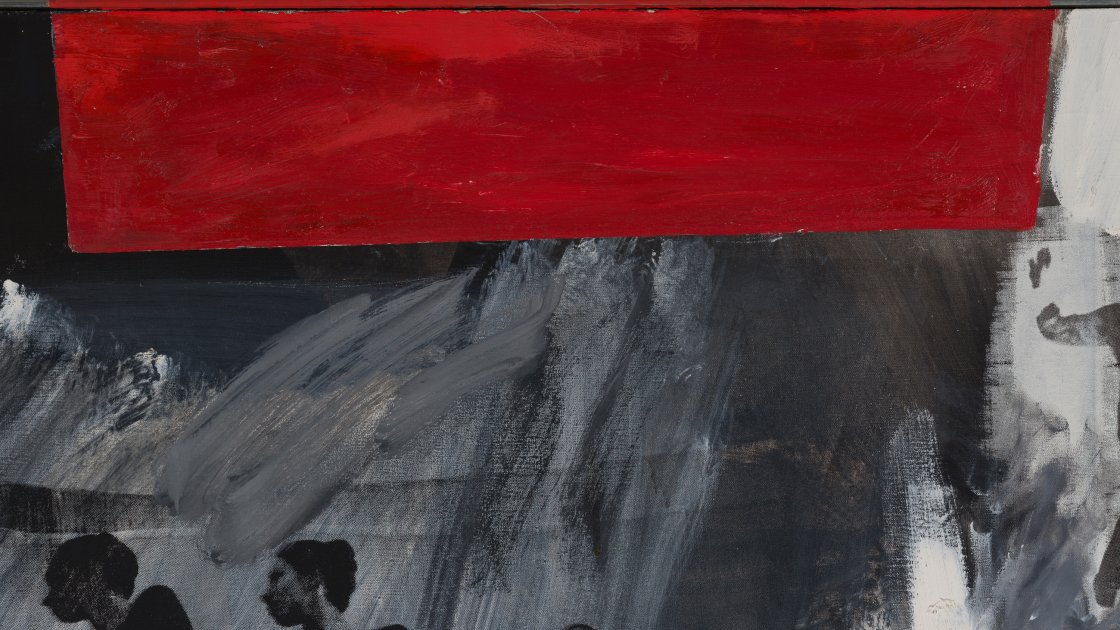
Express

1963
Oil and silkscreen ink on canvas.
184.2 x 305.2 cm
Museo Nacional Thyssen-Bornemisza, Madrid
Inv. no.
721
(
1974.34
)
Room 48
Level 1
Permanent Collection
30 31 32 33 34 35 36 37 38 39 40 41 42 43 44 45 46 47 48 49 50 51 52 53 54 55 56 Postpop rooms Rodin room
30 18th and 19th Centuries. Transatlantic Relations 31 19th Century. American Landscape and Environmental Awareness 32 19th Century. American Landscape and Urban Life 33 19th Century. The Impressionist Period 34 20th Century. Expressionist Landscapes 35 20th Century. Expressionist Portraits 36 20th Century. The Language of the Body 37 20th Century. Urban unrest 38 20th Century. Flowers 39 20th Century. Pioneers of abstraction 40 20th Century. Popular flavor 41 20th Century. The Cubist Tradition I 42 20th Century. The Cubist Tradition II 43 20th Century. Abstract Utopias 44 20th Century. Dada and Surrealism 45 20th Century. Interwar Realisms 46 20th Century. American Abstraction I 48 20th Century. Post-ward American Art 49 20th Century. Post-ward European Figurative Art 50 20th Century. Informalisms 51 20th Century. Homo Ludens 52 20th Century. Pop Art 53 Postpop rooms 54 Postpop rooms 55 Postpop rooms 56 Postpop rooms • Exhibition room
View gigapixel
Discover some of the secrets and details invaluable to the human eye in this work.

Together with Jasper Johns, Robert Rauschenberg provided a link between the generation of more veteran Abstract Expressionist painters and the young Pop artists. Although Rauschenberg always maintained certain elements of Abstract Expressionism in his oeuvre, he rebelled against it at the same time. His meeting with Marcel Duchamp in 1960 was decisive in his adoption of Dadaist methods. Duchamp also admired these young Americans, who turned their backs totally on tradition to create their works: “In Europe, ” he stated, “the Young artists of any generation always act like the grandson of some great man or other — Poussin, for example, or Victor Hugo. This is not the case here. Here they don’t give a fig about Shakespeare, no one is his grandson. Thus the terrain is more suitable for new discoveries.”

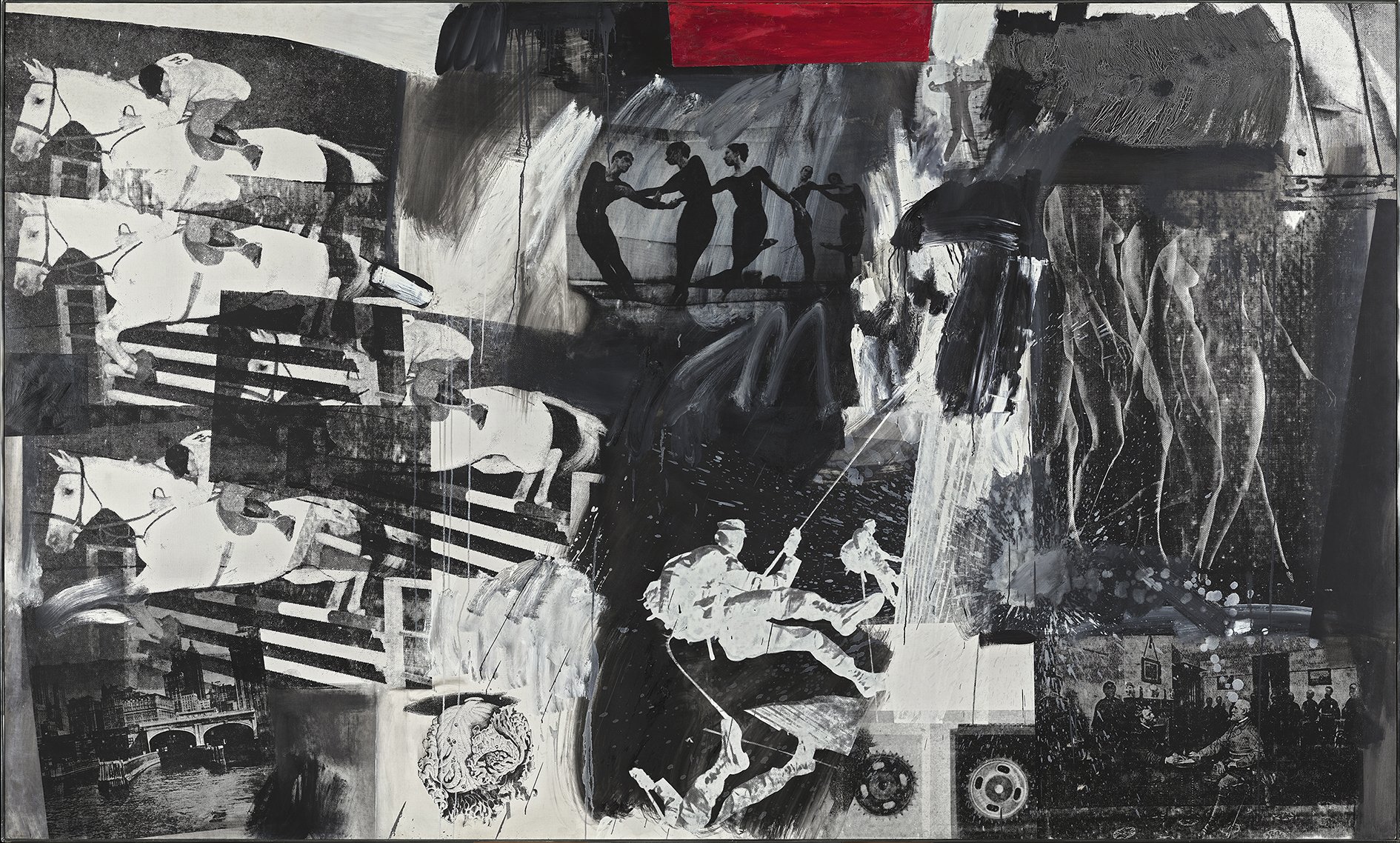
Midway through the 1950s, Rauschenberg began to produce his Combines — a mixture of painting, assemblage and collage — from found photographs and objects, usually consumer society trash. In 1962, under the influence of Andy Warhol, he began to experiment with a new type of artistic technique which became the basis of his work during the following years: silkscreen printmaking. This method enabled him to incorporate photographic images printed on silk screens that he then transferred to canvas, manipulating them and superimposing them in the manner of collages; he then completed the effect with oil painting.

Enlarged reproductions of photographs of his or of magazine cuttings were systematically repeated in different works. As a result of being enlarged to a much bigger scale than the original, the images have a grainy appearance which Rauschenberg exploits by combining them with thick, rapid brushstrokes of oil paint. As can be read in the artist’s testimony recorded by Calvin Tomkins, this technique fascinated him for its element of surprise and for the countless possibilities offered by an image when manipulated and combined with others, as well as for the manner in which “some images insist on being themselves, do what you will to them.”

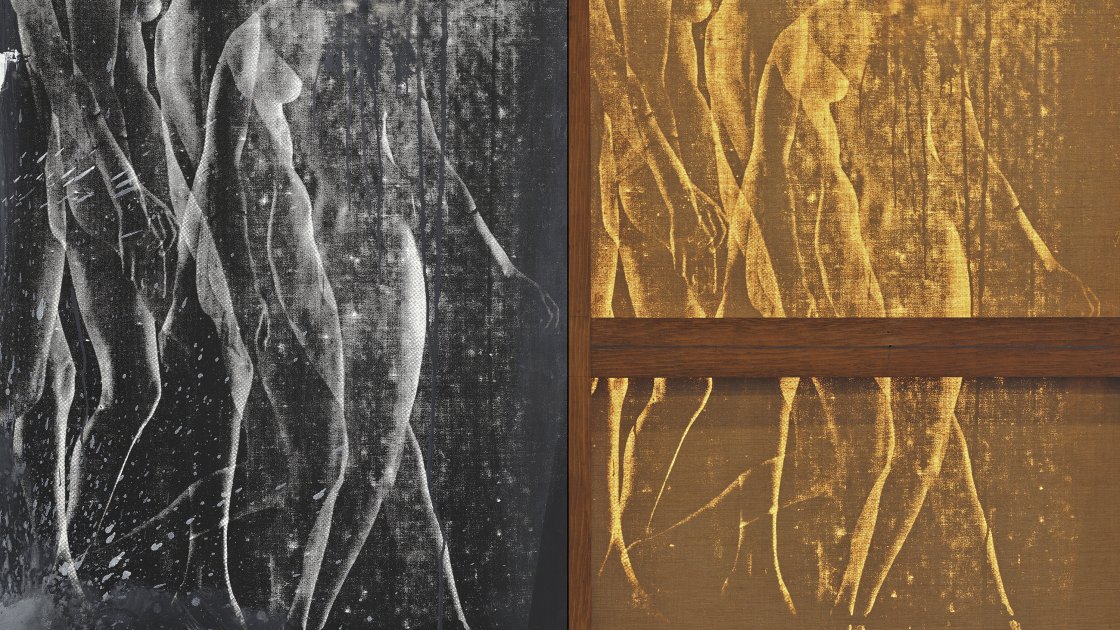
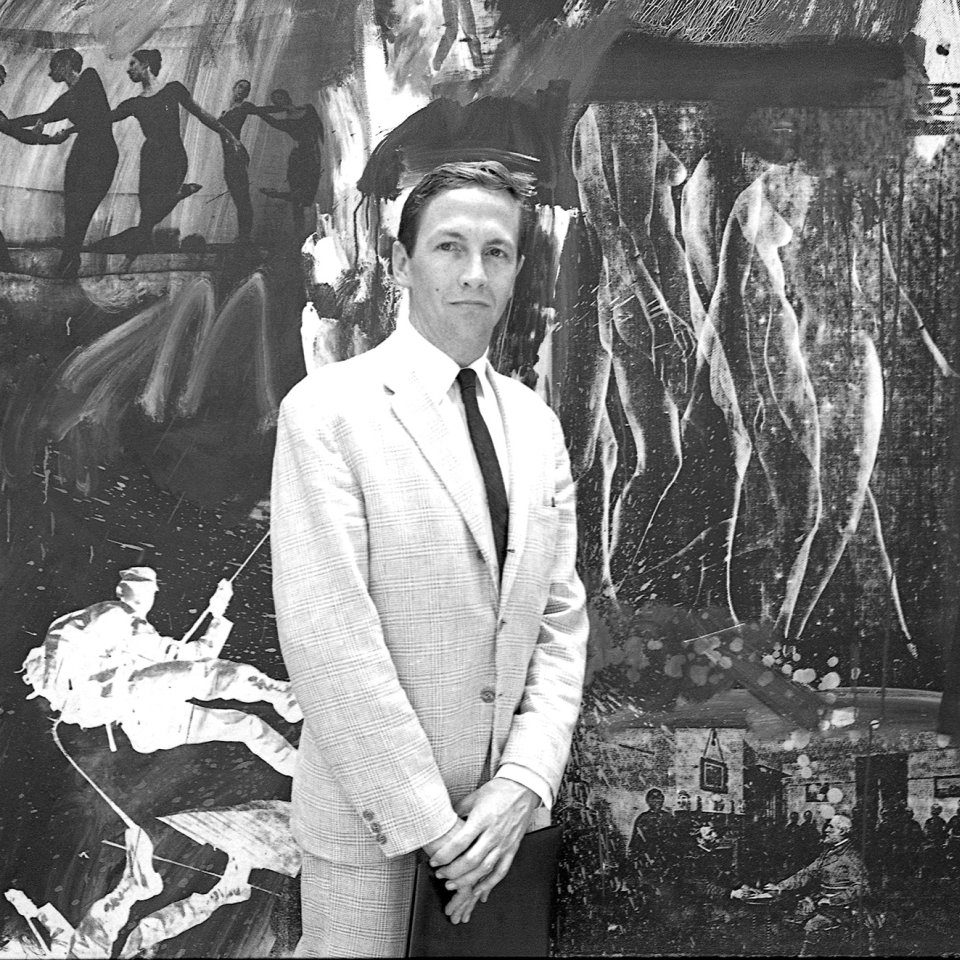
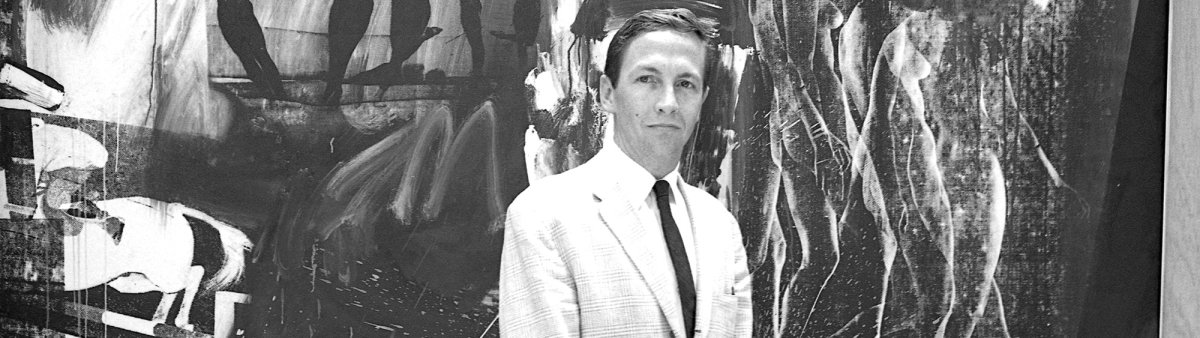
The Museo Thyssen-Bornemisza Express belongs to a group of paintings in which Rauschenberg uses silkscreen printing. Some of the photographs reproduced in it, which capture his visual universe, are found in earlier and later works. According to Gail Levin, the title Express may allude both to very fast movement and to something very precise and exact, or even to the expression of a particular creative impulse. There are numerous references to movement in the work: the repeated image of the horse and rider about to jump over an obstacle, the dancers in action, the climber hanging from his rope, the wheels in the lower part of the picture and a nude descending a staircase — a very explicit reference to Duchamp’s famous work that was shown in the Armory Show in 1913. The photograph of the dancers is a tribute to Rauschenberg’s choreographer friend Merce Cunningham, a fellow student at Black Mountain College in North Carolina, an experimental school that undoubtedly contributed to the development of Rauschenberg’s unique artistic language.

Rauschenberg was always a multidisciplinary artist. Whatever the kind of work he produced, he always remained faithful to his spirit of criticism of the established norms and experimental zeal. Express was one of the works shown in the American pavilion of the Venice Biennale of 1964, where Rauschenberg was the first American artist to be awarded the First Prize. Thenceforward the public recognition of his oeuvre, which constantly sought new forms of expression in art, made him one of the most influential of the young artists of the final decades of the twentieth century.

Paloma Alarcó
20th Centurys. XX - Neodadaísmo en NorteaméricaPaintingOil and silkscreen inkcanvas
Listen
Download image Print page

Related exhibitions

Ugo Mulas Ugo Mulas
Special display
Rauschenberg: Express. On the Move
From 3 February to 24 May 2026
BUY TICKETS
Express. Express, 1963
Contexts of the permanent collection
Rauschenberg. Express
From 7 November 2006 to 17 January 2007

Tours to find it

Naked Eve
Tours
Naked Eve
Over the centuries, the nude has inspired some of the most sublime works in western art.
Inclusive love
Tours
Inclusive love
A different look, based on gender, identity and sexual orientation.

Products and publications

Cherry Pendant by Heem by Andrés Gallardo

Cherry Pendant by Heem by Andrés Gallardo

192,00 €

Richard Estes Poster: Telephone Booths

Richard Estes Poster: Telephone Booths

12,50 €

Exhibition catalogue of German Expressionism in the collection of Baron Thyssen-Bornemisza (Spanish + English)

Exhibition catalogue of German Expressionism in the collection of Baron Thyssen-Bornemisza (Spanish + English)

30,00 €

Richard Estes: People's Flowers Poster

Richard Estes: People's Flowers Poster

12,50 €

Visit online shop

More from the collection

Joseph Cornell
Joseph Cornell
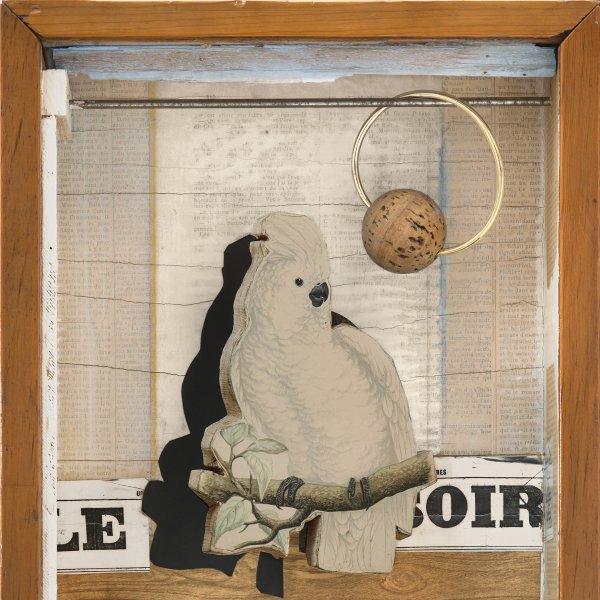
Juan Gris Cockatoo No. 4
ca. 1953 - 1954
Joseph Cornell
Joseph Cornell
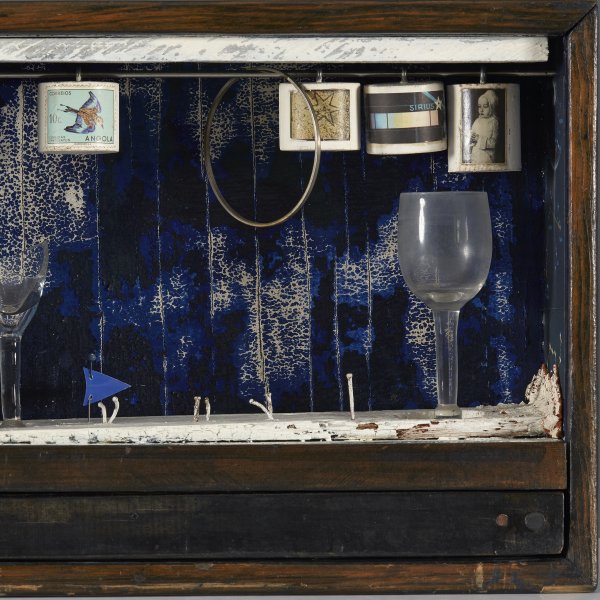
Blue Soap Bubble
1949 - 1950
  • Private and/or didactic use
  • Commercial use
Private and/or didactic use
Express. Express, 1963
Express
Robert Rauschenberg

©

The Estate of Robert Rauschenberg/ VAGA, NY/ VEGAP, Madrid

Terms of Use

The exploitation rights of the images correspond to the Fundacion Coleccion Thyssen-Bornemisza, F.S.P. The Fundación authorizes the downloading of high-resolution images from its website for private use, use for educational and research purposes and non-commercial uses.

However, photographed works are protected by copyright. Therefore, regardless of the terms of use of the images set out below by the Foundation, it will be necessary to obtain a license from VEGAP (www.vegap.es), or from the corresponding collective management organization in the country where the work is going to be used or, where appropriate, from the holder of their rights in order to reproduce or exploit the work.

Use for educational and research purposes is understood as the non-commercial or advertising use of images in presentations, conferences, school or university work, in classes at regulated education institutions, as well as in academic publications, with a circulation of less than 1,000 copies, provided that it is non-profit.

Non-commercial use is understood as the use of the images in a context where no profit, monetary or commercial, is generated, directly or indirectly.

Any use other than those indicated above will require the prior written authorization of the Fundación.

Any request for educational and research use or for non-commercial use (including academic publications), should be directed by email to the Museum Photo Library through the email address archivo.fotografico@museothyssen.org. This department manages the worldwide distribution of the images of the works of the Museo Nacional Thyssen-Bornemisza and the management of their reproduction rights for those uses.

The user agrees to use the image of the website solely and exclusively for the purposes described above and in accordance with the following terms of use, which, however, do not apply to the reproduction of the works included in the photographs, as they are protected by Copyright.

Terms of use

  • If the image is used for reproduction, the work must be reproduced in its entirety. The image may not be manipulated, deformed, modified or altered in any way. In particular, no superposition (of images or texts) on the reproduction is allowed.
  • The reproduction of a detail or part of the work may only be made with the prior written authorization of the Fundación In this case, the credit line must include the following mention: “detail”.
  • Any total or partial reproduction of the images of the Fundación that has been previously authorized must be accompanied by the copyright text indicated by the owners or their copyright holders as well as the following mention: Provenance: Museo Nacional Thyssen-Bornemisza, Madrid”.
  • The user will send free of charge to the Museum Photo Library one (1) free copy of the edition, publication or reproduction to the following address: Archivo Fotografico, Museo Nacional Thyssen-Bornemisza, Paseo del Prado, 8 28014 Madrid, Spain.
Download image
Commercial use
Express. Express, 1963
Express
Robert Rauschenberg

©

The Estate of Robert Rauschenberg/ VAGA, NY/ VEGAP, Madrid

Terms of Use

The Photo Library of the Museo Nacional Thyssen-Bornemisza offers sale and rental service of photographic material of all the works on its Permanent Collection.

To request images or permits for commercial use in academic or research publications, that is, catalogues of other institutions, monographs and other specialized publications, you should contact the Museum's Photo Library by email at the e-mail @email.

To request images or permits for other commercial or advertising uses (general publications, merchandising, exhibitions, audio-visual works, web pages, etc.), you should contact the Museum's Commercial Archive by email at the e-mail @email.

The Photo Library and the Museum's Commercial Archive manage the worldwide distribution of images of the Museo Thyssen-Bornemisza works, as well as their reproduction rights. The applicable rates are calculated based on the nature and proposed use of the images, as well as the availability of the requested image.

Requests for scans or new photographs will be reviewed on a case-by-case basis. Once approved, an additional fee will apply. Re-photographing a work will require a minimum of six weeks to complete.

However, photographed works are protected by copyright. Therefore, regardless of the terms of use of the photographs set out below by the Foundation, it will be necessary to obtain a license from  VEGAP (Visual Entidad de Gestión de Artistas Plásticos www.vegap.es) or from the corresponding collective management organizations in the country where the work is going to be used or, where appropriate, from the holder of their rights in order to reproduce or exploit the work.

Download image
Thyssen-Bornemisza Museo Nacional

Navegación secundaria (EN)

  • #Thyssenmultimedia
  • Press
  • Corporate events
  • Tourism
  • Join our team
  • Newsletter
Instagram
Facebook
X
Youtube
TikTok
iVoox
LinkedIn

The Museo Nacional Thyssen-Bornemisza would like to thanks for the collaboration of:

Fundación Mutua Madrileña Master Card Comunidad de Madrid
©2026 Thyssen-Bornemisza National Museum

Menú al pie (EN)

  • Legal terms
  • Public tenders
  • Transparency site
  • Whistleblower channel
  • Use of images
  • Accessibility and quality
  • Environment, Sustainability & 2030 Agenda
  • Contact
Ministry of Culture España es cultura | Spain is culture. The website promoting Spanish culture Paisaje de la Luz | Paseo del Prado y Buen Retiro. Paisaje de las Artes y las Ciencias
Certificación de Conformidad con el Esquema Nacional de Seguridad. Categoría Media. RD 311/2022