Les Vessenots in Auvers
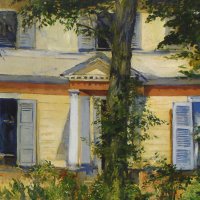
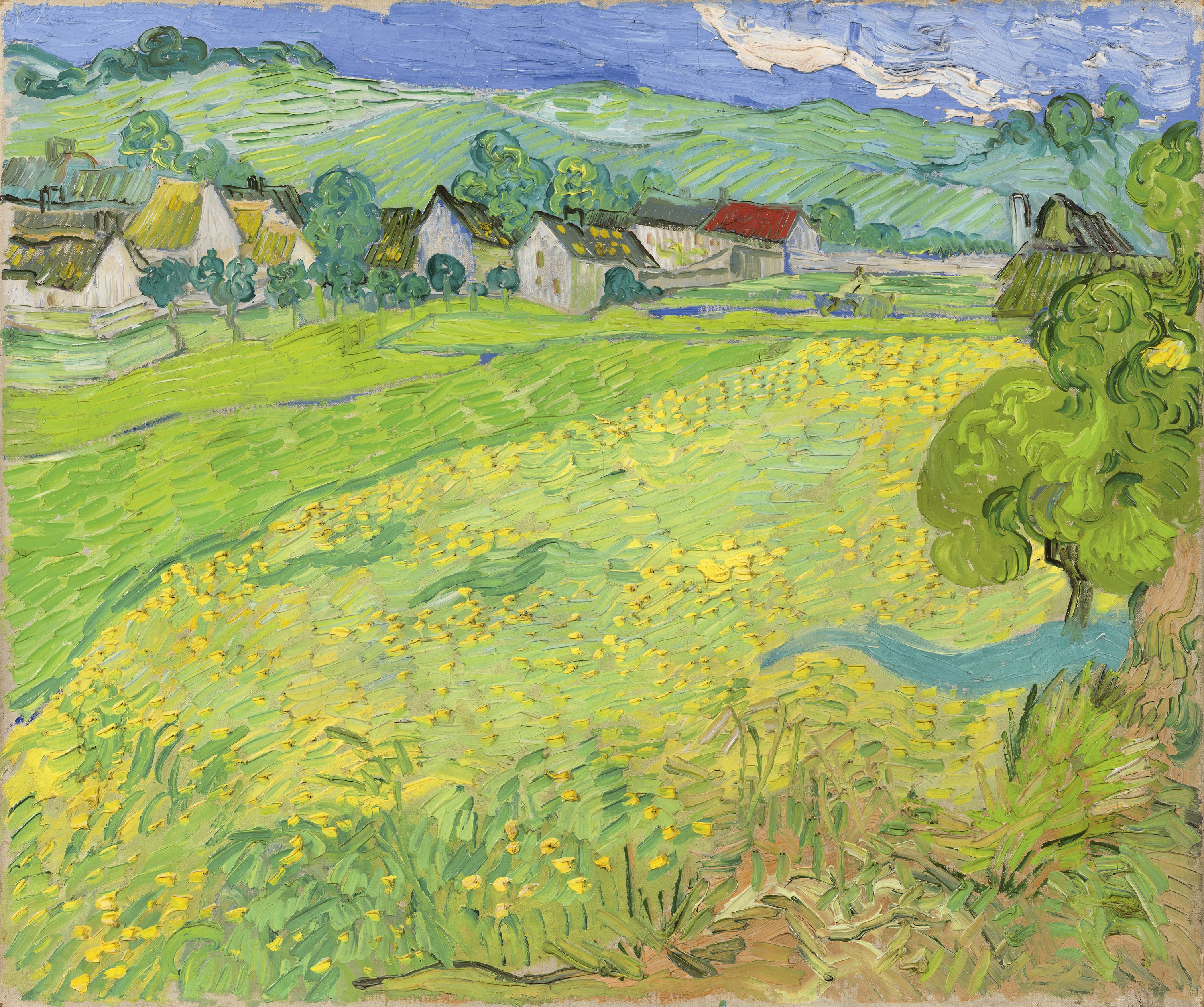
This landscape of ‘Les Vessenots,’ on the outskirts of Auvers, shows a group of old country cottages placed just below a raised horizon; further down, wheat fields stretch to the bottom of the canvas, broken only by a few swaying trees. The narrow colour range—mainly bright greens and yellows—and the nervous, agitated brushstrokes following a repetitive, undulating rhythm, are characteristic of the artist’s work in his final period.
Van Gogh painted a large number of landscapes in the weeks before his death, always working outdoors. By that time, he was prey to all manner of conflicting moods: the vast expanses of fertile cropland gave him a sense of freedom, but at the same time intensified the feeling of melancholy and loneliness which would eventually lead to his suicide.
On 20 May 1890 Vincent van Gogh left Paris for Auvers-sur-Oise, a small village thirty-five kilometres north of Paris where other artists like Charles Daubigny and Paul Cézanne had sojourned before him and the place of residence of Doctor Paul-Ferdinand Gachet, the physician and art collector to whom Theo van Gogh entrusted the care of his brother Vincent’s health at the recommendation of Camille Pissarro. Despite lasting scarcely two months, the Auvers period was extremely productive. During what would the last weeks of his life, Vincent painted a few portraits and numerous landscapes including “Les Vessenots, ” the area of Auvers where Doctor Gachet, the first owner of the painting, lived.
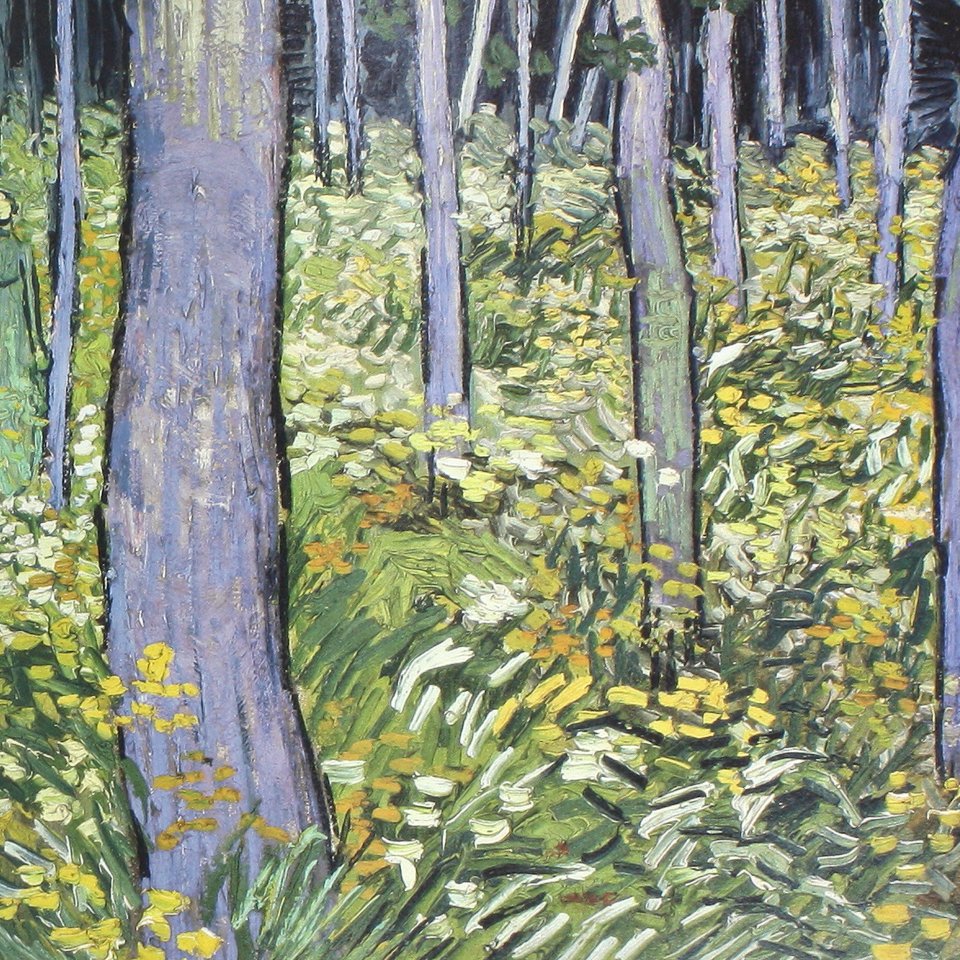
As in other paintings from this final period, the artist combines a composition with a high horizon featuring a group of old country houses, some with thatched roofs, vast cornfields and a few swaying trees, with a reduced palette of luminous greens and yellows and agitated, nervous brushstrokes applied in an undulating, repetitive pattern. As Guillermo Solana noted in his study on the painter’s final period, the high horizon is what distinguishes these Auvers landscapes from those of possible forerunners like Daubigny and George Michel and from seventeenth-century Dutch painting and furthermore constitutes “a general characteristic of the advanced landscape painting of the second half of the nineteenth century.”
Although Van Gogh painted from life, with the subject before him, he shows us an absolutely personal vision and gives visual form to his impressions of what he gazes at. The fertile meadows around Auvers aroused conflicting feelings in him: the sensation of freedom inspired by these broad fields contrasted with the melancholy and feeling of loneliness they brought on. It would be one of these corn fields that he repeatedly painted during the final weeks where, overwhelmed by contradictory feelings and suffering another relapse in his deep-seated depression, Van Gogh put an end to his eventful existence by shooting himself on the morning of 27 July 1890. He died alone and tormented although, as we read in the last letter he wrote to his brother, he retained a glimmer of hope in his oeuvre up until the end: “the truth is we can only make our pictures speak.”
Paloma Alarcó