
Open Windows 14
With the support of:

April 2026
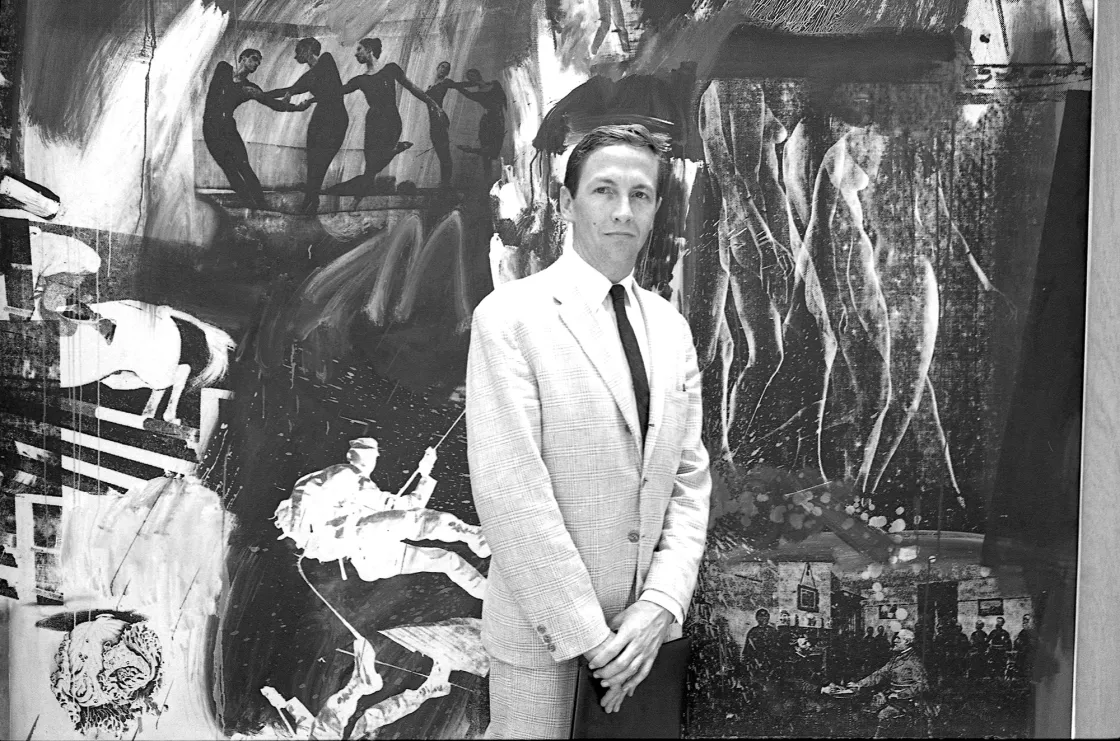
“On the Move”: Robert Rauschenberg’s Silkscreen Paintings
Richard Meyer
In June 1964, Robert Rauschenberg (Port Arthur, Texas, 1925 Captiva Island, Florida, 2008) won the International Grand Prize in Painting at the 32nd Venice Biennale. The award set off something of a panic among European critics who took it as proof of the preeminent position and vulgarizing effect of American art on the world stage.

Robert Rauschenberg: Express, Inside + Outside the Studio
Marta Ruiz del Árbol
Express (1963) enjoys a central position in the layout of Room 48 of the Museo Nacional Thyssen-Bornemisza, after the Abstract Expressionist pictures and before those of the Pop artists. This large canvas—the only one by Robert Rauschenberg (Port Arthur, Texas, 1925–Captiva Island, Florida, 2008) in the permanent collection—not only reflects the shift that was taking place in American art of the 1960s but also connects with many of the concerns that shaped the artist’s career: his relentless urge to experiment, the disappearance of the boundaries between disciplines, and his interest in collaborative work.
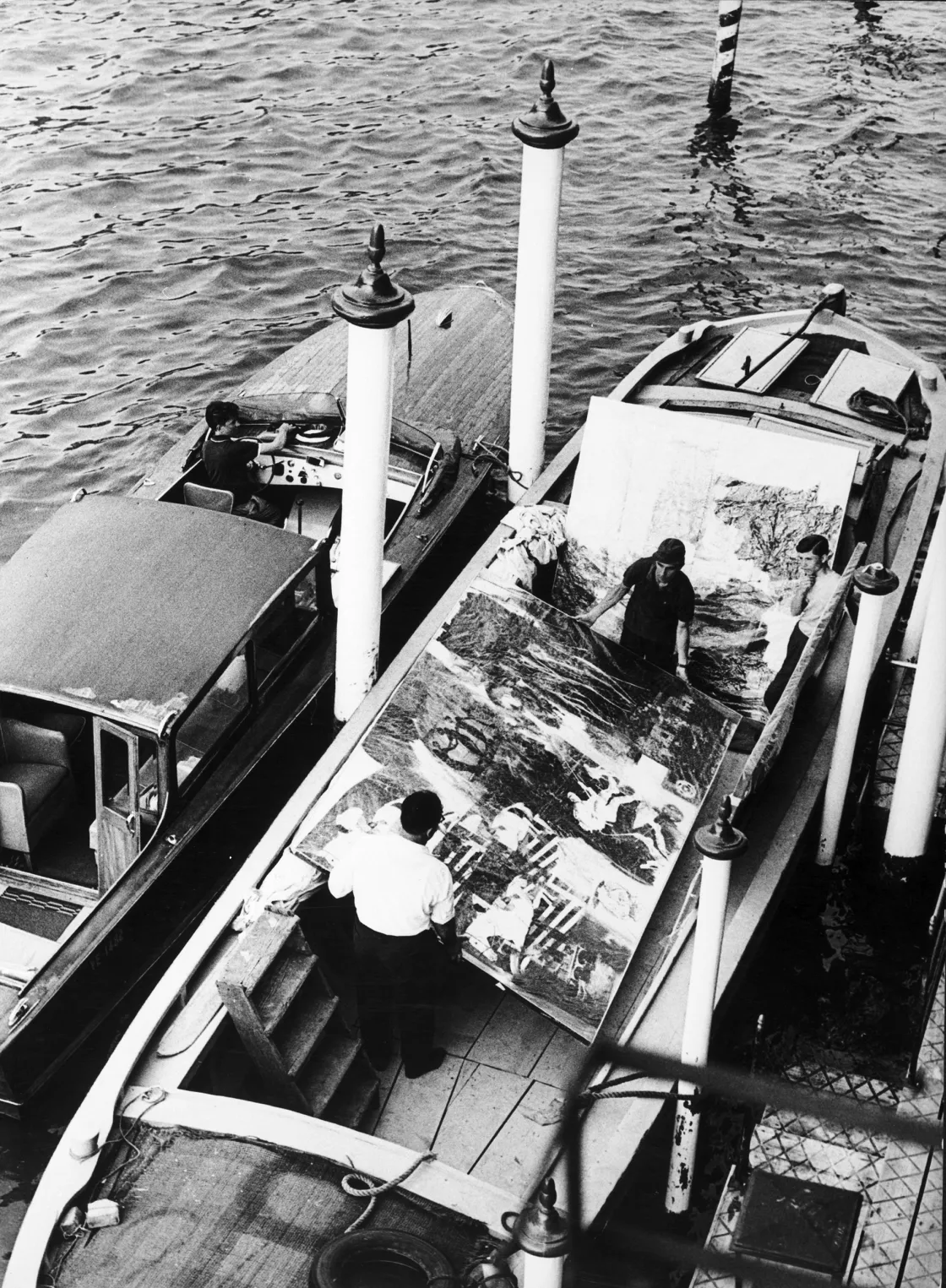
Robert Rauschenberg in Venice: Critical Debate and Cultural Diplomacy
Paloma Alarcó
On June 19, 1964 Robert Rauschenberg was officially announced as the winner of the International Grand Prize in Painting at the 32nd Venice Biennale, and the Italian education minister Luigi Gui presented him with the accolade on the same day. He was the first young artist in his thirties to be awarded it instead of the usual accomplished master.
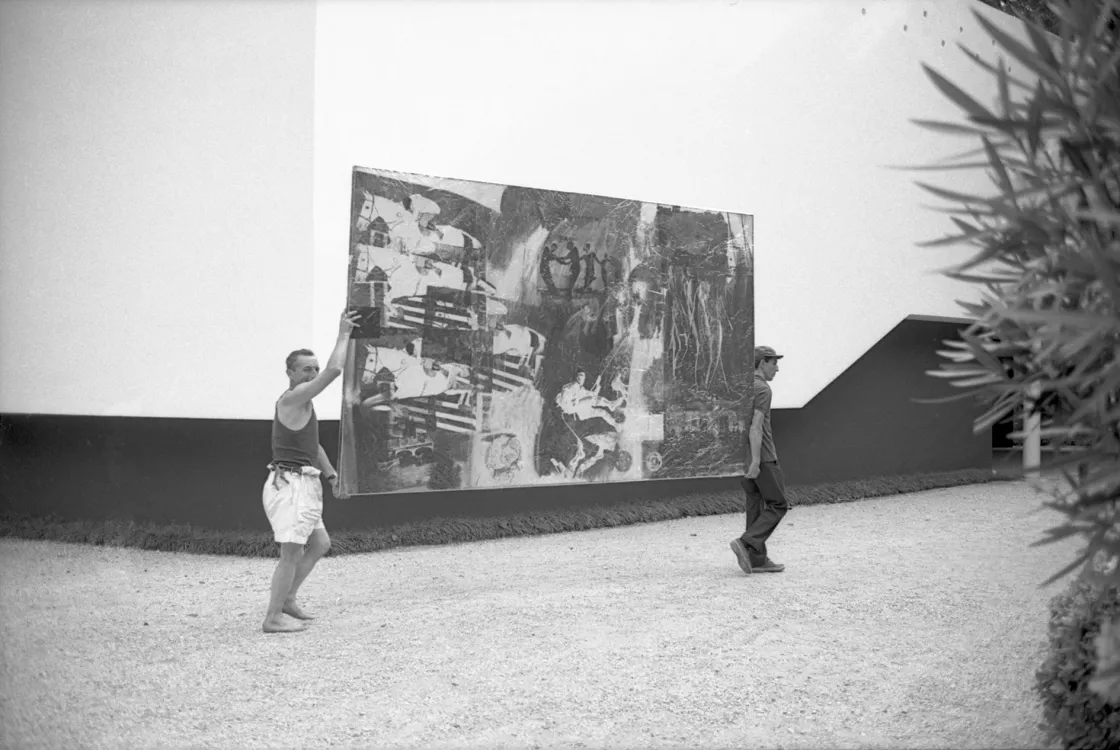
Moving with Express
Carmen Cortizas
In a photograph taken by Ugo Mulas in 1964, behind the foliage of the Giardini della Biennale two unidentified men can be seen carrying Robert Rauschenberg’s Express (1963), one of the three works hastily transported to the U.S. Pavilion shortly before the announcement of the International Grand Prize in Painting at the 32nd Venice Biennale.