The Freudian Universe of Dalí
With the collaboration of:


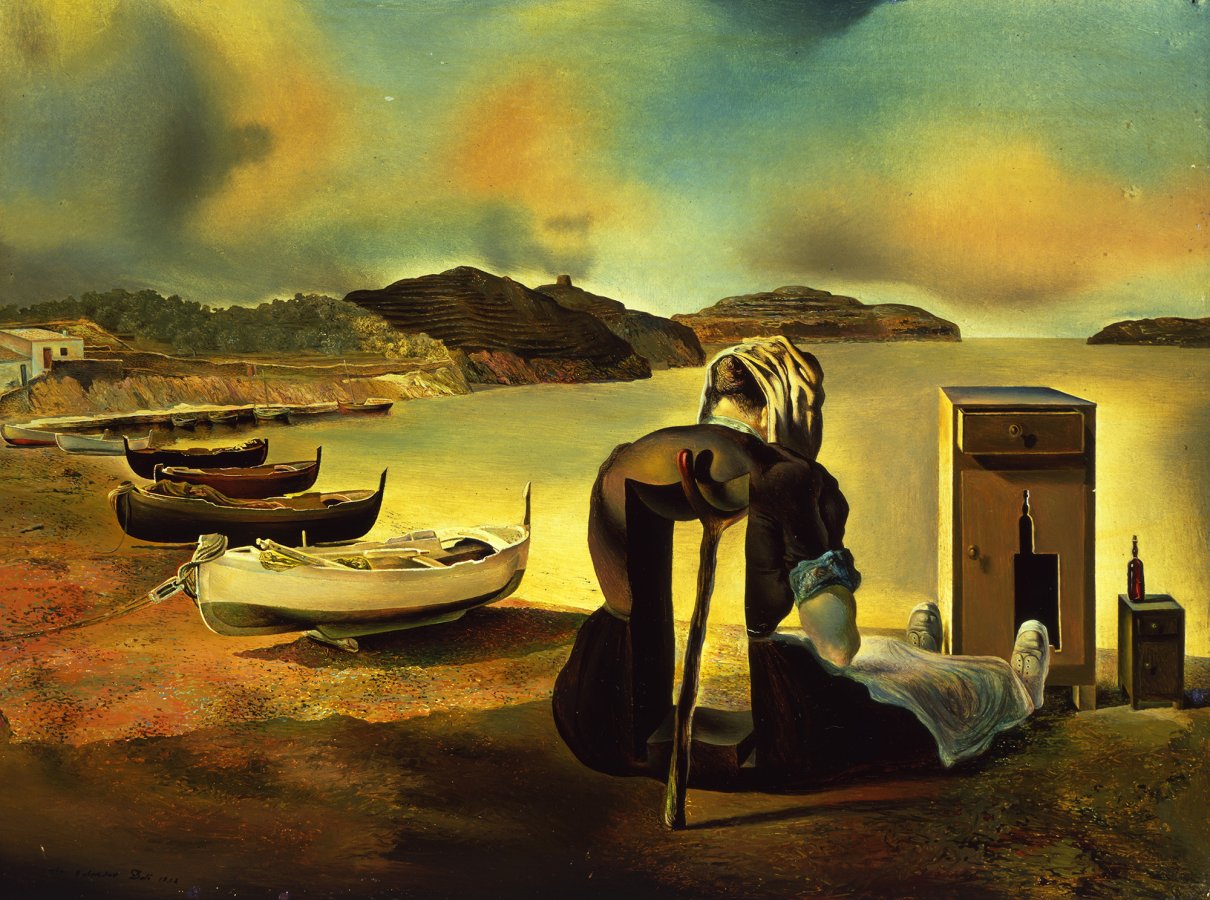
The relationship between the work of Salvador Dalí and the writings of Sigmund Freud is one of the key issues that articulate the artist’s visual aesthetic. The circumstances of Dalí’s childhood and adolescence proved a fertile breeding ground for this relationship, which eventually became little less than an obsession and culminated in the meeting between the two men in 1938, when Freud was living in exile in London.
Dalí had access to translations of Freud's work from the early 1920s when he was living at the Residencia de Estudiantes in Madrid. From 1926 onwards his work became increasingly linked to the aesthetic of Surrealism, itself inspired by Freud. He made a decisive contribution to the movement with his “paranoiac-critical method”, developed from his reading of Freud’s work. Following the London meeting, Freudian elements remained notably evident during his so-called “mystical-nuclear” period.
With the present exhibition, curated by Jaime Brihuega, the Museo Thyssen is aiming to shed new light on Salvador Dalí’s heterogeneous and prolific output. The Catalan artist's fascination with the writings of Freud and their famous meeting in 1938 constitute the guiding thread of the exhibition, which proposes a rereading of Dalí’s entire career, from the complex family background of his early years to his late work produced in Catalonia.
The exhibition is divided into seven sections, arranged chronologically and linked to key chapters in the artist’s life. Each section focuses on works related to Freudian thought and is complemented by relevant paintings and drawings by Jean Arp, Arnold Böcklin, Sigmund Freud, Max Ernst, Jean-François Millet, Pablo Picasso, Santiago Ramón y Cajal, Julio Romero de Torres, Gino Severini and Yves Tanguy, among others.
- Monday: closed
- From Tuesday to Friday and Sunday: 10.00 - 19.00
- Saturday: 10.00 - 23.00 (free access from 21.00 to 23.00 thanks to Thyssen Nights with Uber).
Christmas opening hours:
24 and 31 December: 10.00 - 15.00
25 December and 1 January: museum closed.