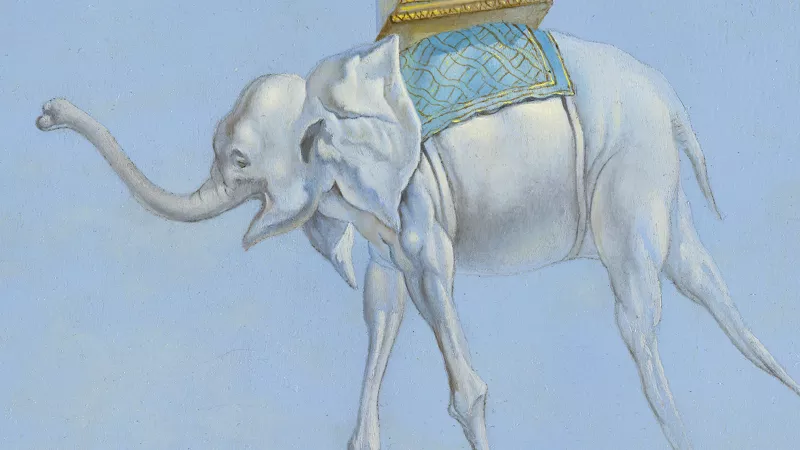
Dalí and Freud: works and highlights of the exhibition
Freud's influence on the works of Salvador Dalí
What was the relationship between Salvador Dalí and Sigmund Freud? How did the ideas of psychoanalysis influence the surrealist painter’s work?
The exhibition The Freudian Universe of Dalí explores the artist’s fascination with Freud’s ideas and the meeting the two had in London in 1938. Building on this connection, it takes viewers on a journey through Dalí’s career to uncover new links between his life, his work, and the imagination that made him one of the most unique figures in 20th-century art.
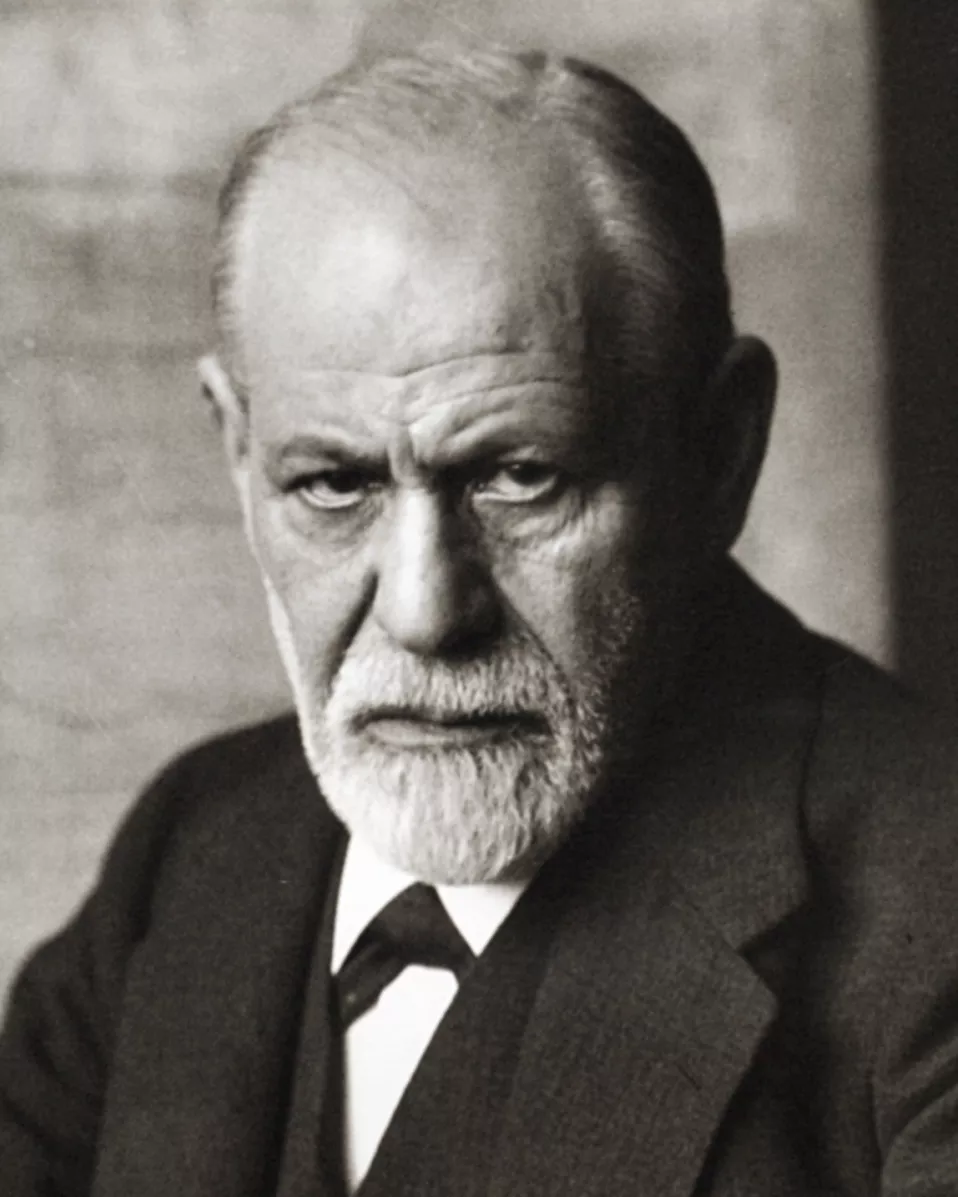
1. Who was Sigmund Freud?
Sigmund Freud (1856–1939) was an Austrian physician and neurologist considered the founder of psychoanalysis, a school of thought that transformed our understanding of the human mind. His ideas about the unconscious, dreams, desires, and internal conflicts had an enormous influence on 20th-century culture and art.
Although Freud was not part of the Surrealist movement, his ideas had a profound impact on Surrealist artists, who found new forms of creativity in the unconscious and the world of dreams. Among them, Salvador Dalí developed a particular fascination with the psychoanalyst’s ideas.
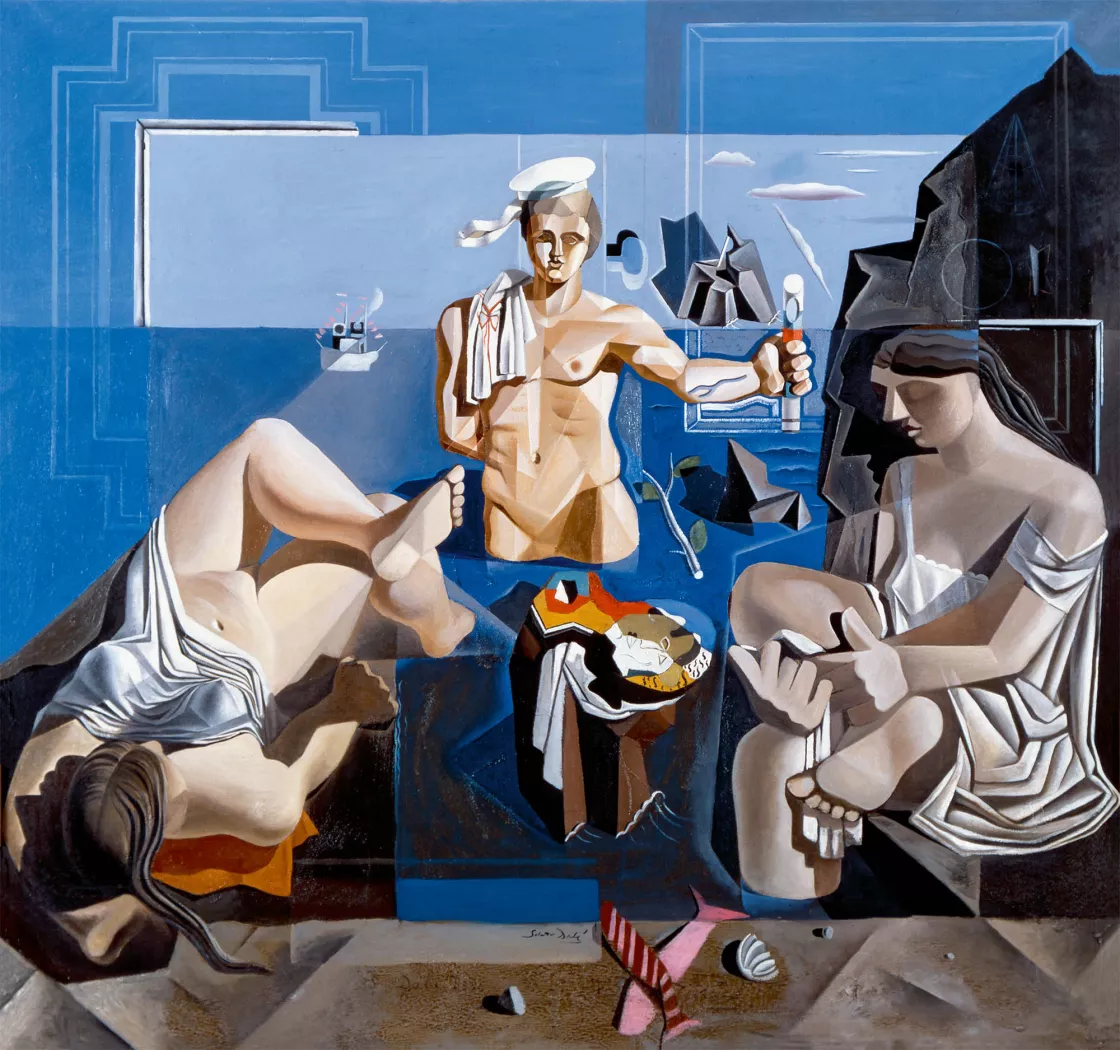
2. How did Dalí learn about Freud's ideas?
Dalí came across Freud’s writings in the early 1920s, whilst staying at the Residencia de Estudiantes in Madrid. The psychoanalyst’s theories aroused a deep fascination in him and offered him new ways of exploring the unconscious, dreams and desires. This interest remained with the artist for much of his career and would eventually become one of the threads linking the different stages of his work.
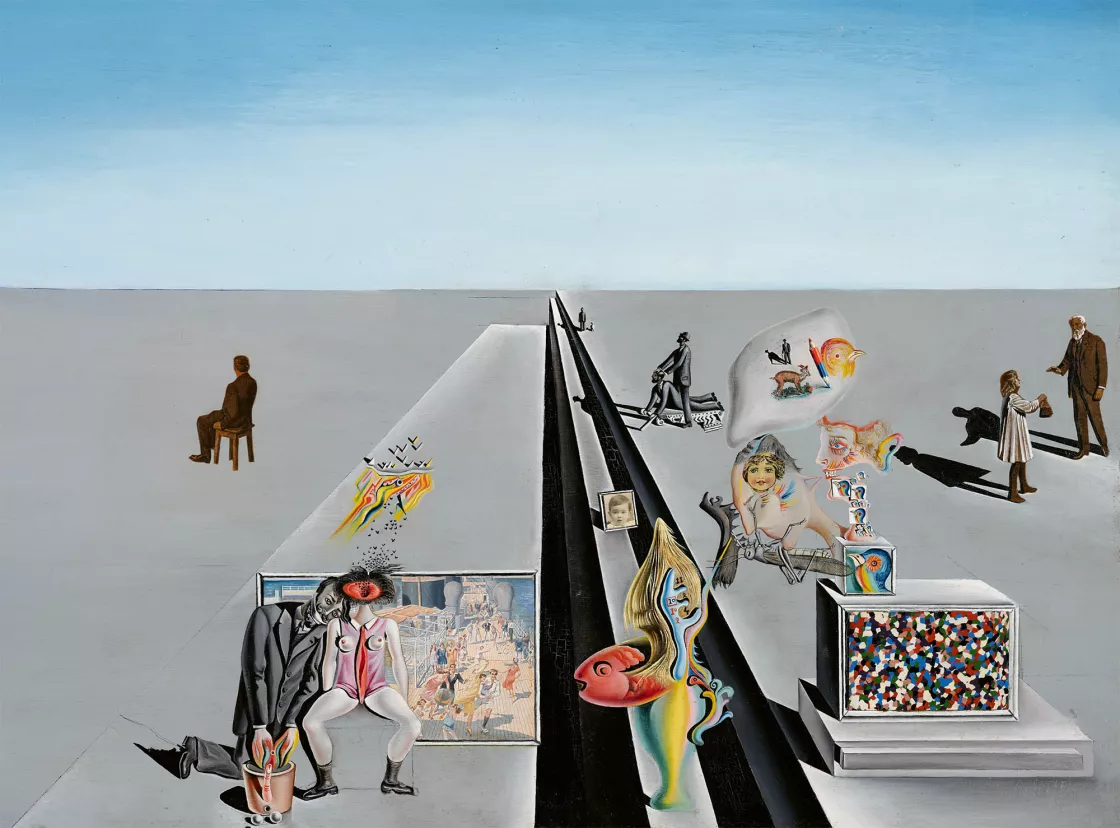
3. Dalí and his approach to Surrealism
Surrealism was an artistic and literary movement that emerged in Paris in the 1920s, seeking to explore the unconscious, dreams and the imagination beyond the bounds of reason. Led by André Breton, it was significantly influenced by Freud’s ideas.
Dalí gradually moved closer to the Surrealist aesthetic from the mid-1920s onwards and, in 1929, came into contact with Breton and the Surrealist group in Paris. From then on, he developed his own artistic language based on dreamlike images, unexpected associations and elements drawn from his inner world.
4. What is Dalí’s paranoid-critical method?
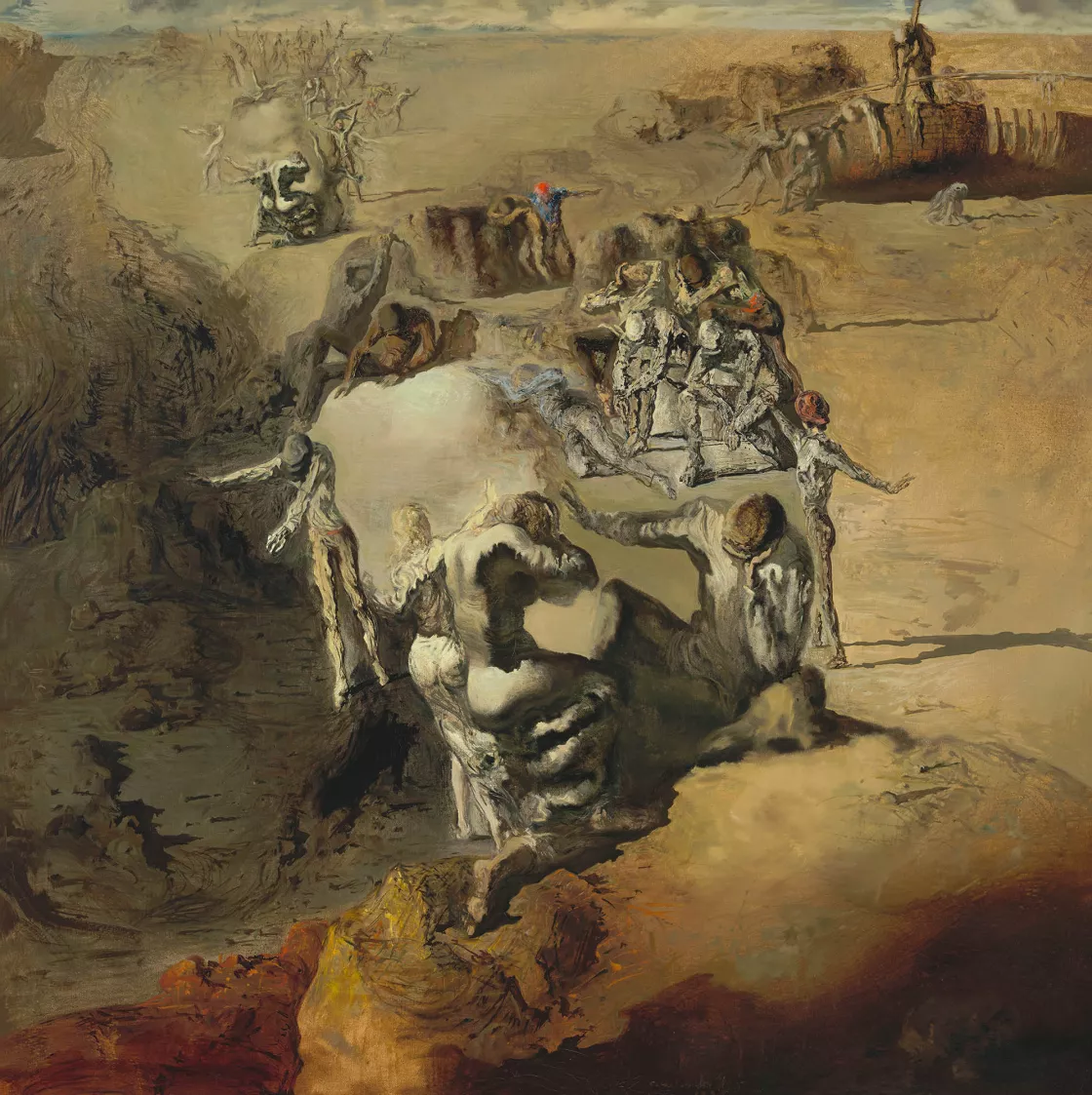
The paranoid-critical method was one of Dalí’s main contributions to Surrealism. Developed on the basis of his readings of Freud, it was a way of interpreting reality from the unconscious, seeking associations and images that might have different meanings.
This method enabled Dalí to transform a single image into several, depending on the viewer’s perception. This gave rise to some of the most characteristic images in his Surrealist work, in which the real and the imagined become intertwined.
5. How did Freud influence Dalí’s art?
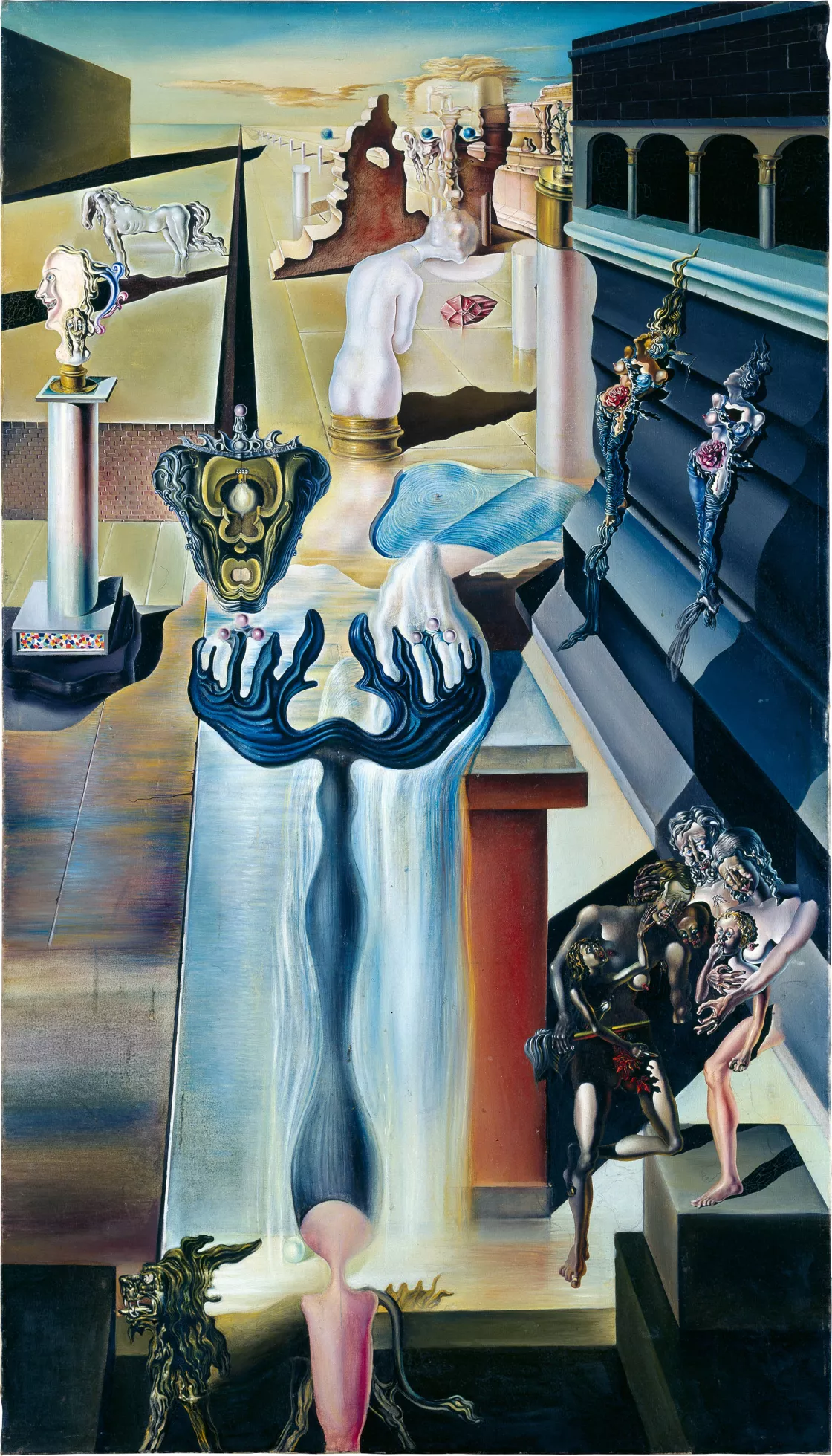
Freud’s ideas offered Dalí new ways of exploring the unconscious, dreams and desires through art. This influence was particularly significant during his Surrealist period, although references to the psychoanalyst’s thinking continued to feature at various points throughout his career. The exhibition draws precisely on this relationship as one of the threads that link Dalí’s life and work.
6. Did Dalí and Freud ever meet?
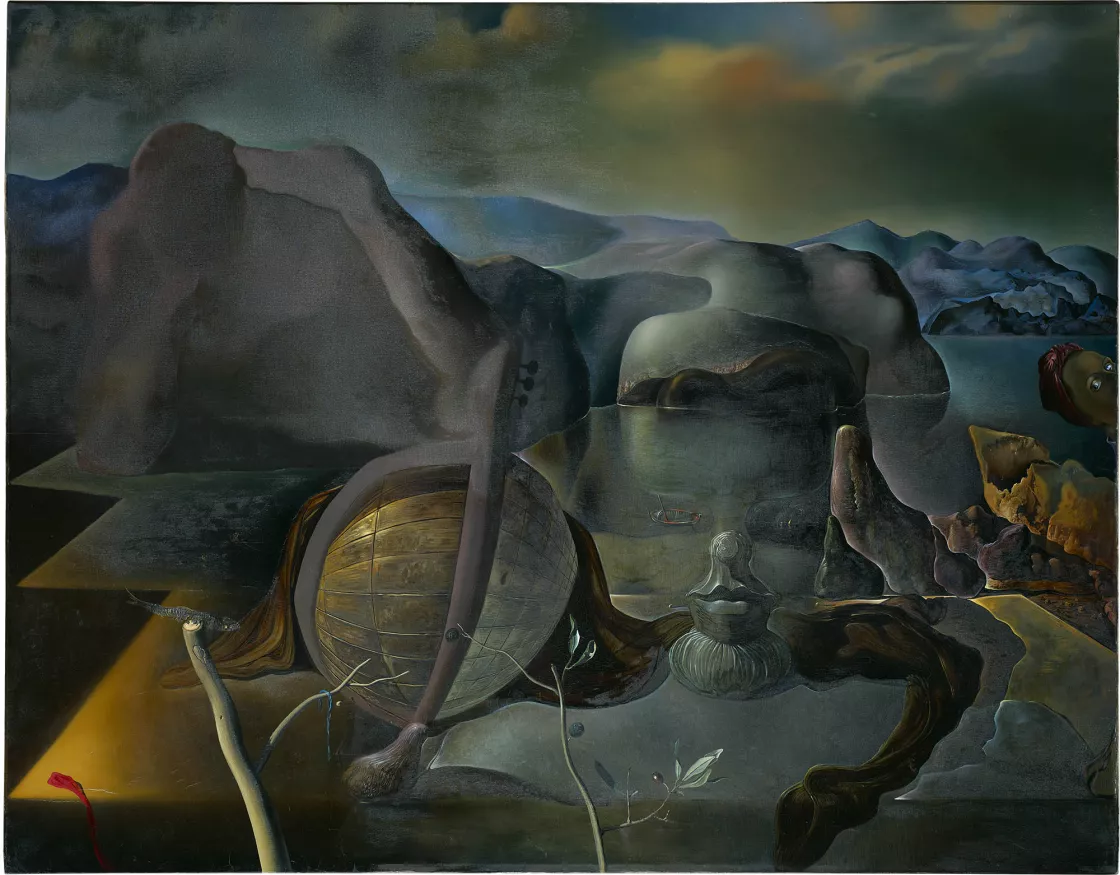
Yes, Dalí and Freud met in person in London in 1938, whilst the psychoanalyst was living in exile there. The meeting was particularly significant for Dalí, who had been fascinated by Freud’s ideas for years.
7. Did Freud continue to influence Dalí after that meeting?
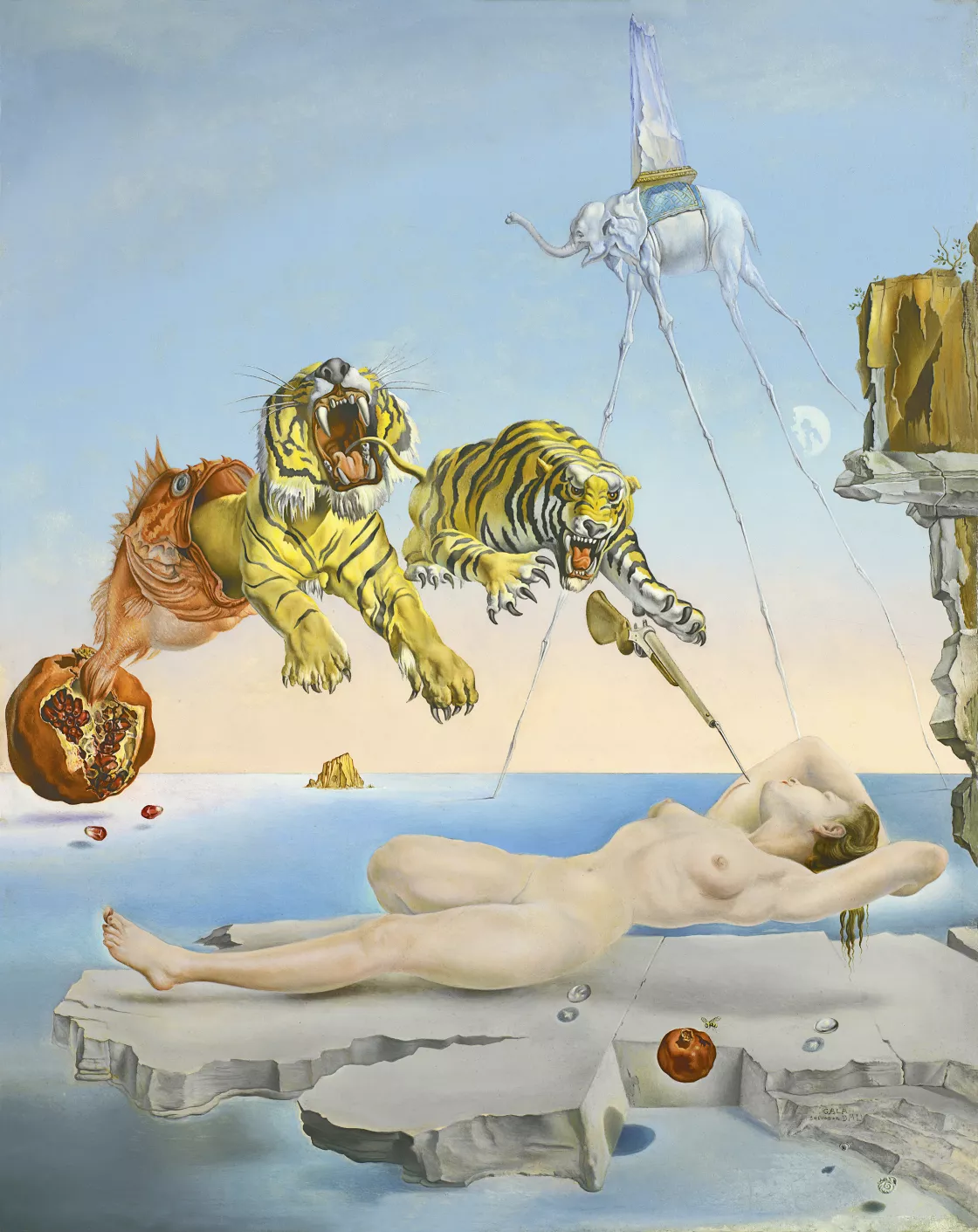
Yes, Freud’s influence did not end with that encounter. Freudian elements continued to feature in Dalí’s work in the decades that followed, even during periods when he had moved away from Surrealism. The exhibition highlights this continuity and includes works from his ‘mystical-nuclear’ period, in which these references remain evident.
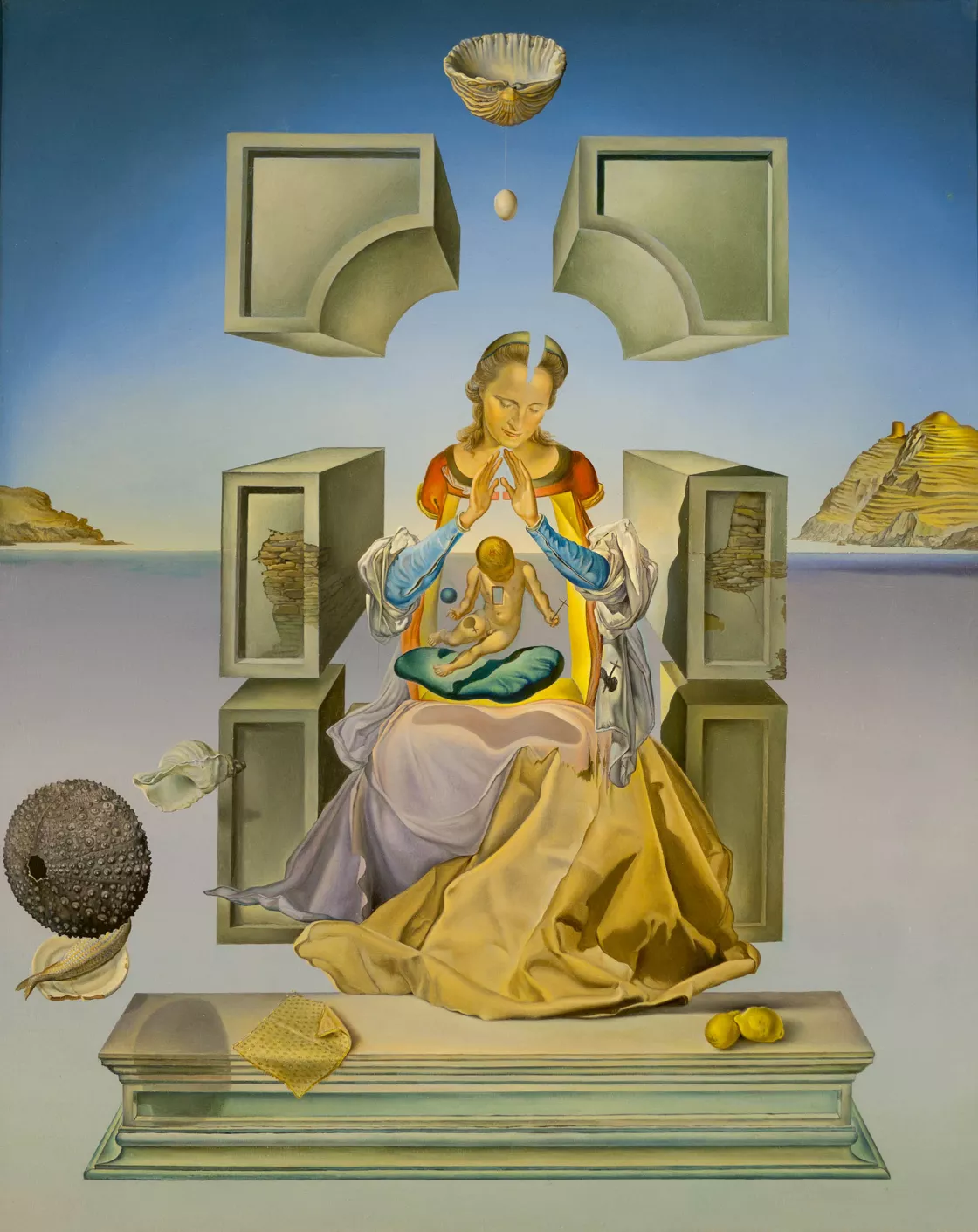
8. What is Dalí’s ‘mystical-nuclear’ period?
The ‘mystical-nuclear’ period is a late phase of his work, which began in the late 1940s, during which he combined his interest in science and nuclear physics with religious and spiritual themes. His works contain references to the structure of matter, energy and religion.
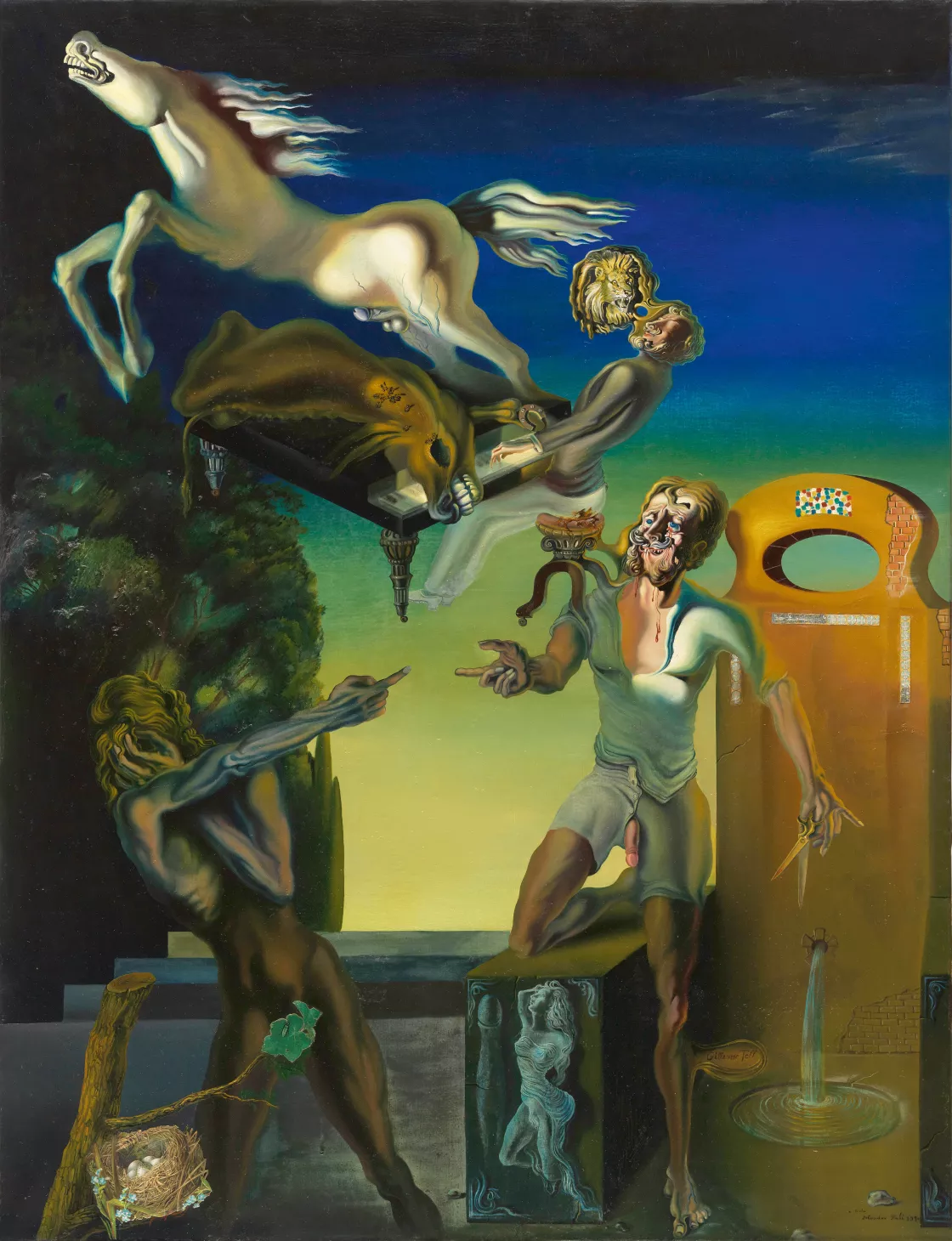
9. Which of Dalí’s works can be seen in the exhibition?
The exhibition brings together works from different stages of his career, from his early years to his latest creations in Catalonia. The exhibition allows visitors to see how his work evolved and how his references to Freud took on different forms over time. Alongside Dalí’s works, the exhibition also features pieces by other artists and figures associated with his artistic and intellectual world.
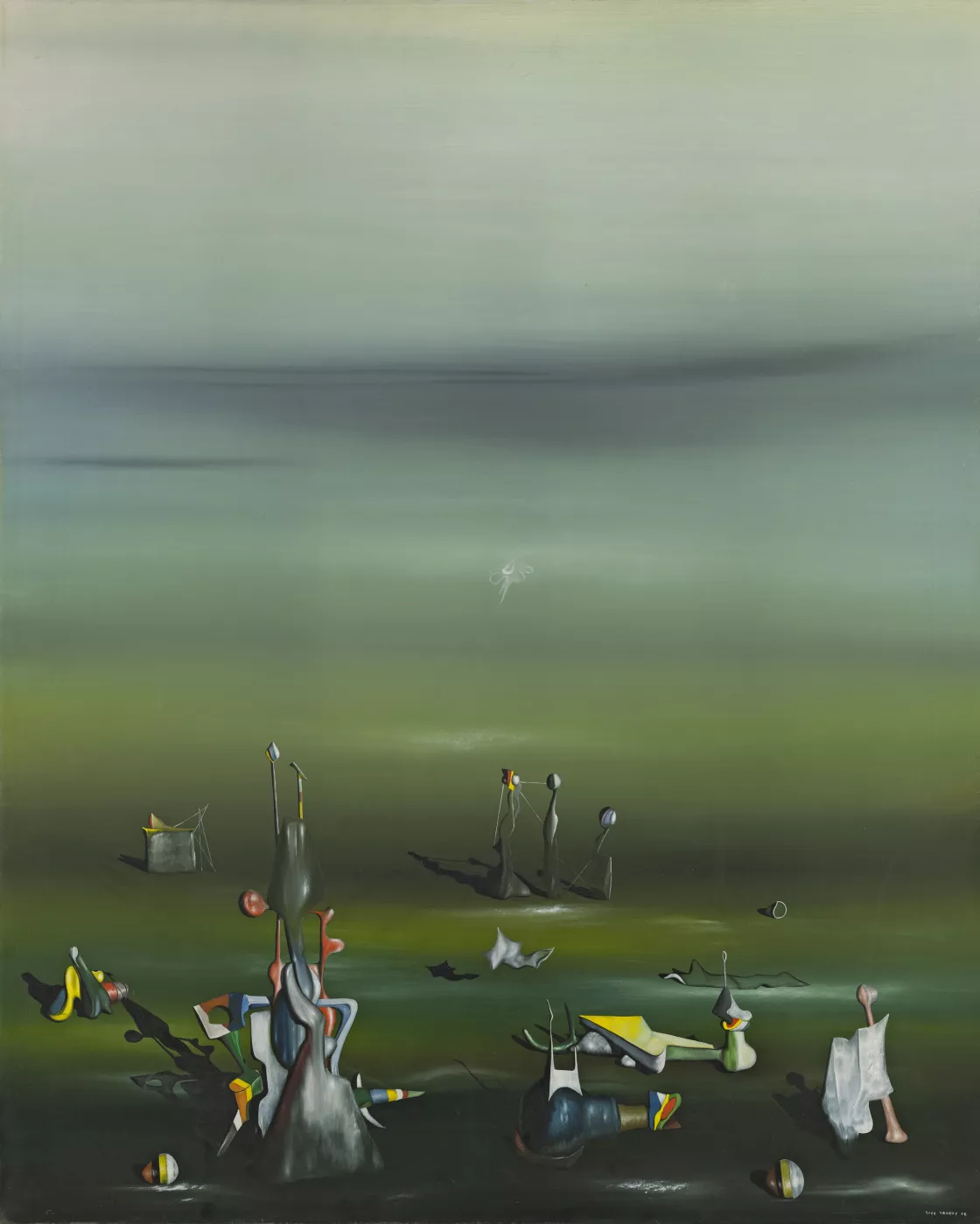
10. Other artists featured in the exhibition
The exhibition is rounded off with works by Jean-Auguste-Dominique Ingres, Gino Severini, Jean Arp, Kurt Schwitters, Federico García Lorca and Yves Tanguy, as well as by Santiago Ramón y Cajal and Sigmund Freud himself.
These pieces help to contextualise Dalí’s work and to highlight some of the influences and connections that form part of his artistic and intellectual universe.
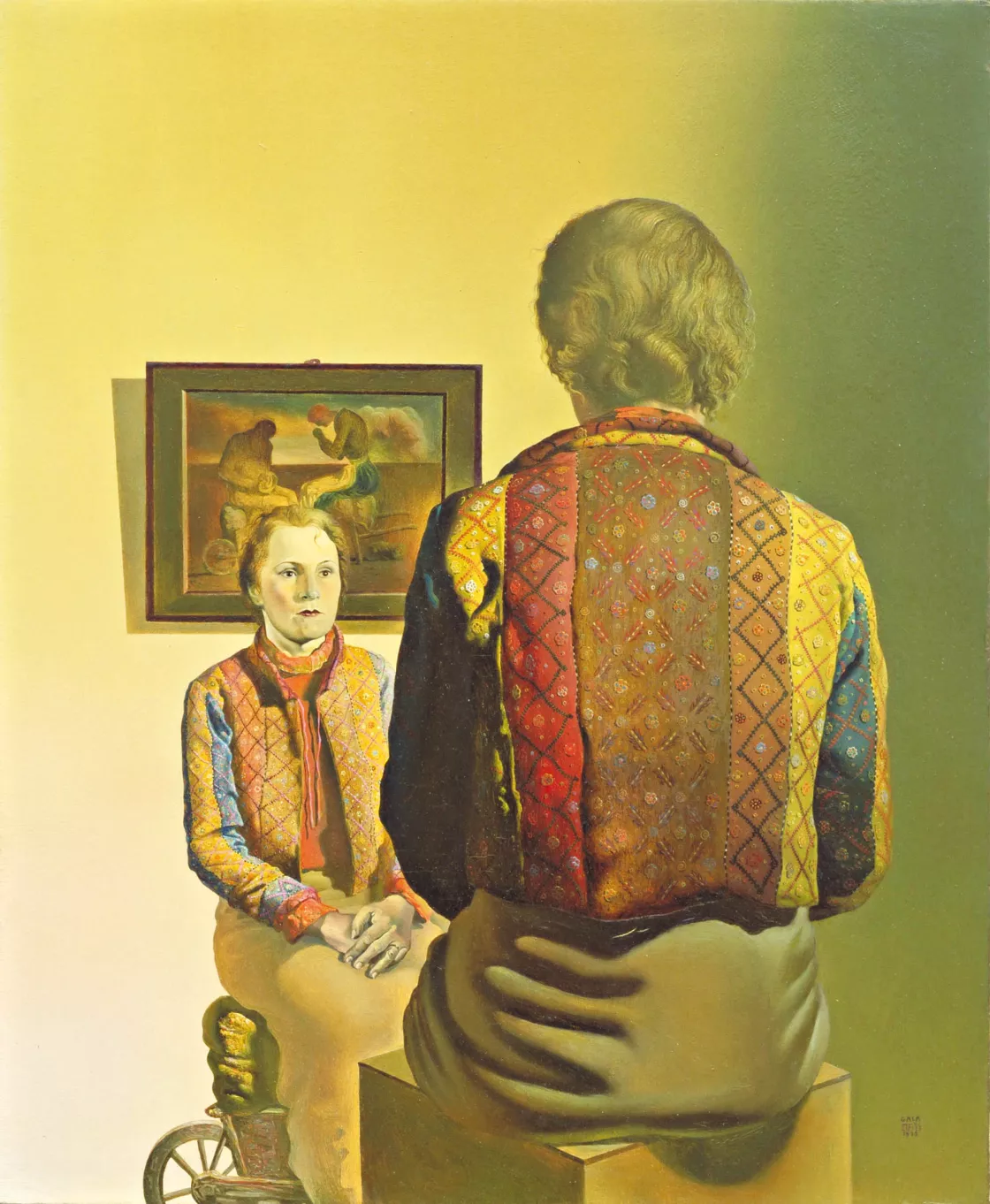
11. How the exhibition is organised
The exhibition is organised into six chronologically arranged sections, linked to key moments in the artist’s life and career.
The exhibition begins with the familiar world of Dalí’s childhood and extends to his final works in Catalonia. Throughout these stages, the exhibition uses his relationship with Freud as a central theme to offer a fresh perspective on the artist’s body of work as a whole.