
Surrealism in Art
Dreams, the unconscious and imagined worlds
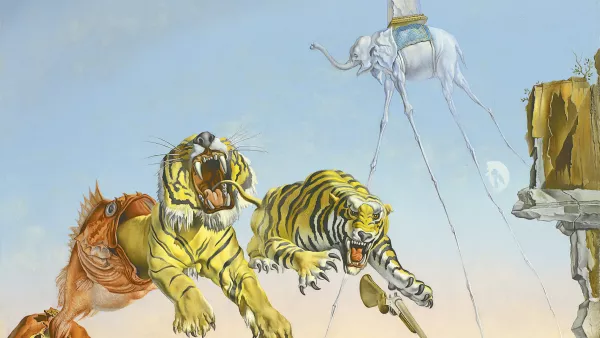
What is Surrealism?
Surrealism was a literary and artistic movement that emerged in Europe in the 1920s. Led by André Breton, author of the 1924 Surrealist Manifesto, it explored creativity linked to desires and the unconscious in order to free human beings from the constraints of instrumental reason.
Influenced by Sigmund Freud’s psychoanalysis, Surrealism drew on chance, dreams, double images, visual paradoxes, found objects and the landscapes of the unconscious to give expression to the inner world, beyond any aesthetic or formal considerations.
Surrealist works in the Thyssen-Bornemisza collection
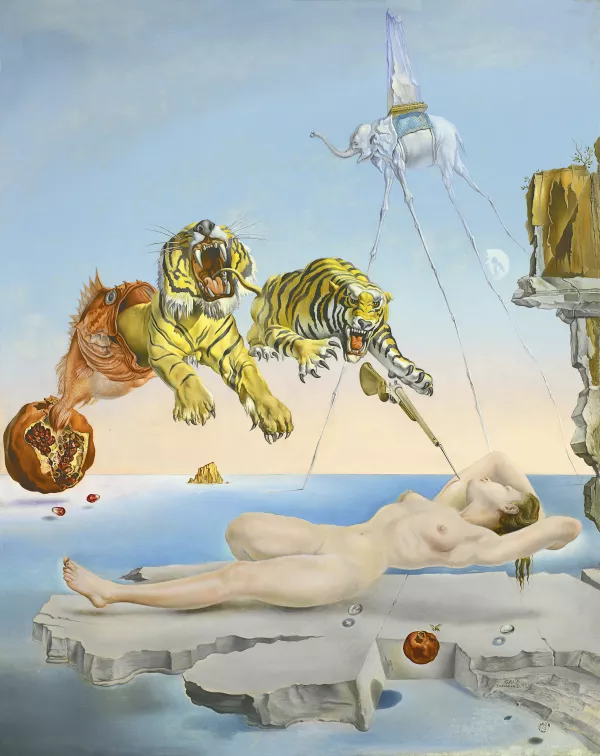
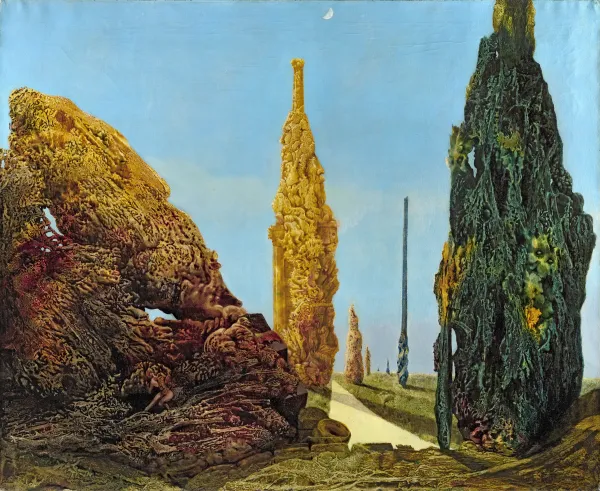
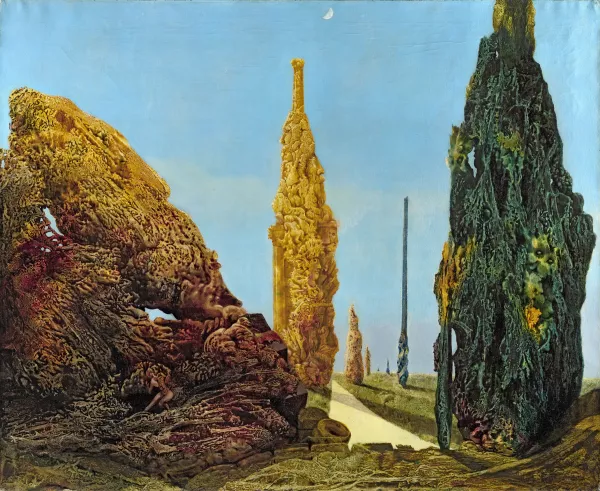
The Museo Nacional Thyssen-Bornemisza houses an outstanding collection of Surrealist art, featuring works by Salvador Dalí, René Magritte, Joan Miró, Paul Delvaux, Max Ernst, Yves Tanguy, Joseph Cornell and Roberto Matta. Its collection offers a journey through much of the movement’s history via iconic works such as One Second Before the Awakening from a Dream Provoked by the Flight of a Bee Around a Pomegranate by Salvador Dalí; The Key of the Fields by René Magritte; and Solitary and Conjugal Trees by Max Ernst.
← Click on the image to find out more about this work.
One Second Before the Awakening from a Dream Provoked by the Flight of a Bee Around a Pomegranate
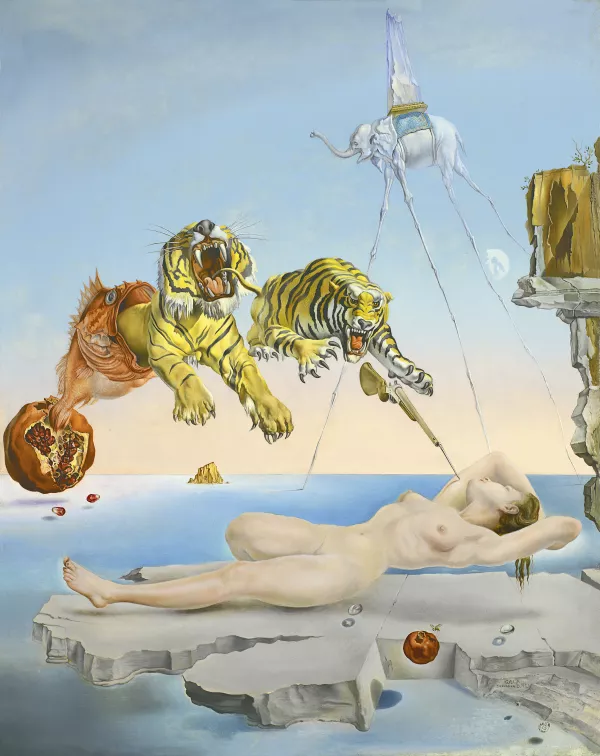
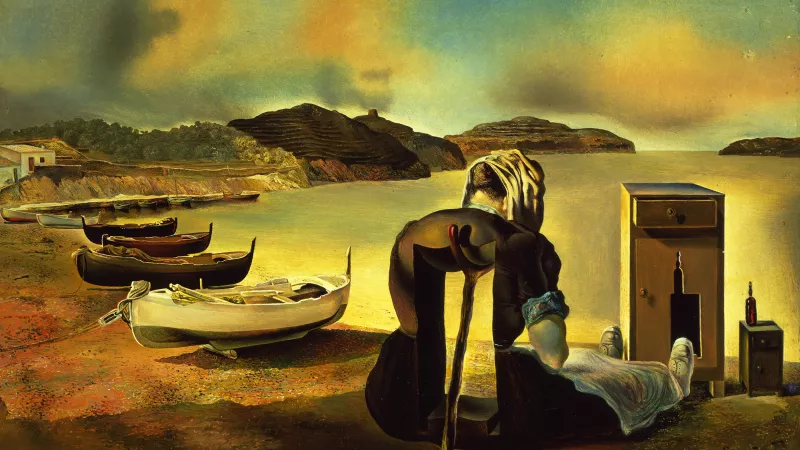
The sleeping figure of Gala, Dalí’s wife and muse, floats above a rock in a tranquil marine landscape. Beside her naked body, two drops of water, a pomegranate and a bee are also airborne. Gala’s dream, prompted by the buzzing of the bee, appears in the upper part of the canvas; there, from an exploding pomegranate shoots out a fish, from whose mouth two ferocious tigers emerge together with a bayonet which, one second later, will wake Gala from her restful sleep.
← Click on the image to find out more about this work.
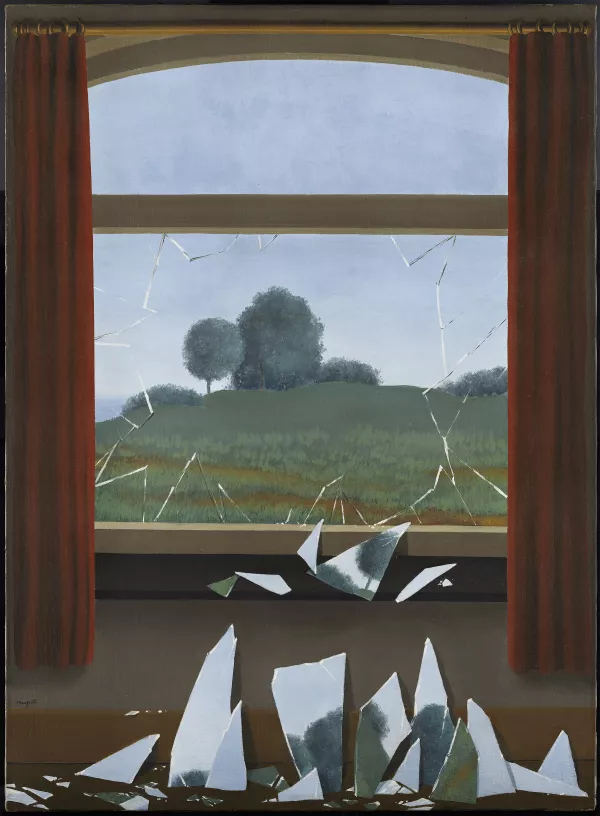
The Key of the Fields (La Clef des champs)
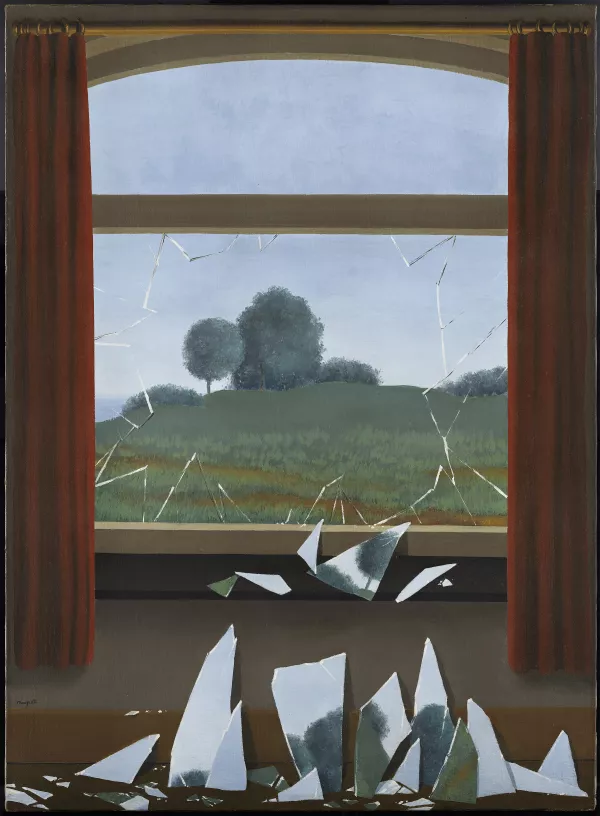
“People who look for symbolic meanings [in my work] fail to grasp the inherent poetry and mystery of the image”. For the Belgian painter René Magritte, painting harbours the mystery of the poetry of the incongruous. Despite being one of the greatest exponents of international Surrealism, this atypical Belgian Surrealist deliberately eschewed the world of the unconscious. His painting shows no trace whatsoever of Romanticism and is constructed with a methodical, almost calculating precision.
← Click on the image to find out more about this work.
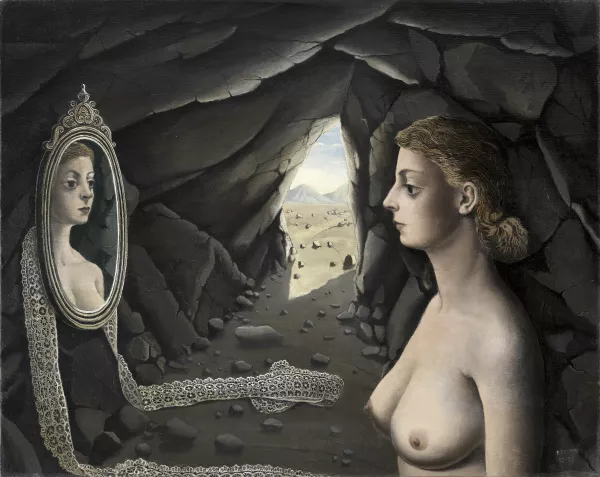
Woman in the Mirror
Delvaux’s Woman in the Mirror, which according to Suzanne Houbart-Wilkin was painted at the end of 1936, repeats a frequent composition in the painter’s output: a nude female figure before a mirror. The symbolism of the mirror is a common allegorical device in the history of western painting and for Delvaux, as Konrad Schreumann stated, “the mirror is the source of knowledge, the instrument that reveals to us our conscience.”
← Click on the image to find out more about this work.
Time and Again
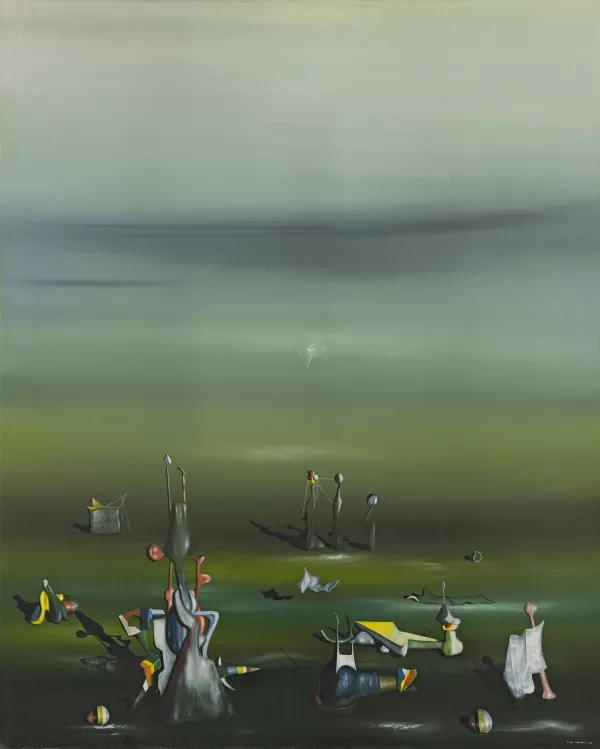
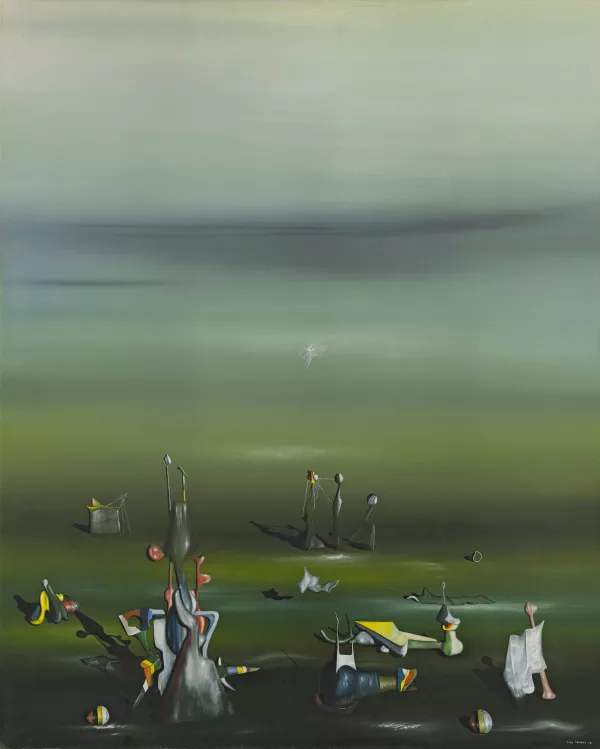
Yves Tanguy was one of the European artists who emigrated to the United States in 1939 when the European war erupted. It was there, in 1942, that he painted the canvas entitled Time and Again, which entered the Thyssen-Bornemisza collection in 1975. As in nearly all his fanciful landscapes, which invariably follow the same pattern, it features several unidentifiable isolated forms in a deserted setting, with an endless horizon.
Key themes of Surrealism
Desire and the marvellous were two of the main themes addressed by Surrealist art. Surrealist artists drew on chance, dreams, paranoia and found objects to represent that which defies logic and to explore new ways of connecting with the inner world.
These themes find different expressions in the works from the museum’s collection presented below, where desire, dreams and the marvellous open up new avenues for exploring the surrealist universe.
1. The influence of psychoanalysis
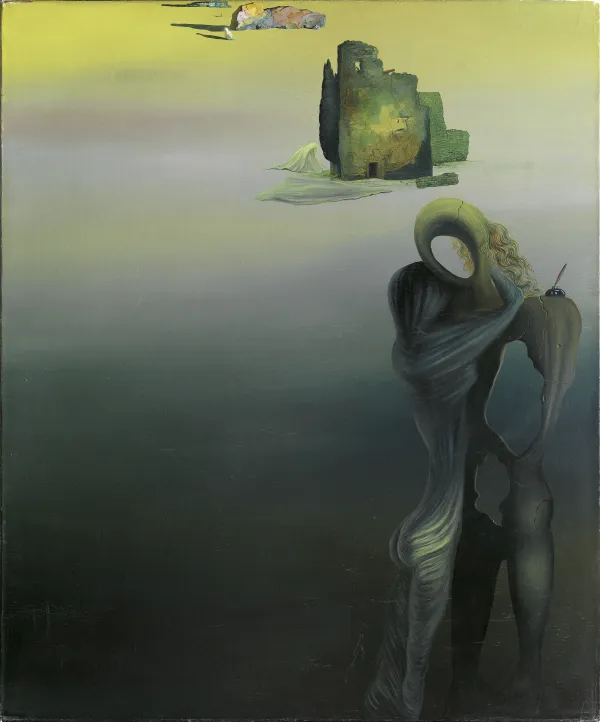
In works such as Gradiva rediscovers the Anthropomorphic Ruins (Retrospective Fantasy) and One Second Before the Awakening from a Dream Provoked by the Flight of a Bee Around a Pomegranate, Salvador Dalí – who was greatly influenced by Sigmund Freud’s theories – illustrates how the desires of the unconscious surface in our perception of the world, leading to the discrediting of reality.
2. The paradoxes of the visible
In The Key of the Fields, René Magritte transforms a seemingly everyday scene – that of a broken window – into a reflection on the paradoxes of perception and its representation, playing on the ambiguity of glass, the mirror and the painting.
3. Automatism and Primitive Forms
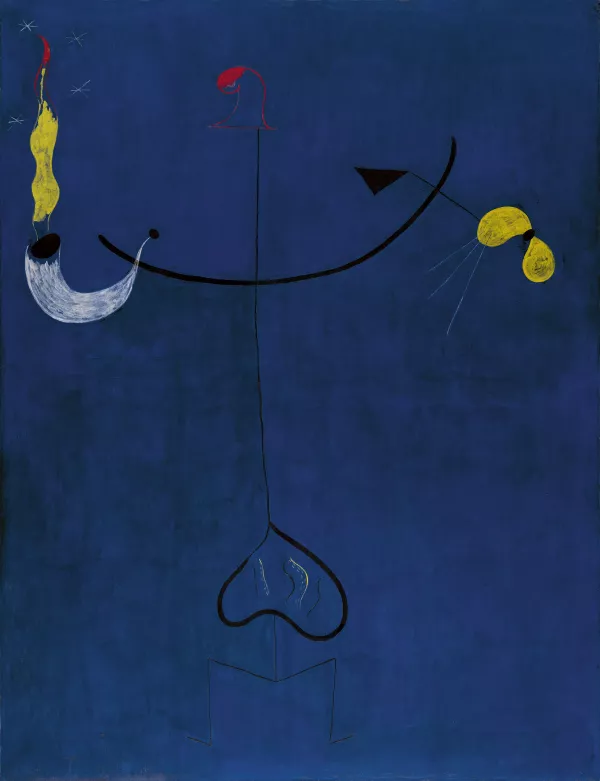
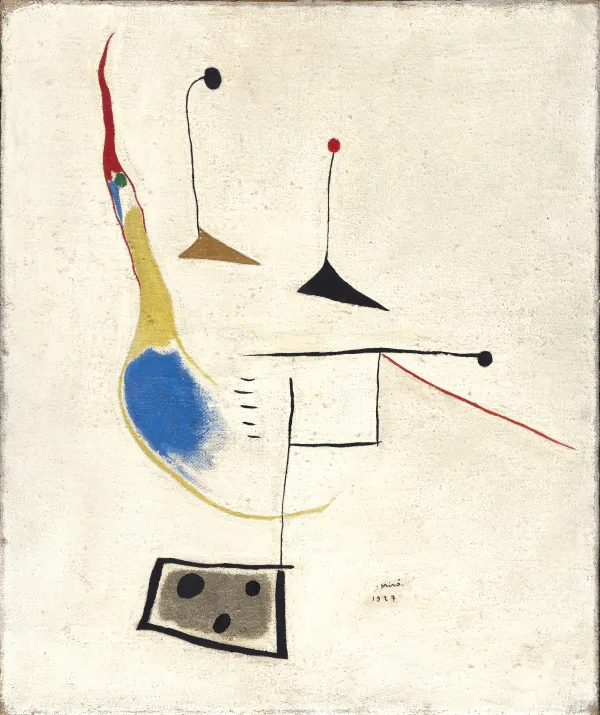
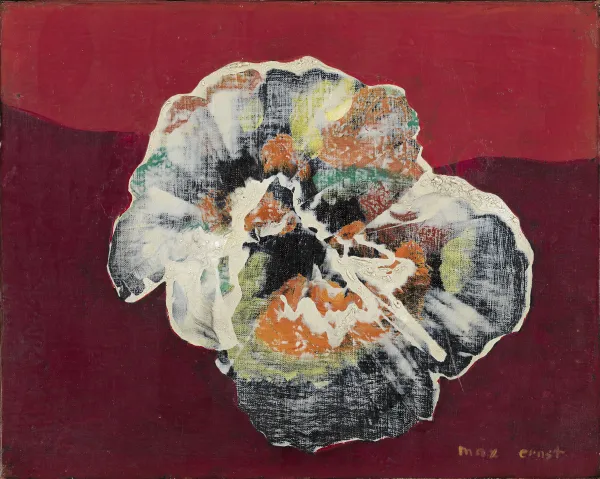
In Catalan Peasant with a Guitar and Painting on White Ground, Joan Miró transforms figures and motifs from his Catalan surroundings into a language of semi-abstract signs suspended in an indeterminate space, created through chance. Chance is also present in Max Ernst’s works Flower-Shell and Solitary and Conjugal Trees, in which motifs printed onto the canvas were subsequently completed by the artist to give rise to menacing plant-like worlds.
4. The mysterious world of dreams
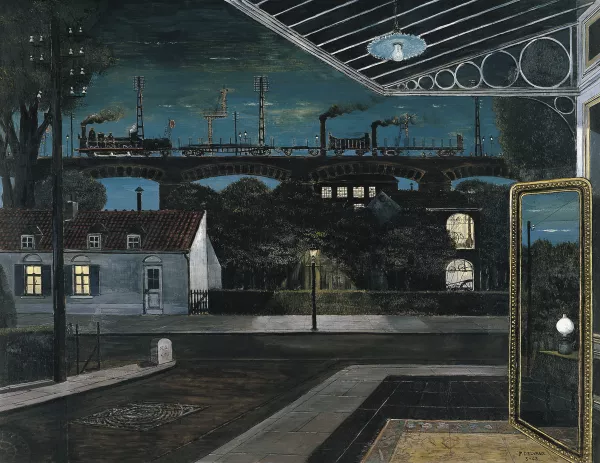
The scenes painted by Paul Delvaux evoke dreams of a time that has stood still. In Woman in the Mirror, the protagonist questions her reflection in order to discover her hidden desires. The mirror also features in The Viaduct as a gateway leading us into the inner world of memories and dreams.

5. Landscapes of the Unconscious
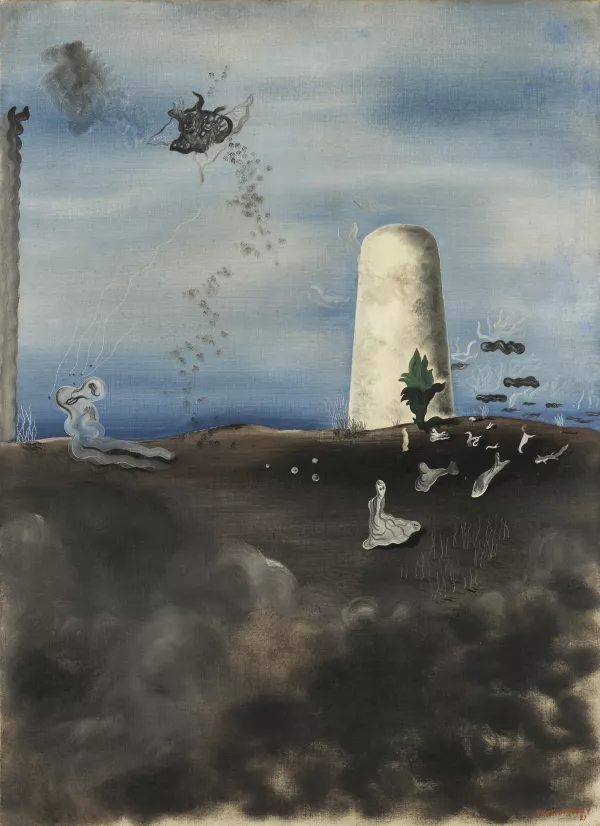
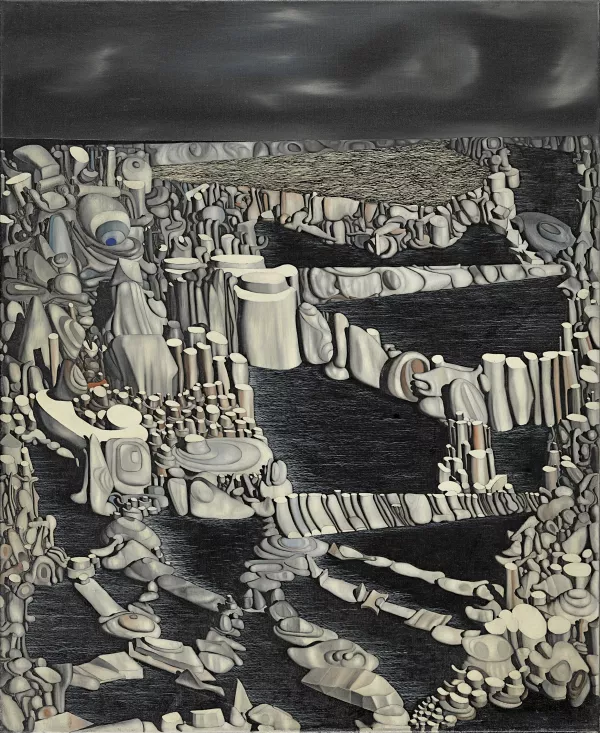
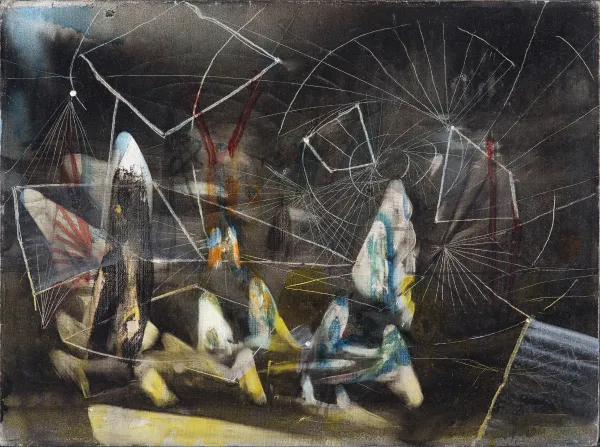
In Death Watching his Family, Yves Tanguy uses forms derived from chance to recreate a primeval landscape in northern France. In Time and Again and Imaginary Numbers, he also shows us desert landscapes filled with biomorphic or geological motifs, which transport us beyond the visible world. Roberto Matta, for his part, recreates in Untitled a sort of labyrinthine mental landscape populated by biomorphic and ghostly motifs.
6. Found objects
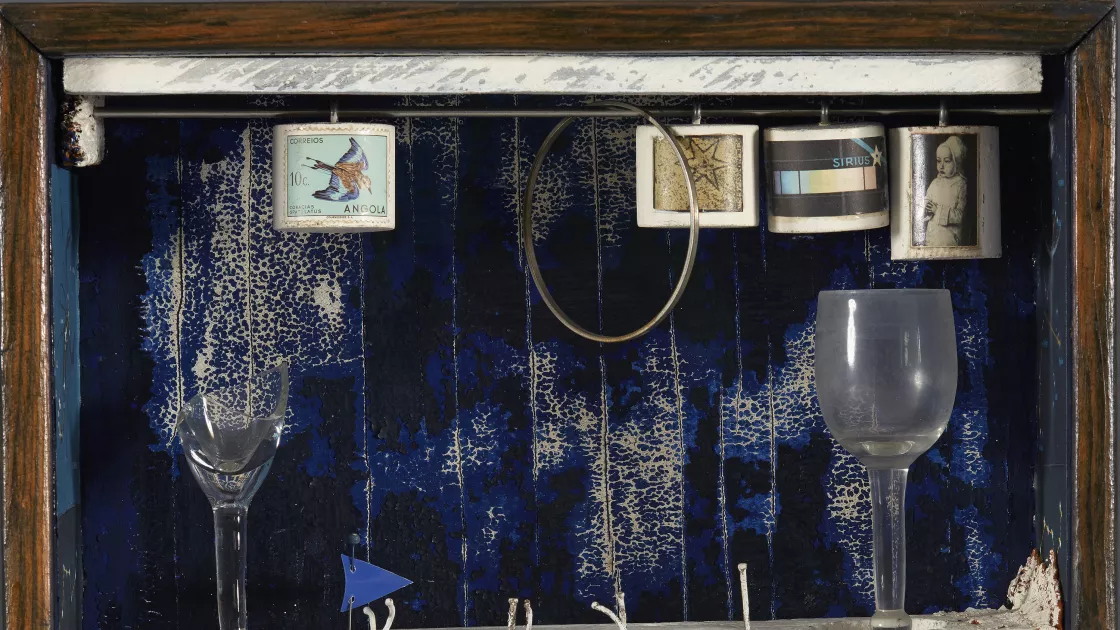
Joseph Cornell’s boxes are visual poems that evoke a sense of wonder through objects juxtaposed without any apparent logic. In Blue Soap Bubble, based on his childhood memories, the blue-painted drawer represents the sea; the silver balls, the planets; the crystal glasses, the cradle of life; and the four cylinders, the members of his family.
To continue exploring surrealism
Surrealism can also be explored beyond the works in the collection. Find out more about its artists, ideas and exhibitions through the Thyssen-Bornemisza Museum’s courses and lectures, virtual tours, videos and podcasts.
Courses and lectures
Explore the key aspects of the Surrealist movement and delve into its dreamlike world through the following content:
Virtual tours
Explore exhibitions dedicated to Surrealism and delve into the world of some of its artists from wherever you are:
Videos
Find out more about the key themes of the Surrealist movement through the explanatory videos for the exhibitions:

Podcasts
Explore the dialogue between two of the major art movements of the 20th century and delve into the creative world of René Magritte with these podcasts (in Spanish):
Surrealism in Art
Dreams, the unconscious and imagined worlds
Continue exploring the collection
From surrealism to abstraction, expressionism and realism, discover the artistic movements represented in the collection of the Museo Nacional Thyssen-Bornemisza.