Technical study
Christ with the Cross is a transitional work, painted between the two Annunciations in our collection.
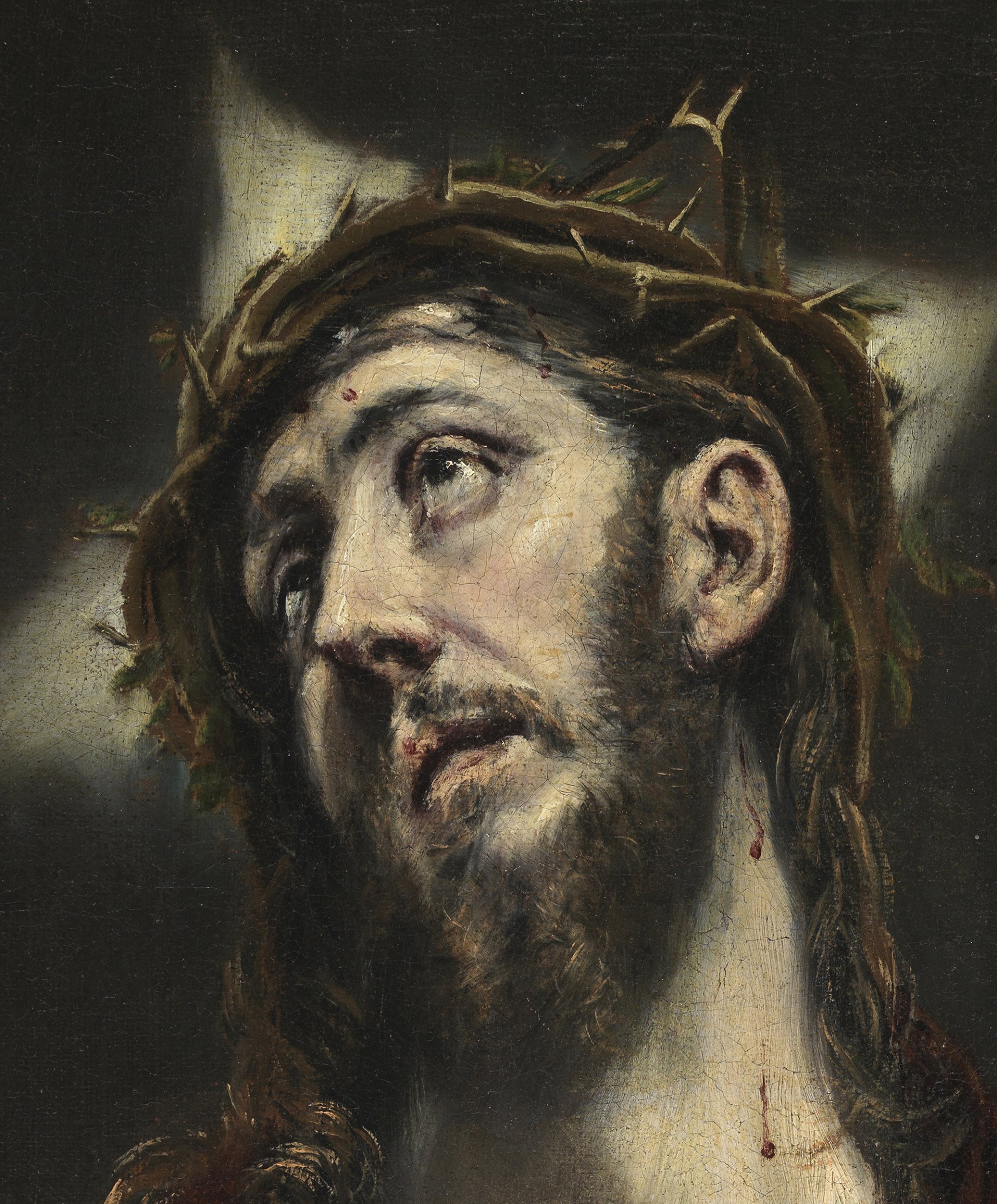
It therefore dates from a period when El Greco was searching for the distinctive style that would come to characterise his works. The reddish grounds undoubtedly hark back to his early years in Italy. He outlines the anatomy of the figure and pays painstaking attention to the hair, highlighting it with golden tones in a conventional and as-yet academic manner.
However, the face is rendered with whitish, almost transparent strokes that allow the darker layers to show through and create colour contrasts and chiaroscuro effects. The simplified, loose brushwork in this area, where the drawing has been lost, lend the work a quasi-expressionistic quality.
The X-Ray image
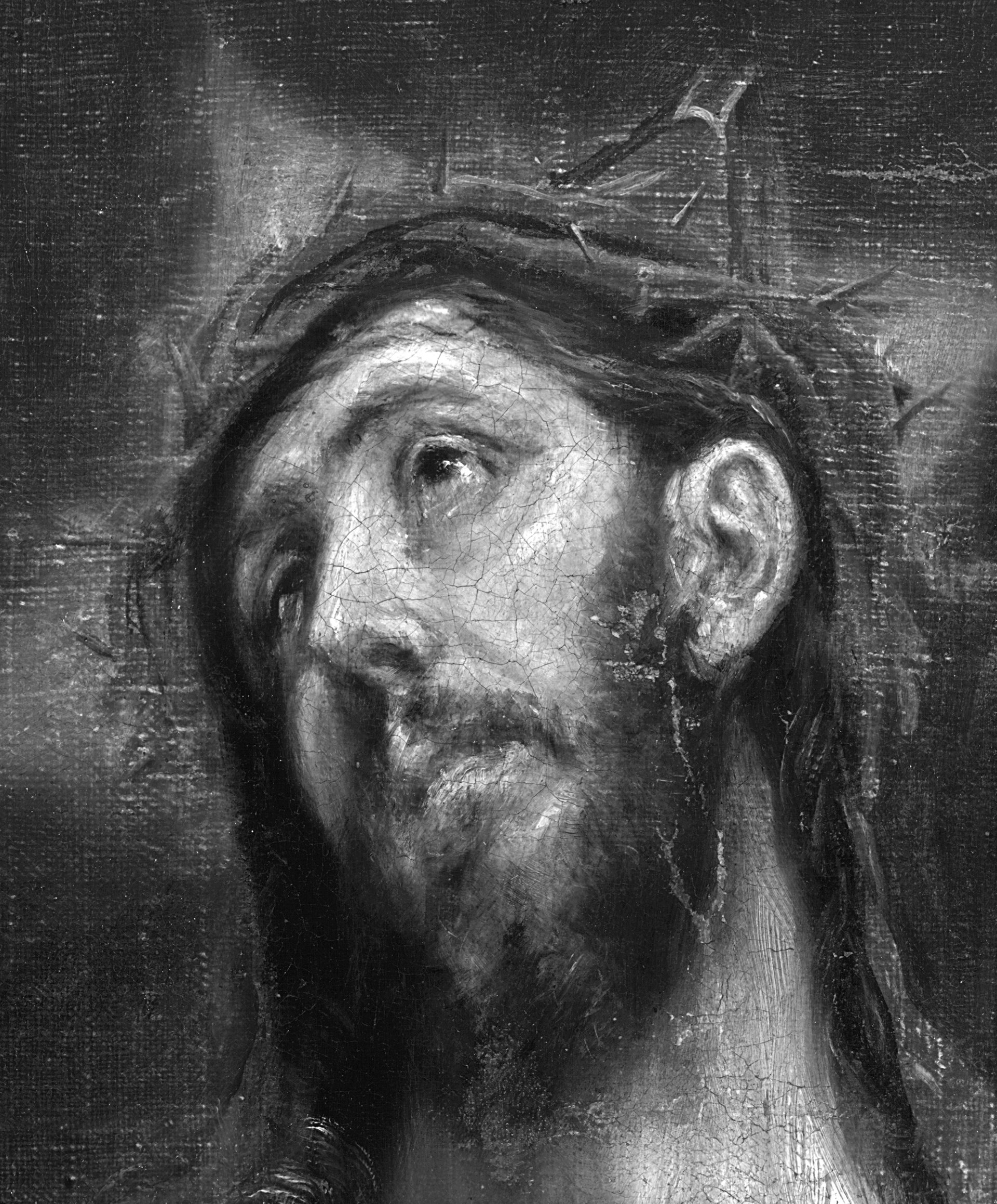
The X‐ray image of this work reveals signs of past interventions in the canvas support. First the original size of the canvas was reduced at the top; this is why we see a dark line where the original painted cloth was folded over, and the holes where the original tacks secured it to a smaller stretcher (now lost).
During a second intervention the original canvas was enlarged by unfolding the top and bottom edges and grafting on two patches from another piece of painted canvas, giving it the size we see today. Finally, the entire support was lined with a single piece of new canvas.
The work’s overall condition is good, although there is considerable paint loss below the face and a cross‐shaped tear in the central part of the canvas.
It is a treat to observe the freedom with which El Greco painted this work, and how he executed a quasi-Impressionist face with swift, sure, loose brushstrokes. Making hardly any changes, he made the dark background come alive with vigorous lines of light, managing in a few deft strokes to create the perspective of a face so elongated that its dimensions would seem impossible if executed by any other painter, and yet in El Greco are truly brilliant.
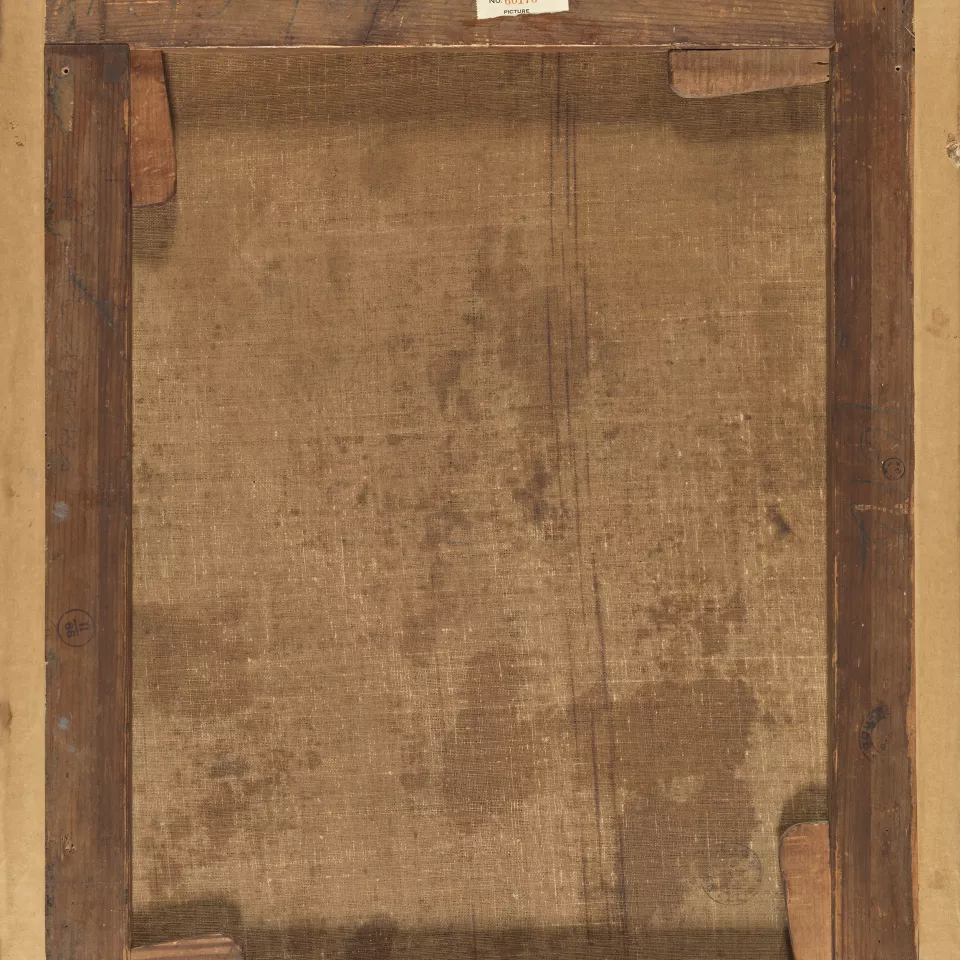
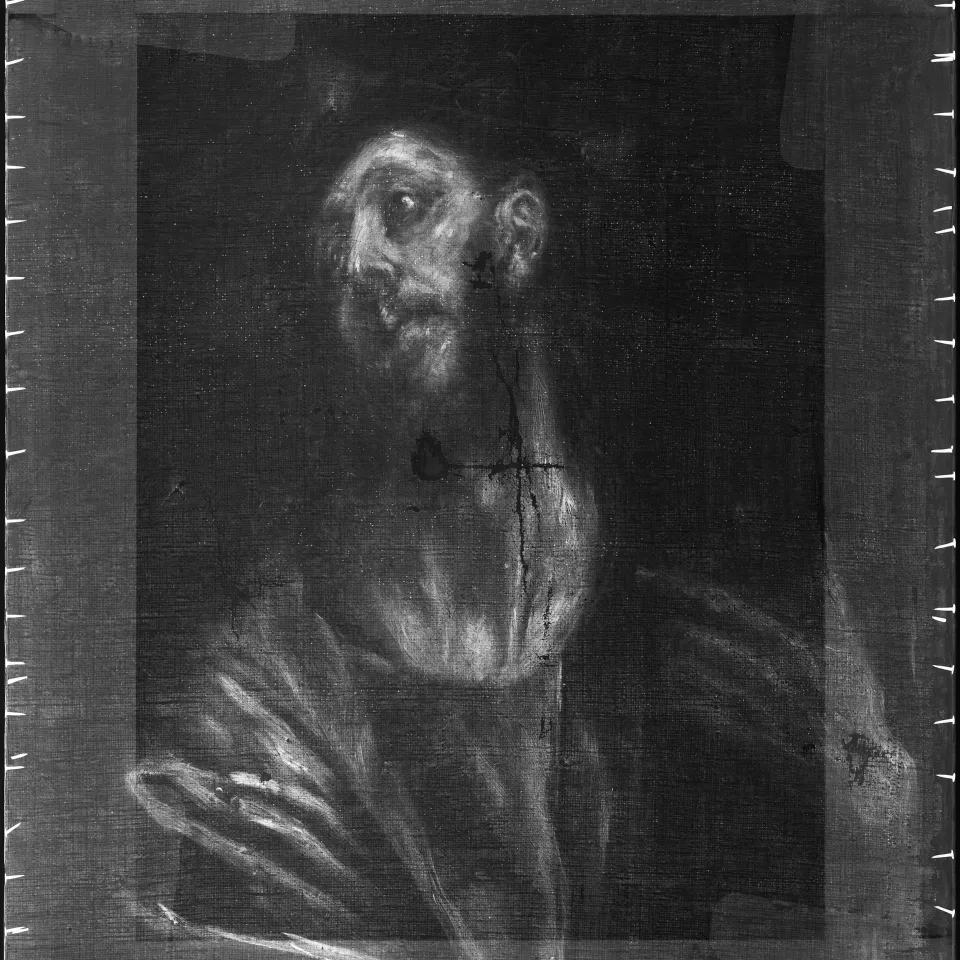
The support of the work Christ with the Cross (ca. 1596-1600) by El Greco consists of two canvases.
The original is a plain-weave cloth (typical of the Spanish Renaissance), and during restoration the work was lined with a single piece of canvas, also a plain weave, added to the back for reinforcement. Two patches of painted canvas were also added to the top and bottom of the painting.
The characteristics of the original cloth could only be revealed by X-ray imaging, as it was concealed on the front by layers of paint, and on the back by the lining.
The adjustable stretcher is made of pine and does not have a central crossbar, as it was considered unnecessary to maintain canvas tension given the picture’s small size (66 x 52 cm). It has four simple keys, one in each corner.
The materials analysis
The materials analysis was carried out to determine the composition of the original materials used in the painting and how they are distributed in the various layers. The information obtained from this analysis is useful for understanding the pictorial technique that the artist used and has helped to explain the different transformations that were effected during its execution.
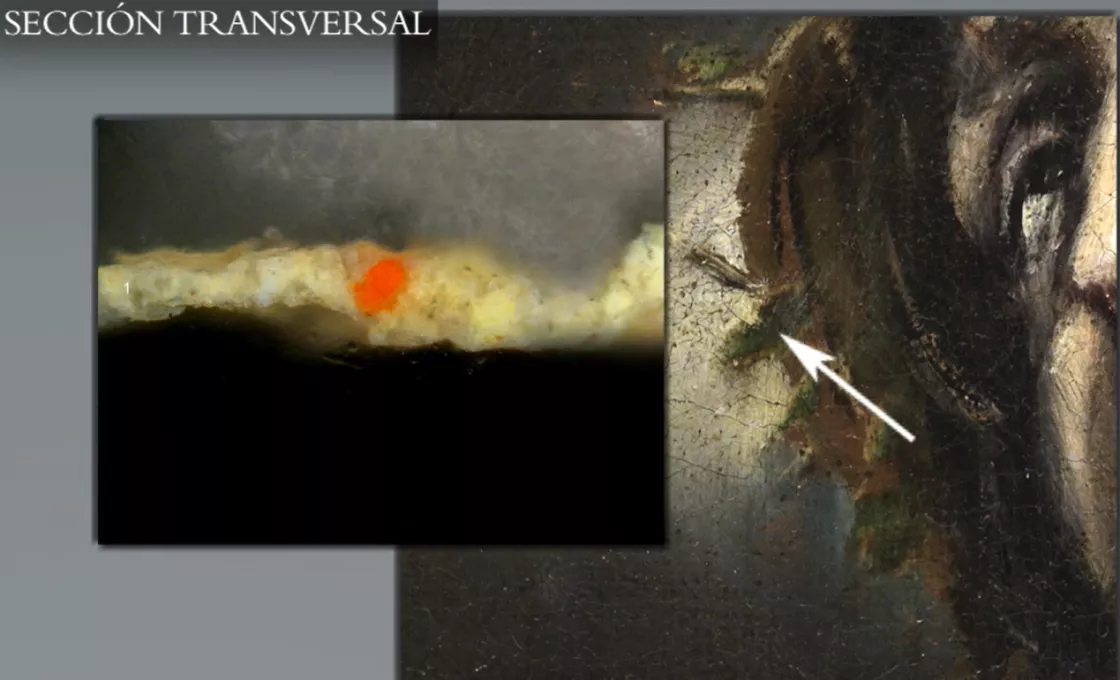
Cross‐section of the yellow in Christ’s halo
This cross‐section only penetrated as far as the top paint layer (1).
The blend of pigments identified in this layer matches the treatment observed in other El Greco paintings that have been analysed, in whichhe achieves yellow and orange tones by mixing lead‐tin yellow (type I in this case) with minium or, when he wanted to add a reddish tinge, carmine lake.
The base of this paint layer is white lead, and a small amount of calcium carbonate has also been detected.
The infrared image
The use of reddish‐brown ground layers makes it difficult to identify clearly defined lines. However, there are a few traces in the area of the face, hair, neck and hand, as we can see in the details shown.
Very subtle sketched lines mark the position of the head, the locks of hair, the hand and the edge of the tunic in Christ with the Cross. The drawing concealed beneath the paint shows that the artist changed his mind about the design of the neck area. He also corrected the arrangement of the hair to make the curling locks longer.