Restoration and technical study
Pier Francesco Foschi’s work had been almost completely overlooked by critics until 1953 when Roberto Longhi published his first study on him. New research that has emerged since then has gradually formed a catalogue of the oeuvre of the artist who is now considered one of the most outstanding painters of sixteenth-century Florence.
Foschi created major compositions of religious themes, although today he is perhaps best known for his portraits. Until they were re-examined in the 1950s, Foschi’s works were attributed to other painters in his circle. Such is the case of our Portrait of a Lady, considered the work of Pontormo when baron Heinrich Thyssen-Bornemisza acquired it in 1935.
In 2019 the Museo Thyssen-Bornemisza embarked on the restoration of Portrait of a Lady by Pier Francesco Foschi. In 2021 the work travelled to the Metropolitan Museum of Art in New York City, along with Portrait of a Young Man as Saint Sebastian by Bronzino, for inclusion in the exhibition The Medici: Portraits and Politics, and in 2022 it was presented at the Georgia Museum of Arts as part of the first monographic exhibition on Pier Francesco Foschi.
The restoration
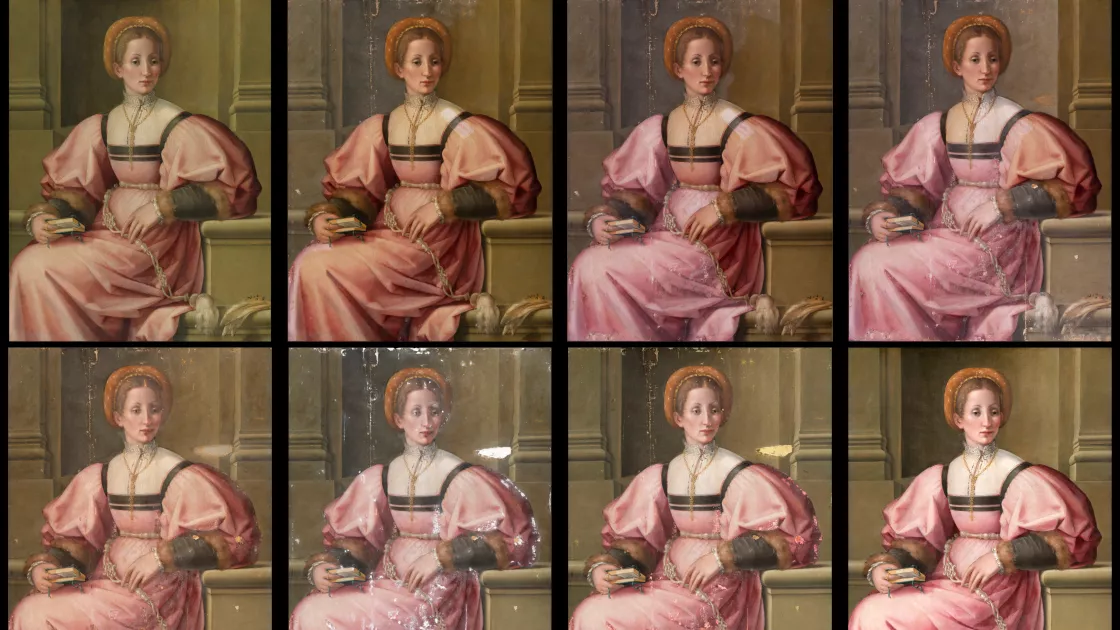
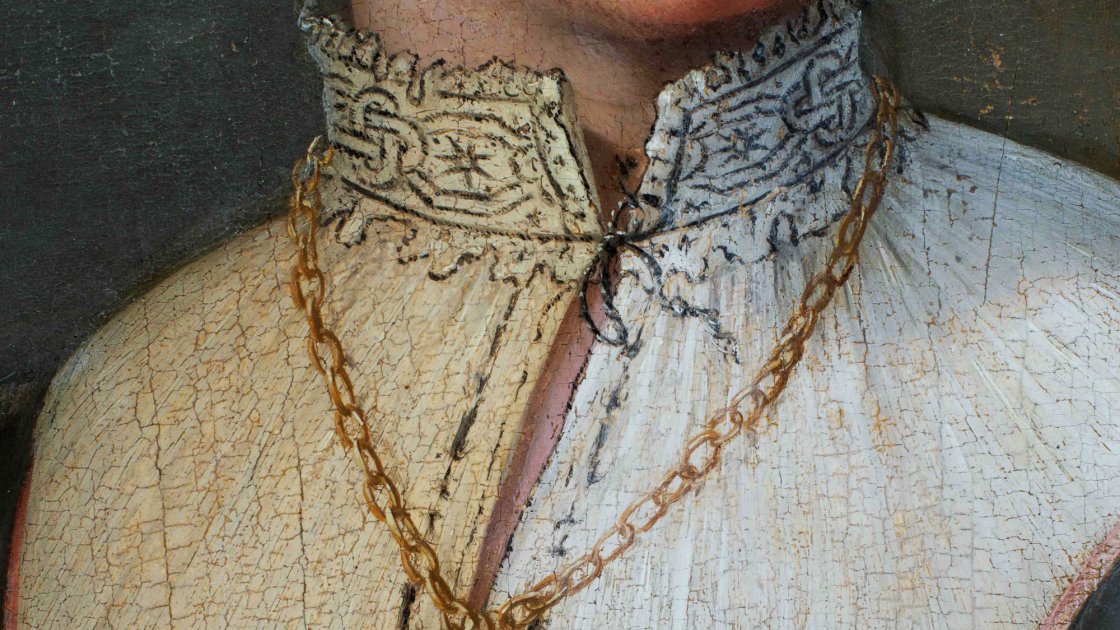
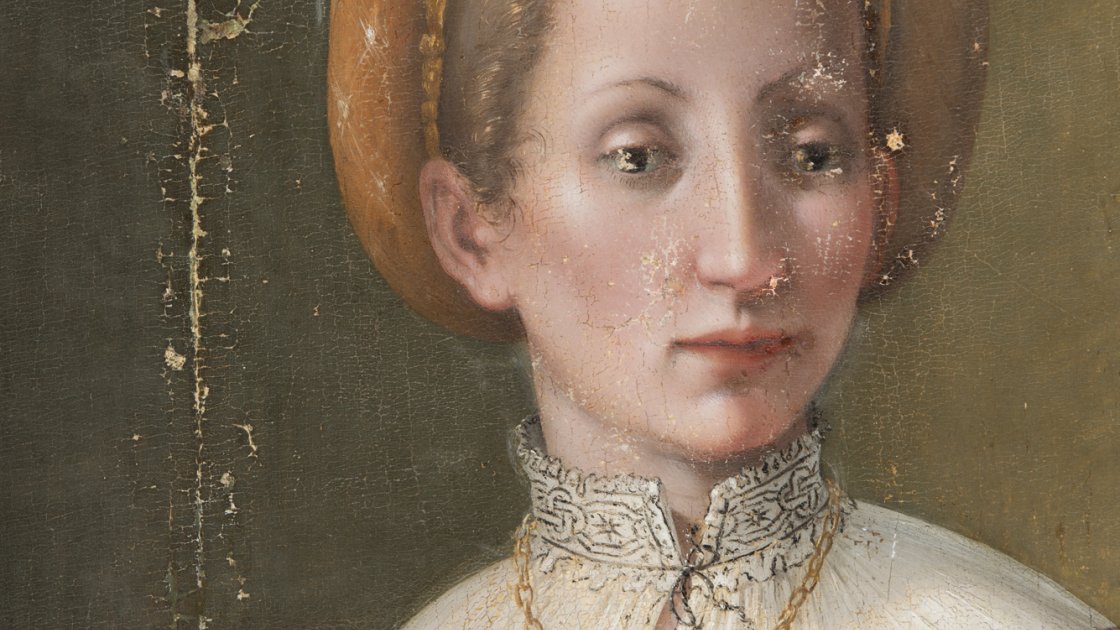
Although the work was still stable, the entire surface had unfortunately been retouched, concealing the painting’s extraordinary quality. In addition, the varnish over the paint layer had yellowed considerably, which had darkened the original colours.
A meticulous technical study of the work led to the formulation of an intervention plan.
The pictorial surface of the work presented significant craquelure and had suffered various scratches and detachments of the paint layer. Also visible on the painting were the effects, some of them irreversible, of different interventions conducted with varying degrees of success.
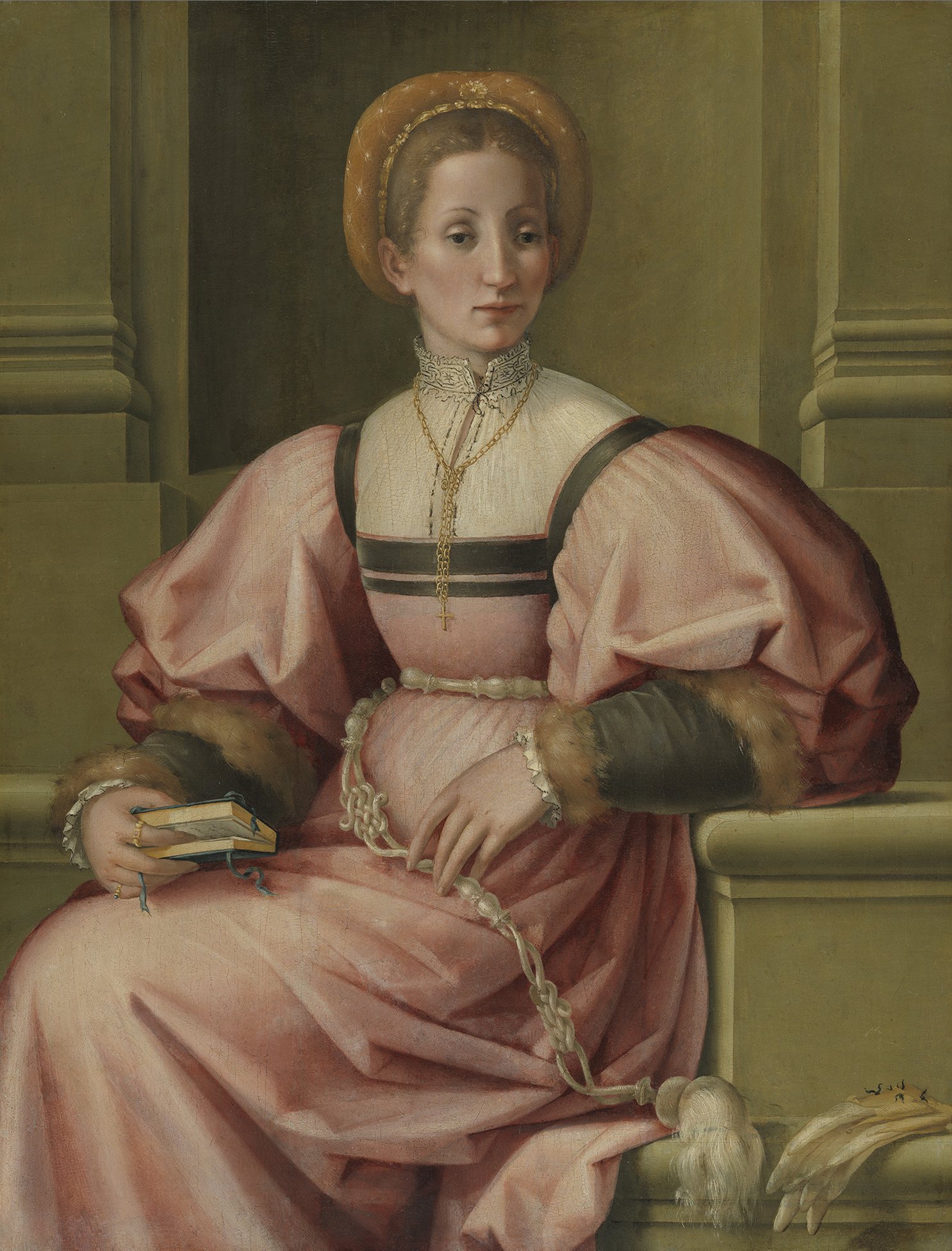
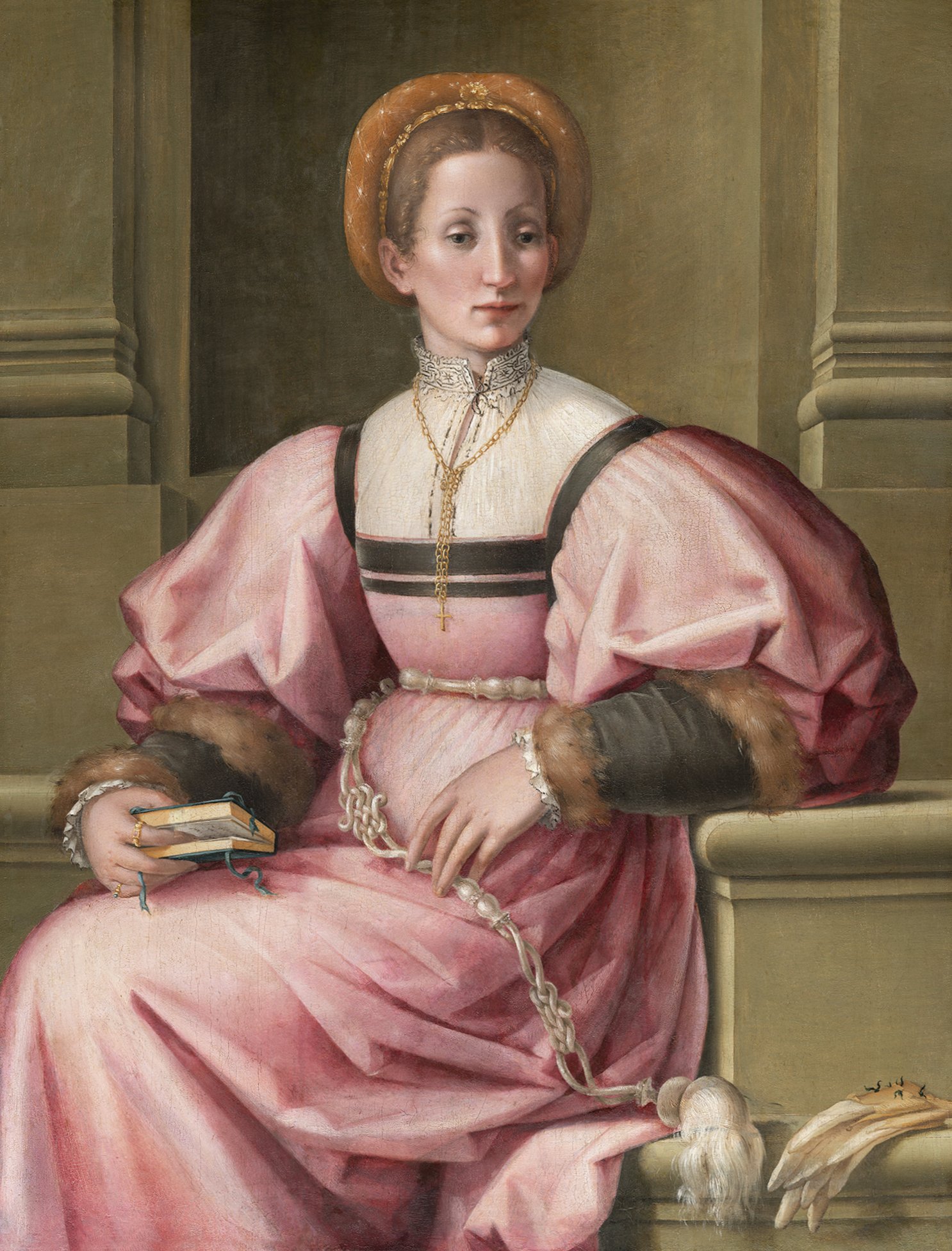
Examination of the paint layer revealed a particularly calamitous intervention in which aggressive cleaning had worn away the paint layer, removing the most superficial glazes and creating a somewhat “raw” appearance.
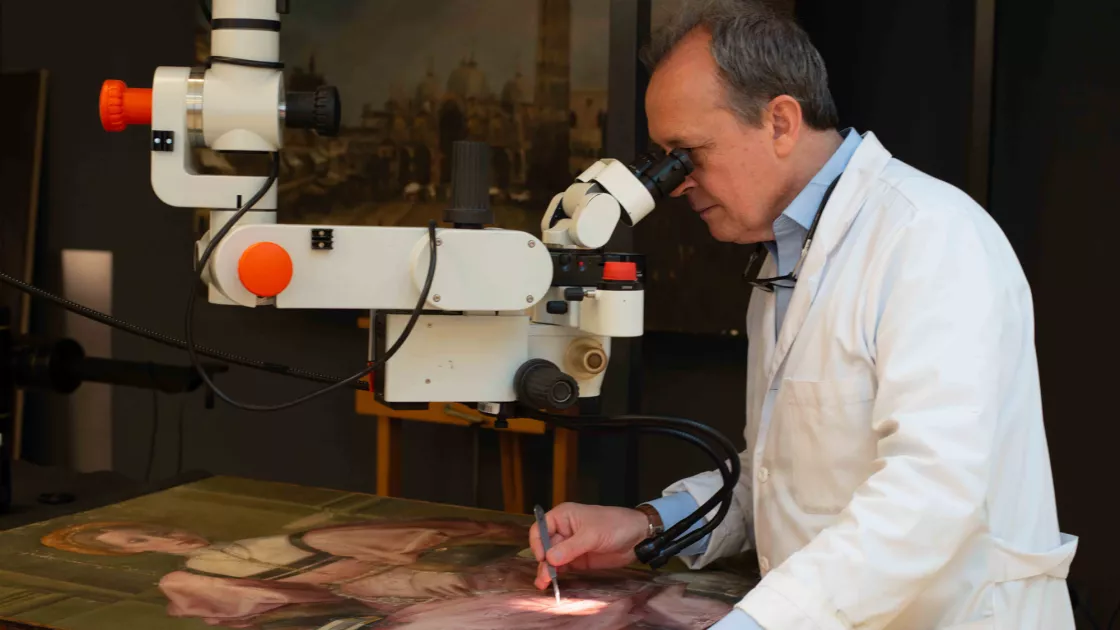
Throughout the intervention, the materials laboratory of the restoration department monitored the cleaning process. This support served a dual purpose, ensuring that the restoration tasks were carried out correctly and facilitating a more detailed material study of the work.
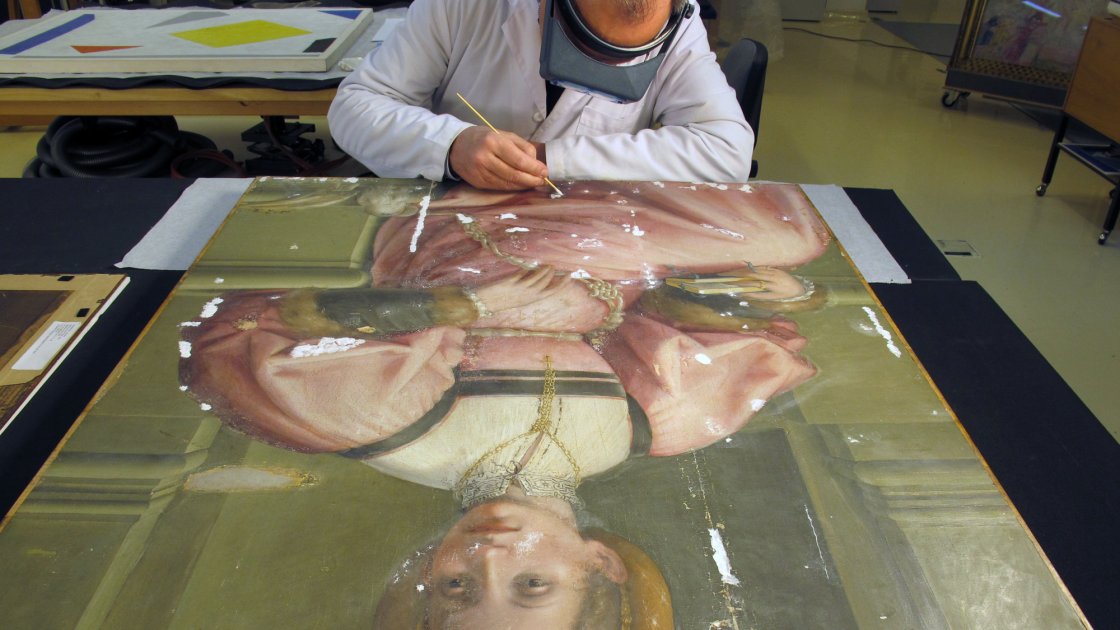
The most important intervention, which was critical for recovering the integrity of the work, was undoubtedly the cleaning of the paint layer. This basically consisted in removing old layers of oxidised varnish and retouchings of varying scales from different periods.
The retouchings covered large areas of the original polychrome, and the fillers applied in previous restorations that were not flush with the paint layer or that concealed the original paint were also removed or corrected. The pictorial reintegration was another long and delicate process due to the major losses of polychrome that were revealed after the cleaning phase.
The work had undergone various interventions throughout its history that had particularly affected the paint layer. Pictorial reintegration does not aim to return a work to its original appearance as that would be impossible. Instead, its purpose is to ensure the coherence of the work that has reached us while respecting its original qualities at all times.
The retouchings
Several factors must be taken into account when assessing the suitability and intensity of an intervention. One such is the sensitivity of the varnish layers and original polychrome to the different cleaning systems. Another aspect to study is the quantity and quality of the retouchings, and how easy or difficult it will be to remove them.
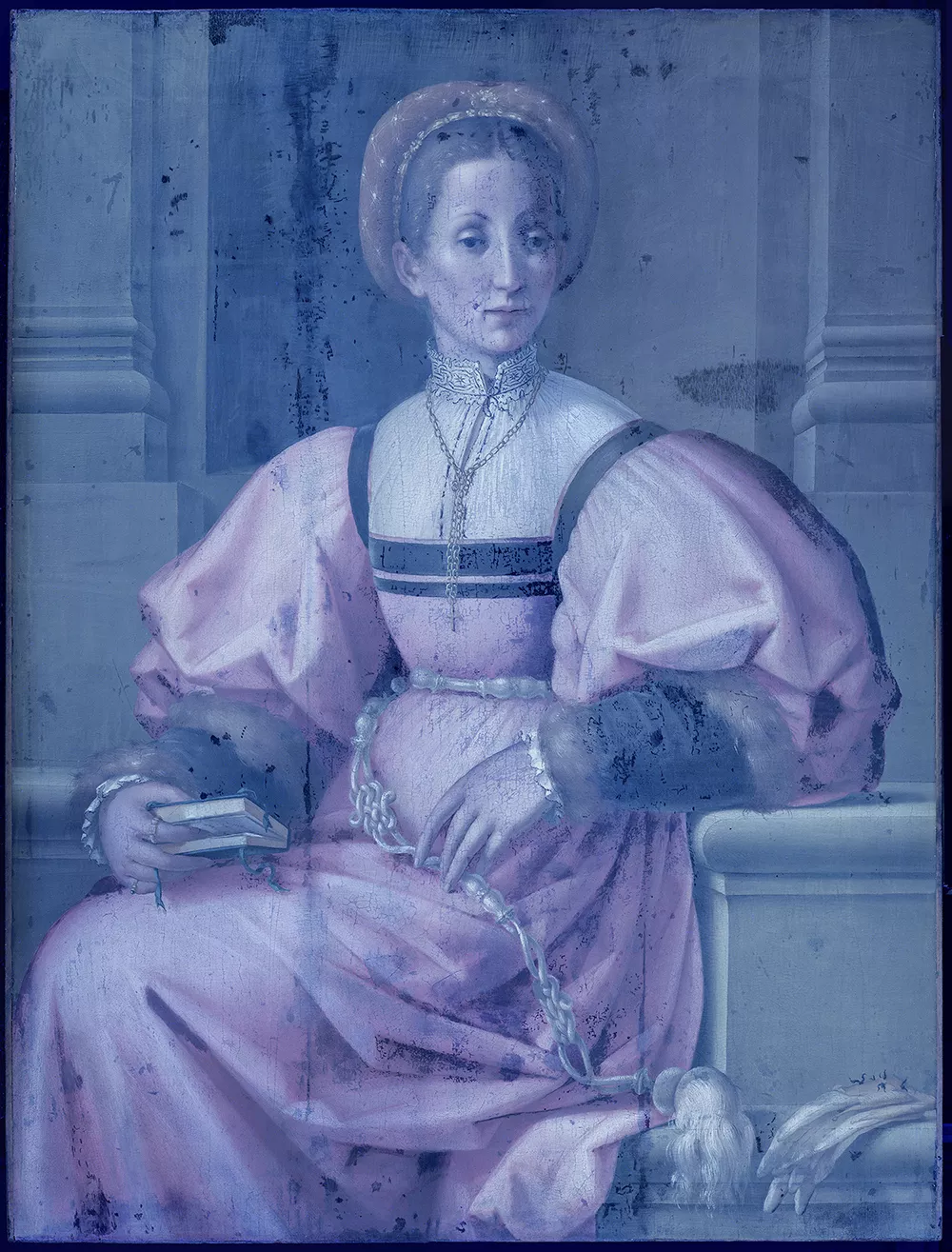
The studies conducted prior to this intervention included detailed examination with ultraviolet light in order to delimit the retouched areas. Tests were carried out using different cleaning systems and the analysis performed in the laboratory revealed that the paint was highly sensitive to the use of polar solvents, especially the areas with abundant lake pigments, such as the lady’s robe.
Most of the retouchings reacted to the cleaning systems much more sensitively than the original paint.
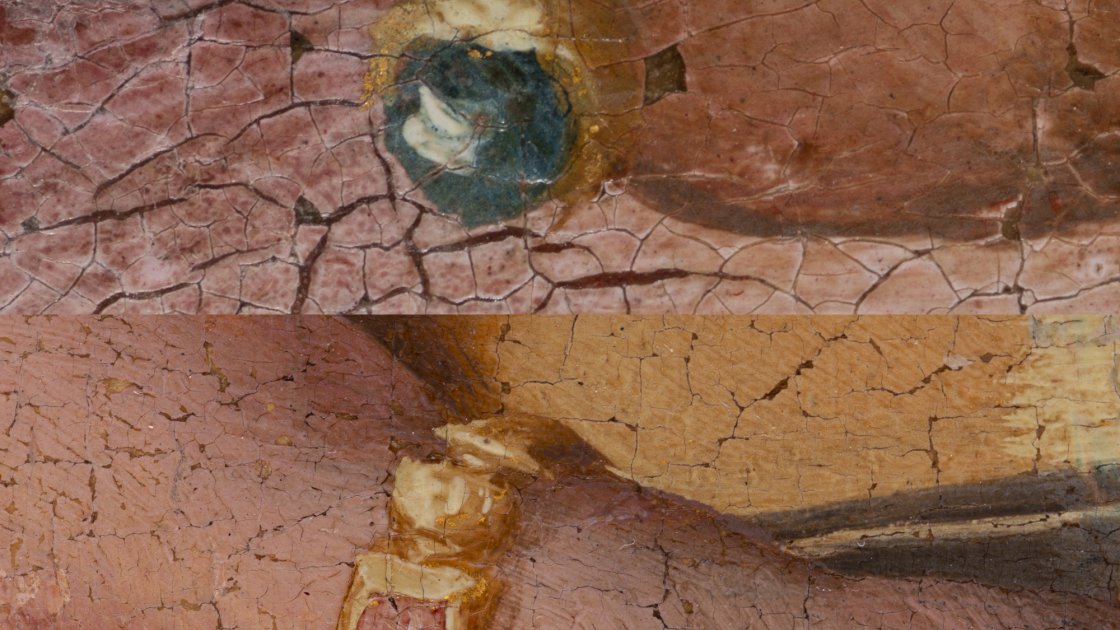
The image obtained with ultraviolet light shows a detail of the robe. The blue stains visible—identified as retouchings—with varying degrees of colour intensity could indicate three successive interventions.
The darker blues likely correspond to retouchings applied on more superficial layers and the lighter and greyish blues to those closer to the paint film. In any case, the different ways in which each retouching responded to ultraviolet light was a useful factor that helped us to characterise and understand the painting prior to intervention.
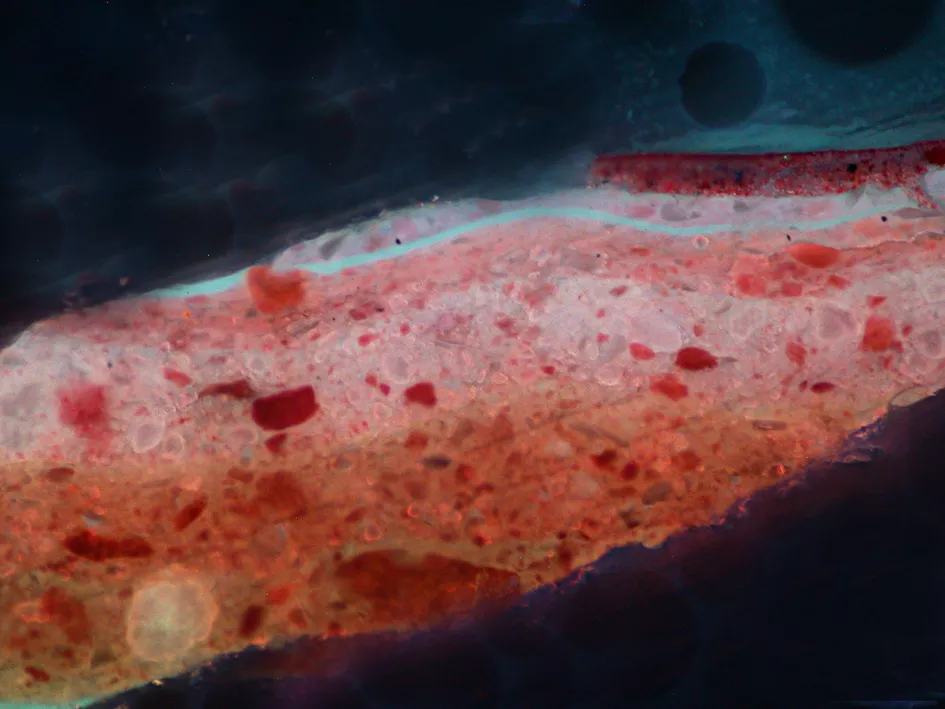
Microsample taken from an overpainted area of the dress
UV light image. MPlan 20x/0.45 Objective.
The overlapping red layers of varying intensity are due to the application of successive brushstrokes loaded with different proportions of red lake pigment mixed with lead white and a small amount of calcium carbonate.
The bluish layer near the upper part of the sequence of layers corresponds to a varnish that was added and separates the original paint from the overpaint. Especially in the area from which the sample was taken, a small fraction of the pink glaze (possibly badly discoloured) was removed and became embedded in the intermediate varnish, as can be seen in the cross-section.
The more thickly applied red layer visible in the uppermost part corresponds to the overpaint and above it is a new coating of varnish added during an earlier intervention that preceded the recent restoration work.
The incisions
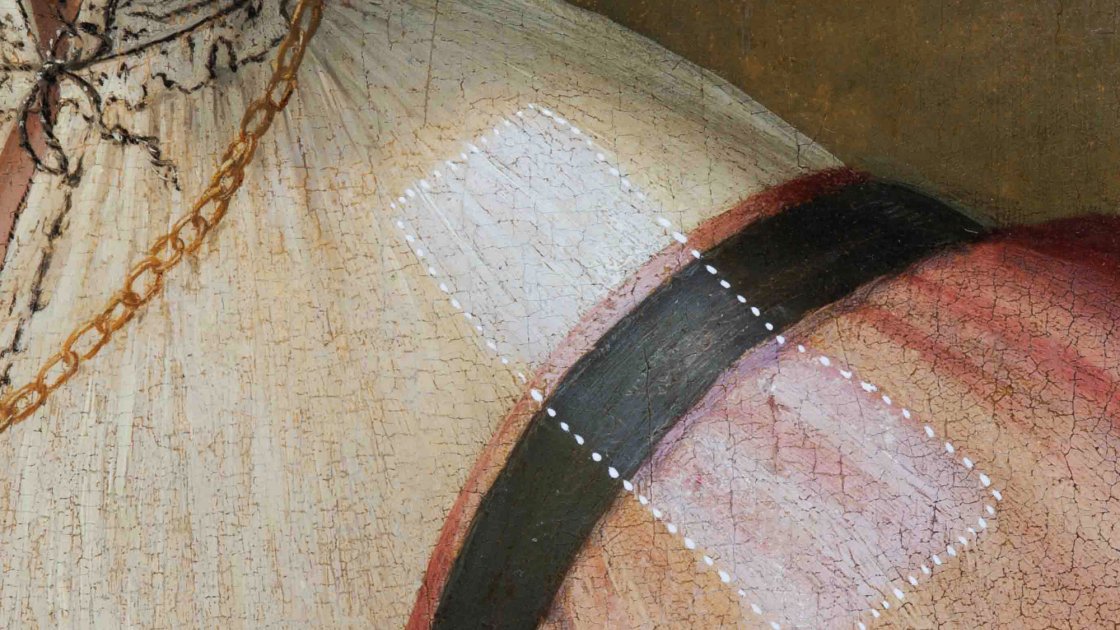
One of the most interesting aspects of Pier Fancesco Foschi’s creative process is the use of incisions in the formulation of his compositions. These marks, barely perceptible to the naked eye, reveal the painstaking manner in which the artist planned the composition of each element in his work.
In Portrait of a Lady, the incisions play a crucial role in the construction of the architectural background, serving as guide for the distribution of lines and volumes. Technical studies and detailed observation of the pictorial surface not only identified these incisions but provided a deeper insight into Foschi’s technique and spatial organisation.
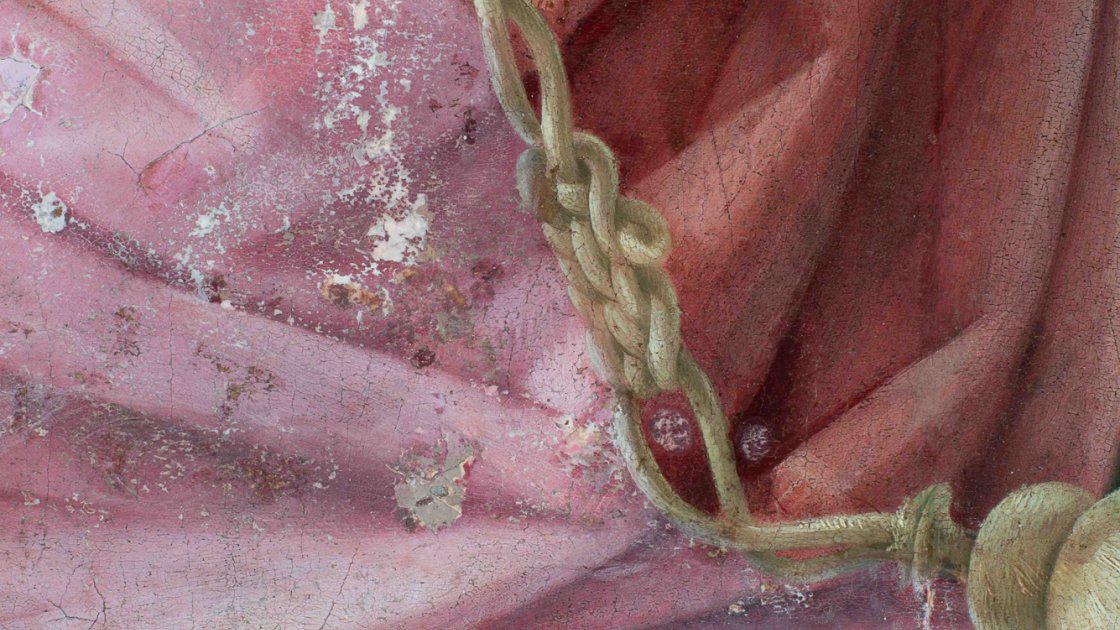
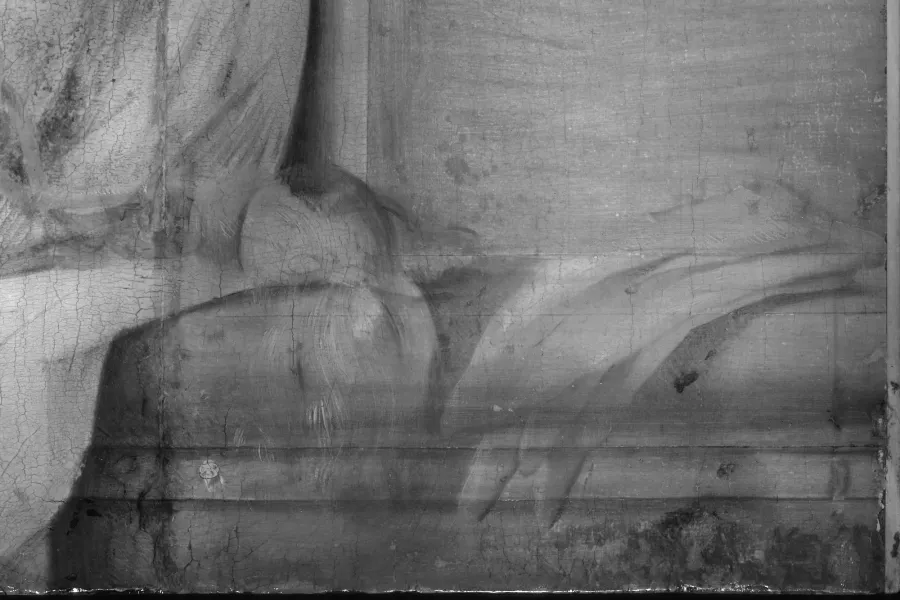
The author used a pointed object to trace the lines that define the outlines of the architectural elements. These lines adopt the form of fine grooves on the smooth surface of the ground layers and are still visible today, even after the application of several layers of paint, which would not have been the case if the lines had been drawn.
This is a typical technique of paintings on panel. As the Renaissance progressed, the use of incisions in the composition of artworks gradually declined and all but disappeared in the Baroque period.
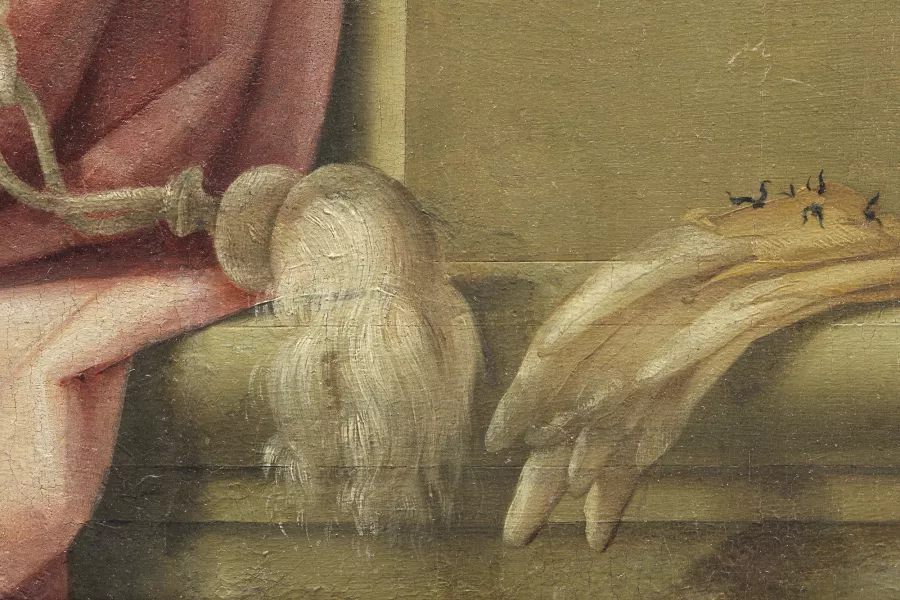
The image obtained with raking light reveals these incisions. In the close-up photograph taken with raking light, one can see how the horizontal lines that define the architectural background also run through the tassel on the belt and the gloves, which are positioned against that background.
Gold applications
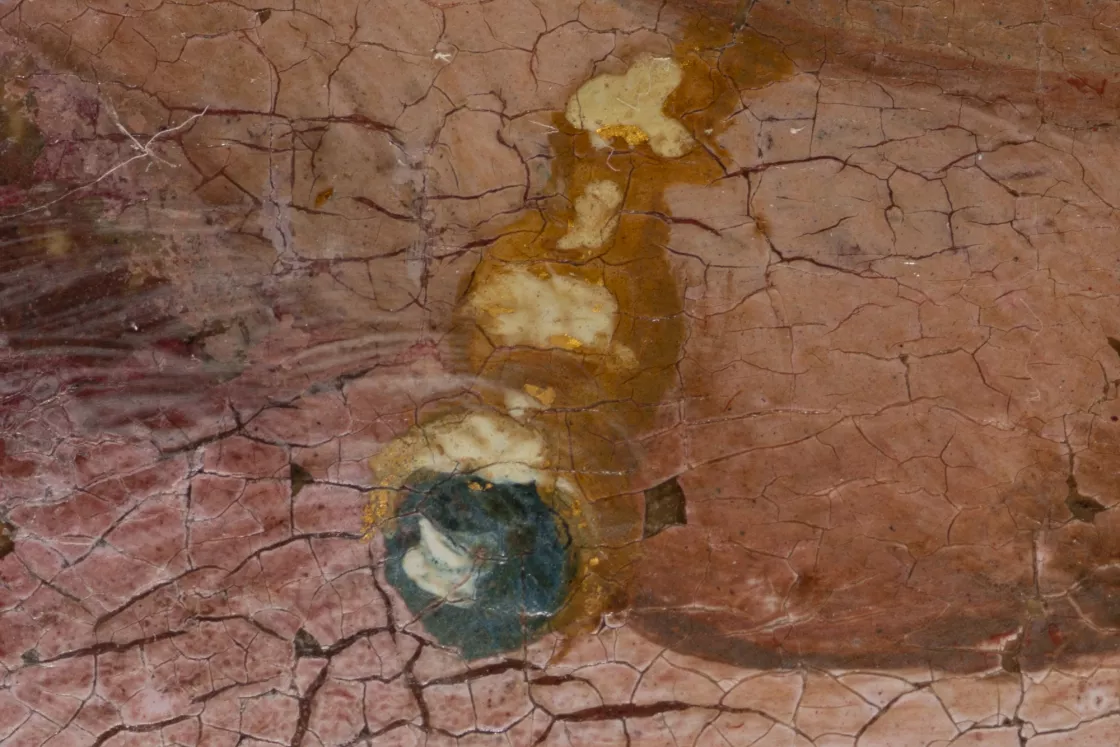
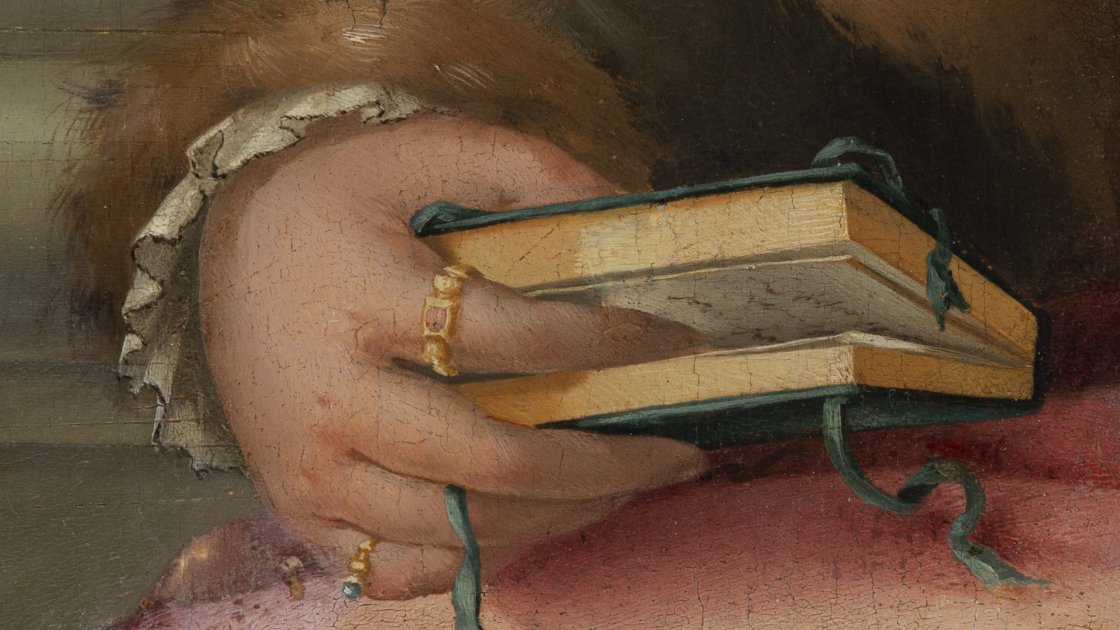
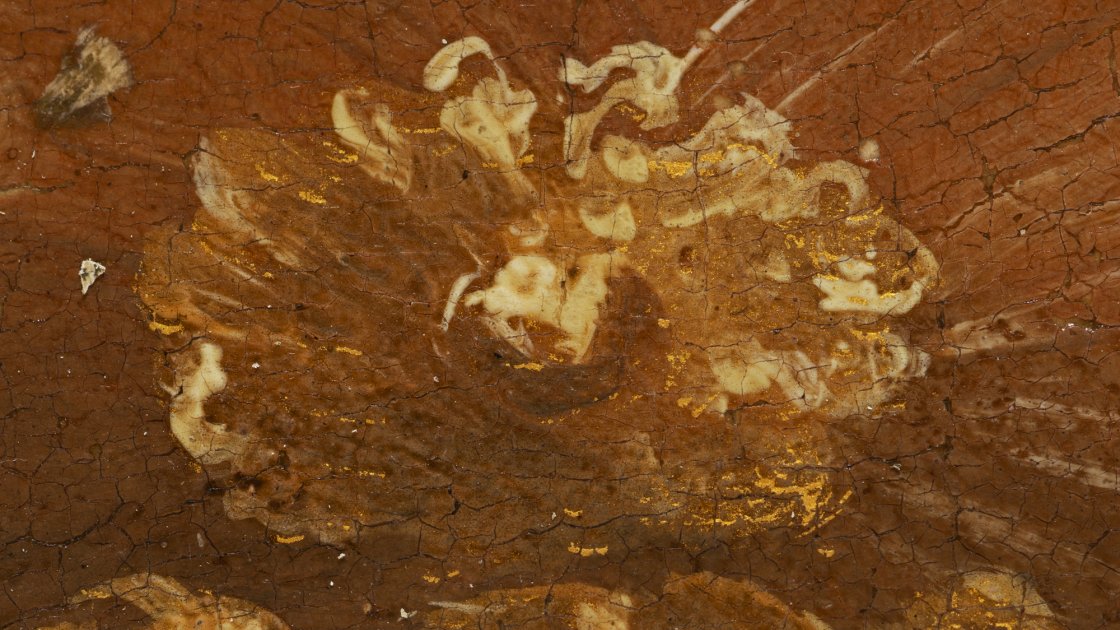
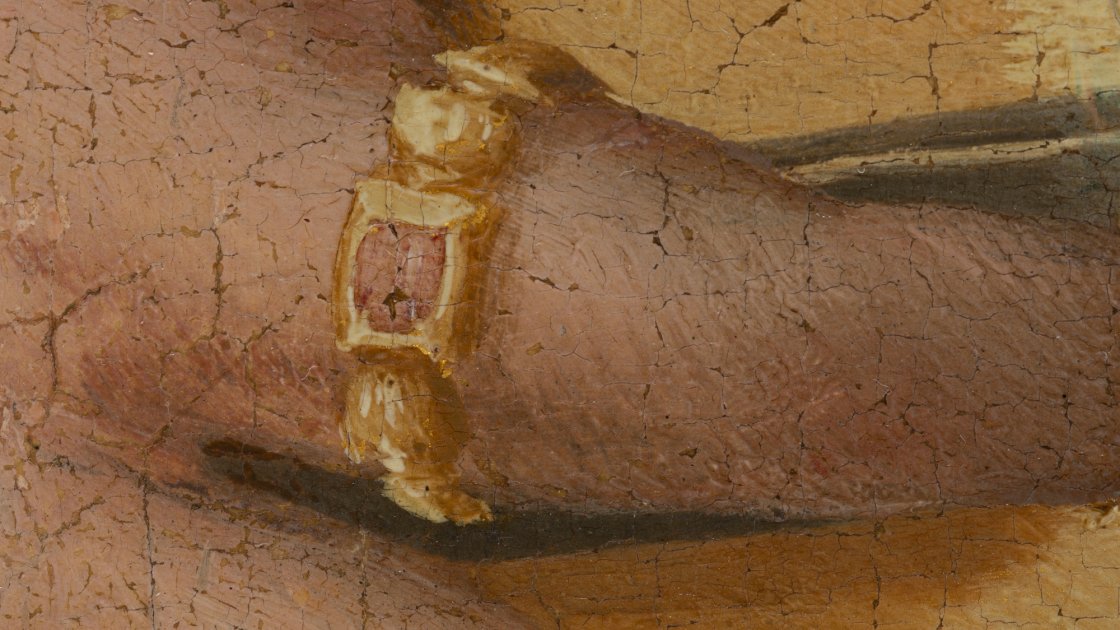
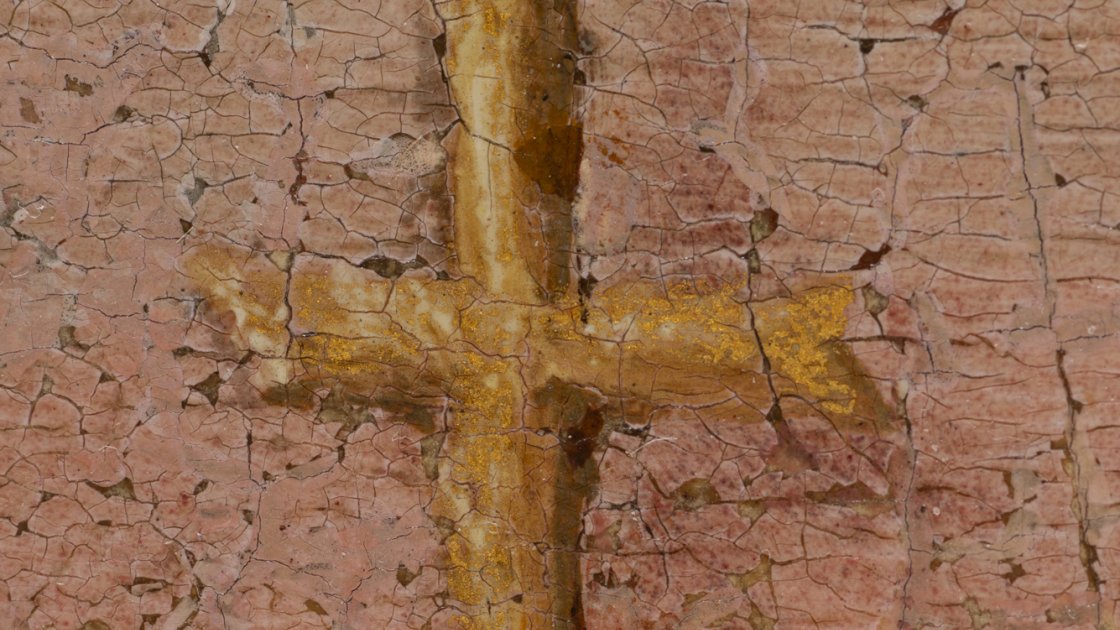
One of the most interesting features of this work is the use of pure gold to enhance certain elements which, in the real world, would be made of or covered with this precious material. The artist painstakingly applied pure gold to details such as the delicate chain and cross, the headband that secures the hairnet, the rings and the gilt edges of the book.
The artist used gold powder, mixed with glue to bind it and then applied with a brush. Gold was carefully applied to the more luminous edges of the jewellery to enhance its natural glow. This technique intensifies the visual effect and lends greater realism and richer detail to the symbolic representation of the elements.
Despite the cleaning treatment carried out on the work, it is difficult to see these gold applications with the naked eye. The gilded areas may have suffered wear with the passage of time, although in our opinion this has probably not been extensive since an excessive use of gold would have detracted from the realism of the portrait.
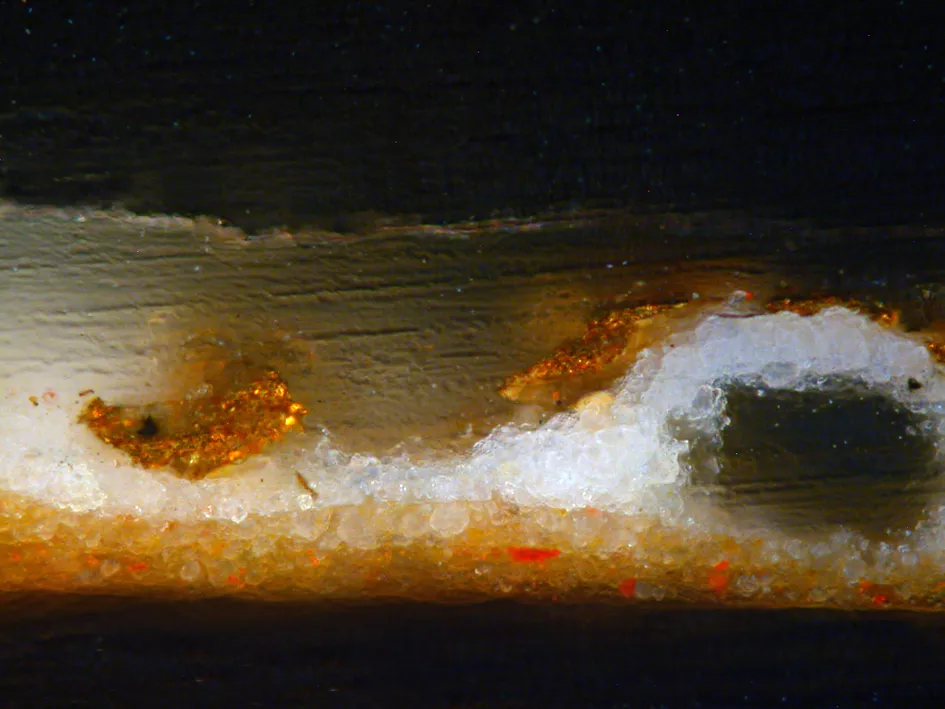
Microsample taken from the golden zone of the book
MPlan 50x/0.85 Objective
The cross-section of this microsample shows small particles of remnants of gold leaf embedded in drying oil.
This is the gold that was applied in powder form in the area of the book. Remains of gold leaf left over from gilding were often given a new use by grinding them down to apply as gold powder.
The support
The support is made up of three planks of poplar wood glued together along their edges cut at a right angle, a type of joining technique known as “unión viva”. In keeping with common practice, the grain direction of the wood coincides with the greater dimension of the work, which in this case is the longitudinal axis.
Whereas oak was commonly used in the Dutch and Flemish schools, poplar was the typical wood of choice for panel painting in Italy.
The original support of this work was thicker than the one that has reached us. In a previous intervention it was reduced to 8 mm to incorporate a cradle with the aim of keeping the painted surface completely flat.
The choice of wood, the seasoning time and the entire panel-making process was a highly conscientious undertaking, guided by experience and the demands of the commissioners of the works themselves.
Density is not uniform across the entire surface of a plank of wood which, combined with the hygroscopicity of the material, means that panels used as supports for paintings tend to warp to one degree or another. Cradles are used to correct this warping but, as occurred with this work, this treatment often led to a thinning of the original support and even the appearance of cracks due to the new stresses caused by the forced rigidity of the wood.
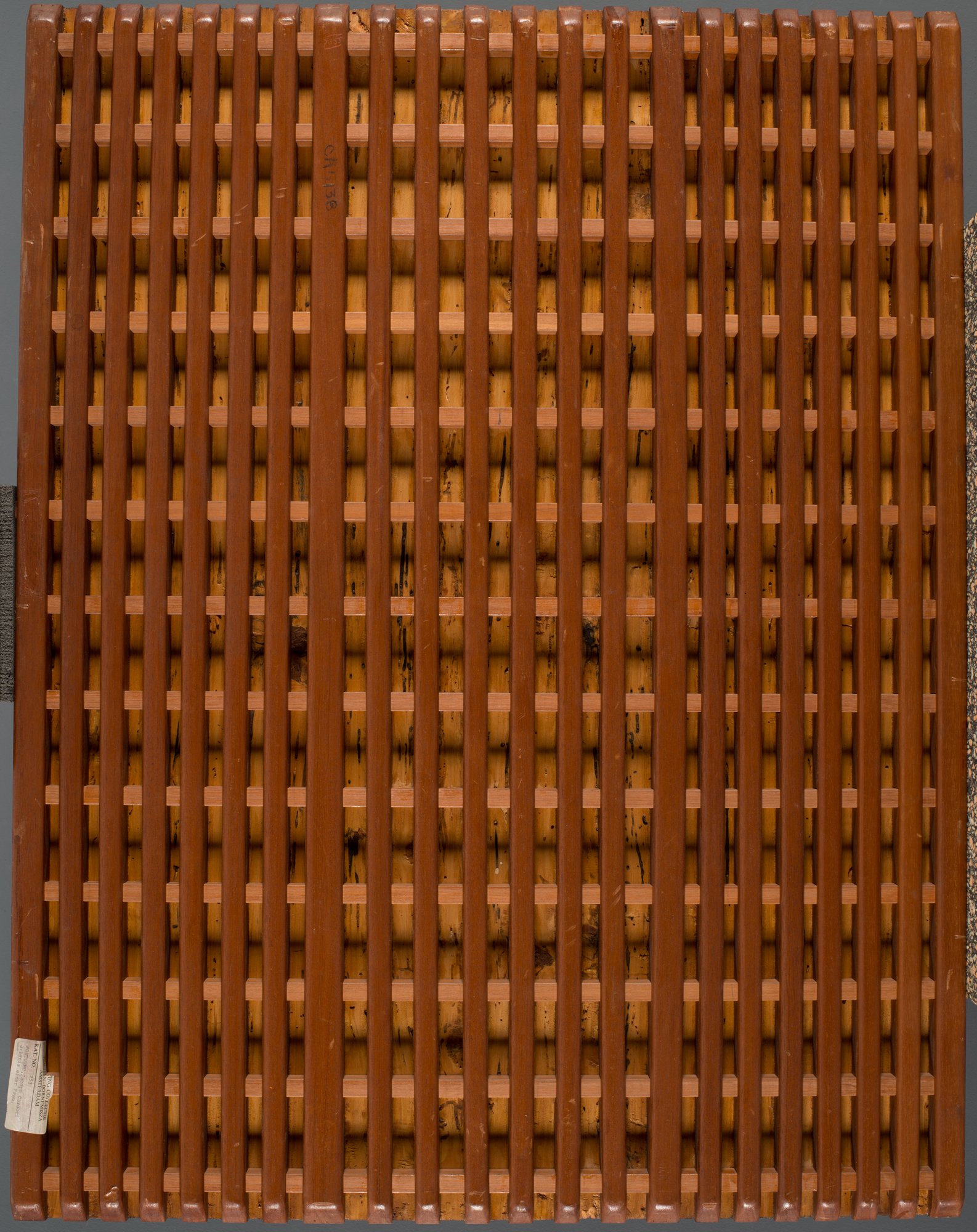
Looking at the image of the back of the cradle, we can see that two of the vertical slats are thicker than the rest: they correspond to the slats that were glued on to the joints of the three planks of wood to reinforce them.
Lastly, we can detect the presence of an old attack by wood-boring insects whose tunnels have perforated and degraded the structure of the support. Fragments of the support are visible in the grid of vertical and horizontal slats that form the cradle, and we can see that the slats are covered with tunnels bored by the insects.
We can also trace with our eyes the paths followed by the larvae, which confirms that the panel has been thinned: if the support had preserved its original thickness, only the insects’ tiny emergence holes would be visible.
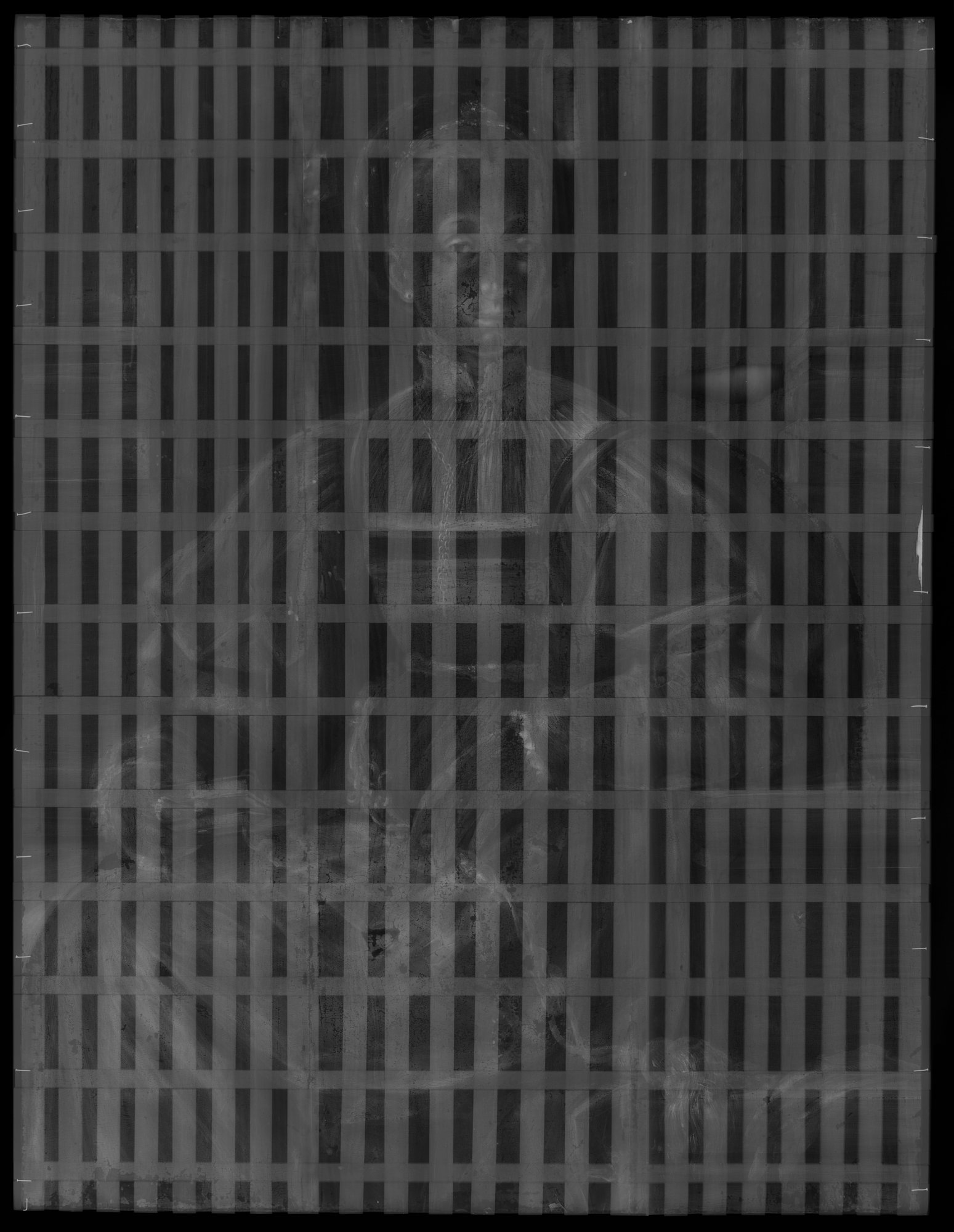
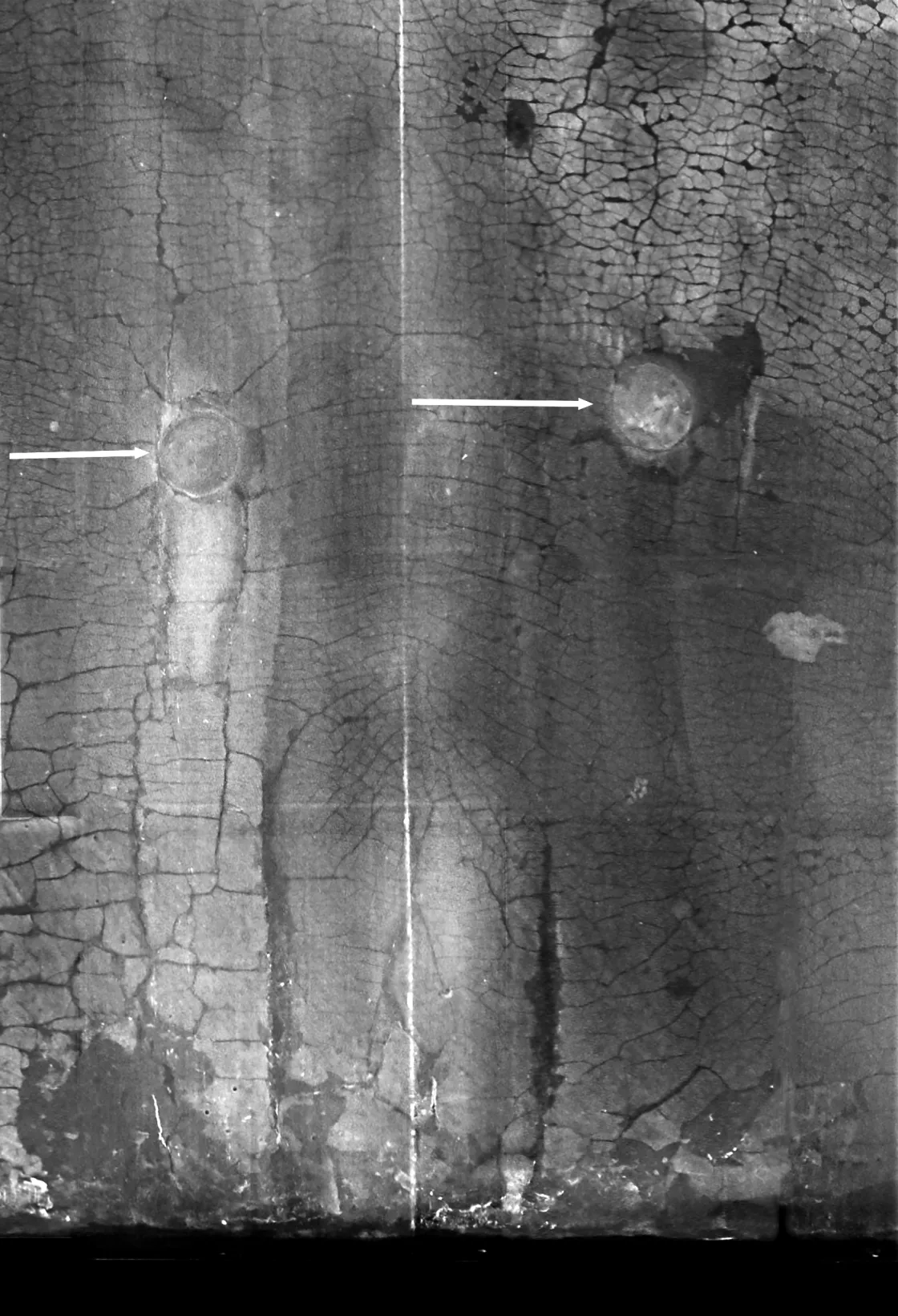
The X-radiograph of the work shows the joints between the three planks of wood that compose the support. The joints appear as separate white lines with pairs of little circles along them, one on each side of the white line. These circles correspond to the vestiges of wooden plugs, revealing the system that was used for joining the planks that form the support of the work.
As mentioned above, the wooden planks that form the support were glued edge to edge a unión viva. To ensure the stability of this joint, the maker of the support opted to insert false tongues reinforced with wooden plugs. Although rare, this method has been documented in various Italian works from the Renaissance period.
On the back of the support, a prism-shaped mortise was carved into the glue line between two planks, perpendicular to the line, and a piece of wood cut to the exact dimensions of the mortise was glued inside it. This mechanism was reinforced by inserting a series of plugs—little cylindrical pieces of wood—that crossed the tongue and part of the original support, like nails.
Neither the back of the work nor the X-radiograph show traces of the tongues or their mortises because they were removed when the support was thinned to accommodate the cradle. As stated above, it is the little circles, evidence of the wooden plugs that fixed the tongues in place, that have enabled us to identify the reinforcement system.