
Irma Álvarez-Laviada
Inside and outside the Frame
The Museo Nacional Thyssen-Bornemisza is presenting Inside and outside the Frame, the ninth edition of its Kora programme which presents an exhibition every year conceived from a gender perspective. On this occasion it focuses on the work of Irma Álvarez-Laviada (born Gijón, 1978), with a selection of more than thirty pieces created in the last decade, shown alongside paintings from the museum's own collection in an exhibition curated by Rocío de la Villa.
Álvarez-Laviada's works occupy an intermediate space, both within and outside the frame, created from industrial materials intended for functional purposes. Through this approach the artist reflects on inclusions and exclusions within the modern tradition of Western art: between the pure and the decorative, and between aesthetic experience and economic and ideological interests in art.
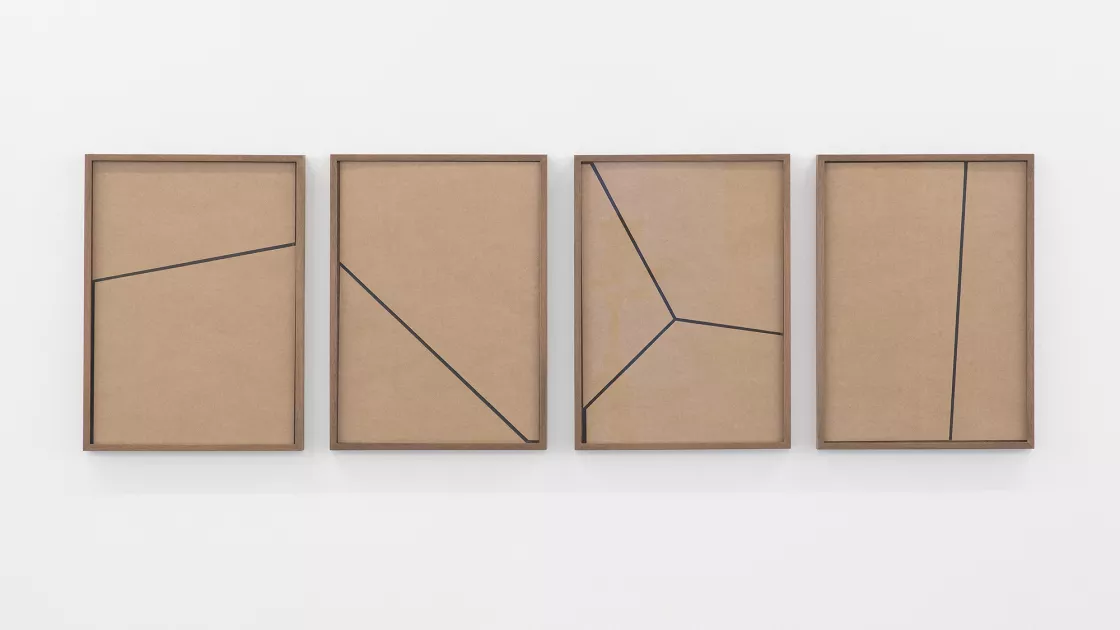
Her makes use of geometrical abstraction from a gender perspective. The attributes of masculine and feminine stereotypes -vertical and horizontal, hard and soft, essential and subsidiary, full and empty - are questioned in pieces that engage with tradition, deconstructing it in creative processes governed by repetition and its variations.
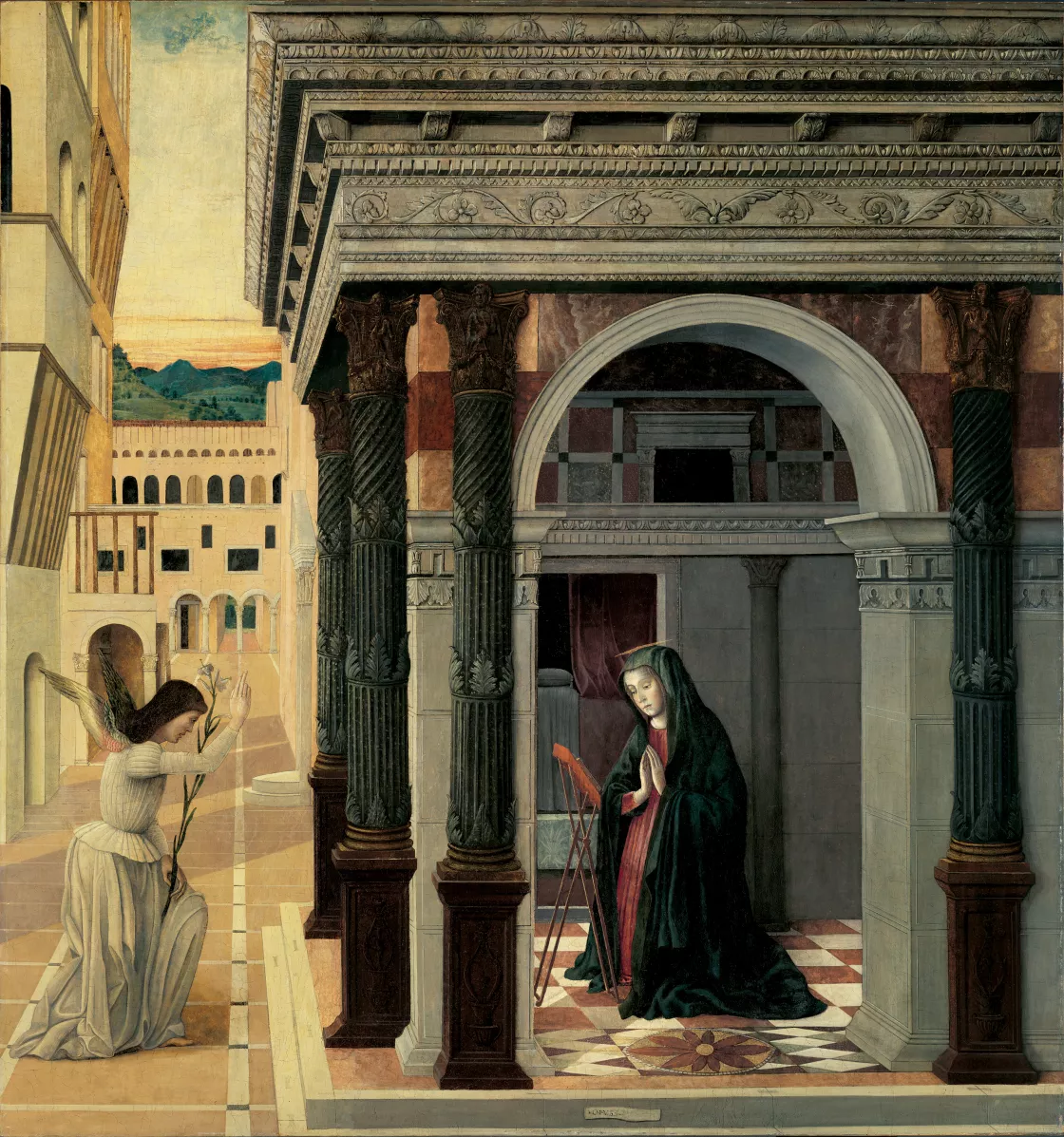
Part of Álvarez-Laviada’s creative process involves reinterpretation and re-contextualisation. In this sense, she has selected a number of works from the museum’s permanent collection, locating them in dialogue with her own works in the museum’s galleries. Flat and vertical. Pedestal no. 0 (2020) and The Annunciation (ca. 1475) by Gentile Bellini allude to the importance of the relationship between architecture and painting and the absence of the figure.
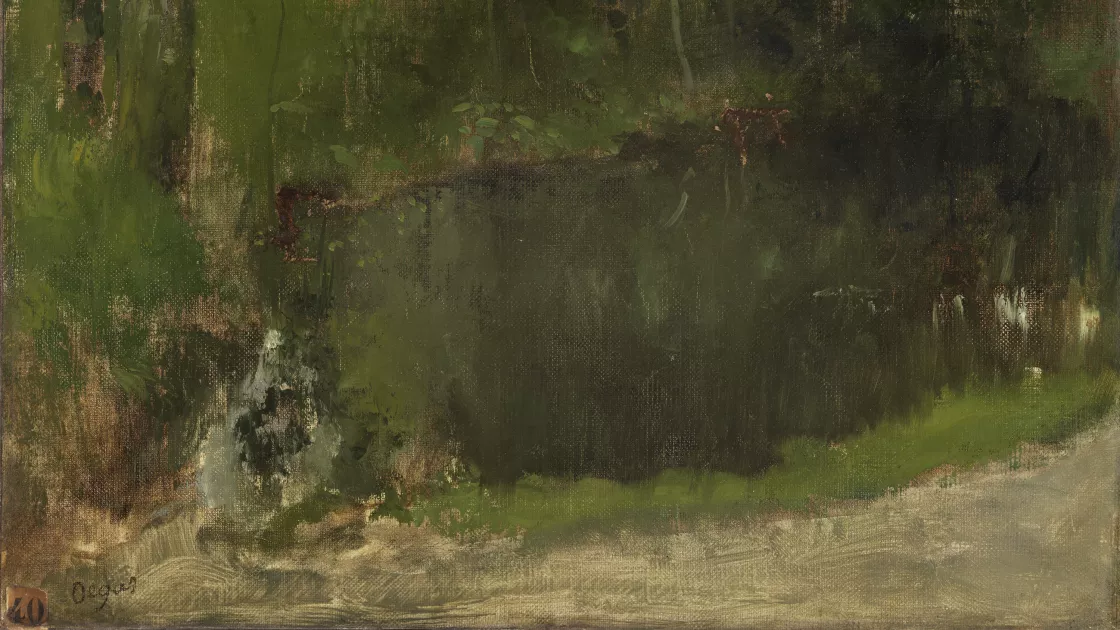
The presence in the exhibition of Suprematism (1920-1921) by Nikolai Suetin reveals Álvarez-Laviada’s creative processes, constructed from references to formal abstraction, as evident in the work that accompanies it, ST. (Composition in red, blue and yellow on black 0) (2021). Finally, Green (2025) is seen alongside The Pond in the Forest (ca. 1867-68) by Edgar Degas, emphasising painting’s haptic values.
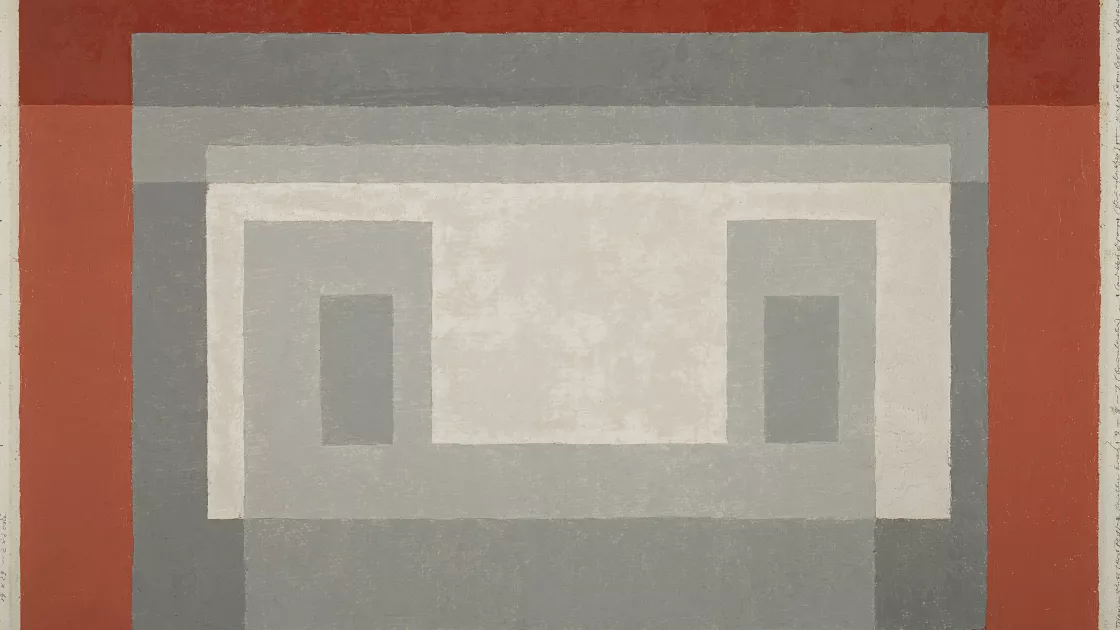
The exhibition opens with works that combine yellow, red and blue with black, the result of mixing the three primary colours. Álvarez-Laviada explores the tradition of research into these colours, from Suprematism and Neoplasticism to the visual investigations of Joseph Albers, whose painting Casa Blanca B (1947-1954) is displayed in this section. Álvarez-Laviada’s work And I'm going round (2025), located in the centre, invites visitors to experience the space in a different way while appealing to personal experience.
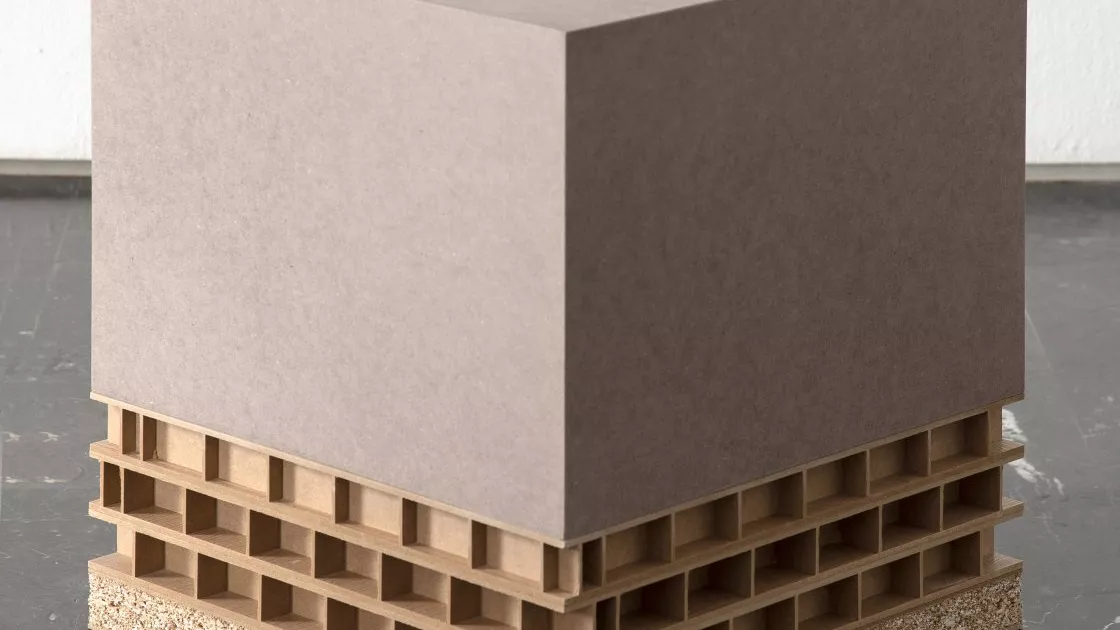
In the next room, Construction in Space-Time II (1924) by Theo van Doesburg (1924) establishes a dialogue with works from Álvarez-Laviada’s series Idea as Model. Created using monochrome materials that evoke architectural models, they reflect on the notion of emptiness.
They are accompanied by others that show the reverse side of open boxes and packaging, such as those in the series Modalities of the visible (2016-2017) and The necessary and the possible (2017), revealing negative space, the hidden, the secondary and silence.
In contrast, in Pedestal 5 (2019) the support becomes the image of what is missing. This group of works reveals the artist's response to secondary materials and artifacts which until recently were needed to maintain and extol the idealised models characteristic of the Eurocentric and patriarchal tradition.
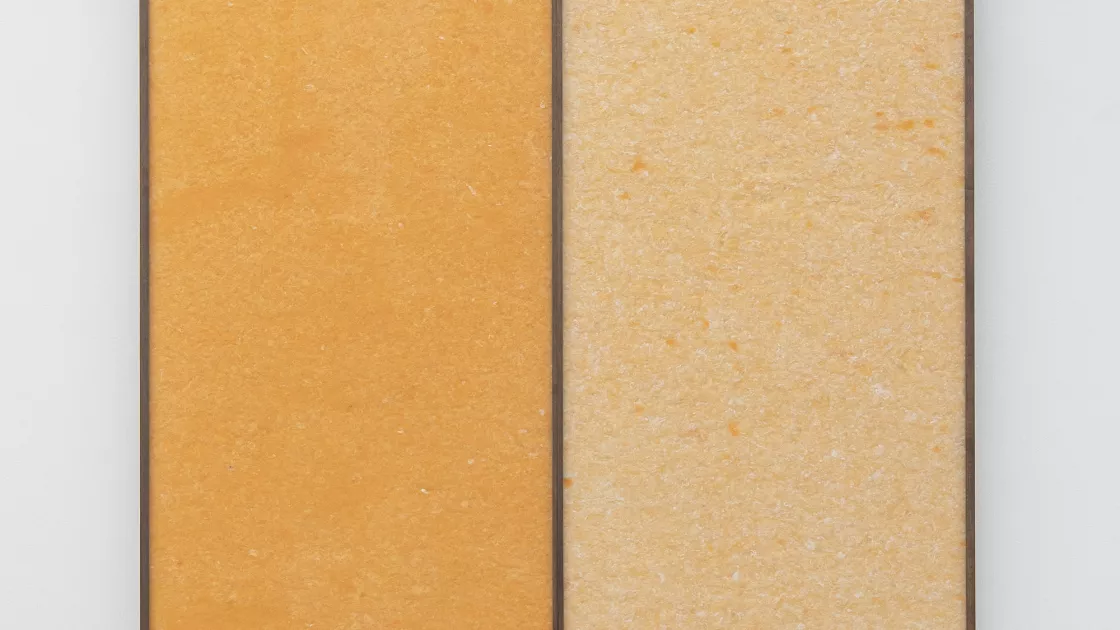
The works on display in the third room, from the series The necessary and the possible, are in some cases made of polyurethane and composite foam, while others are polystyrene. They reveal a similarity with the gouache on cardboard Earth Rhythms (1961) by Mark Tobey, acting as a starting point for new reflections on the notion of the pictorial in abstraction. A visual style comparable to that of the American artist is evident in these works, now applied to industrial materials and repetitive patterns.
Also on display in the connecting corridor is a group of works through which Álvarez-Laviada explores visual/haptic experience, in contrast to the traditional division between the noble senses (sight and hearing) and the lesser ones.
In alternating works from various series (The necessary and the possible and Sample, 2019-2020) sandpaper and soundproofing foam coexist, as do the hard and rough with the very soft, the smooth and the mute, resulting in an activation of the senses which manifests the artist's conviction that the work is only finished by those who experience it.
Finally, Kurt Schwitters' collage Merzbild Kijkduin (1923) has inspired Álvarez-Laviada to develop a new site-specific project in the last room of the exhibition. It comprises a large painting and a coloured cylinder, shown alongside large-scale hardwood reproductions of the volumes in Schwitters’ assemblage.
Irma Álvarez-Laviada (Gijón, 1978)
Within the self-referentiality of the post-Minimalism painting tradition, which extends the avant-garde discovery of painting as a material object, Álvarez-Laviada's works include and establish dialogues between elements such as the stretcher, the canvas, cardboard and paper, the mount, the frame and the support, as well as sandpaper, foams and other protective materials, with architecture, both in spaces linked to the art system and in contexts outside of it.
Whether on her own initiative or commissioned by institutions, Álvarez-Laviada typically starts from a reflection on specific problems in painting and its relationship to space. From there, she deconstructs its postulates and through the manipulation of materials constructs a personal aesthetic articulated through the concept of the small versus the monumental.