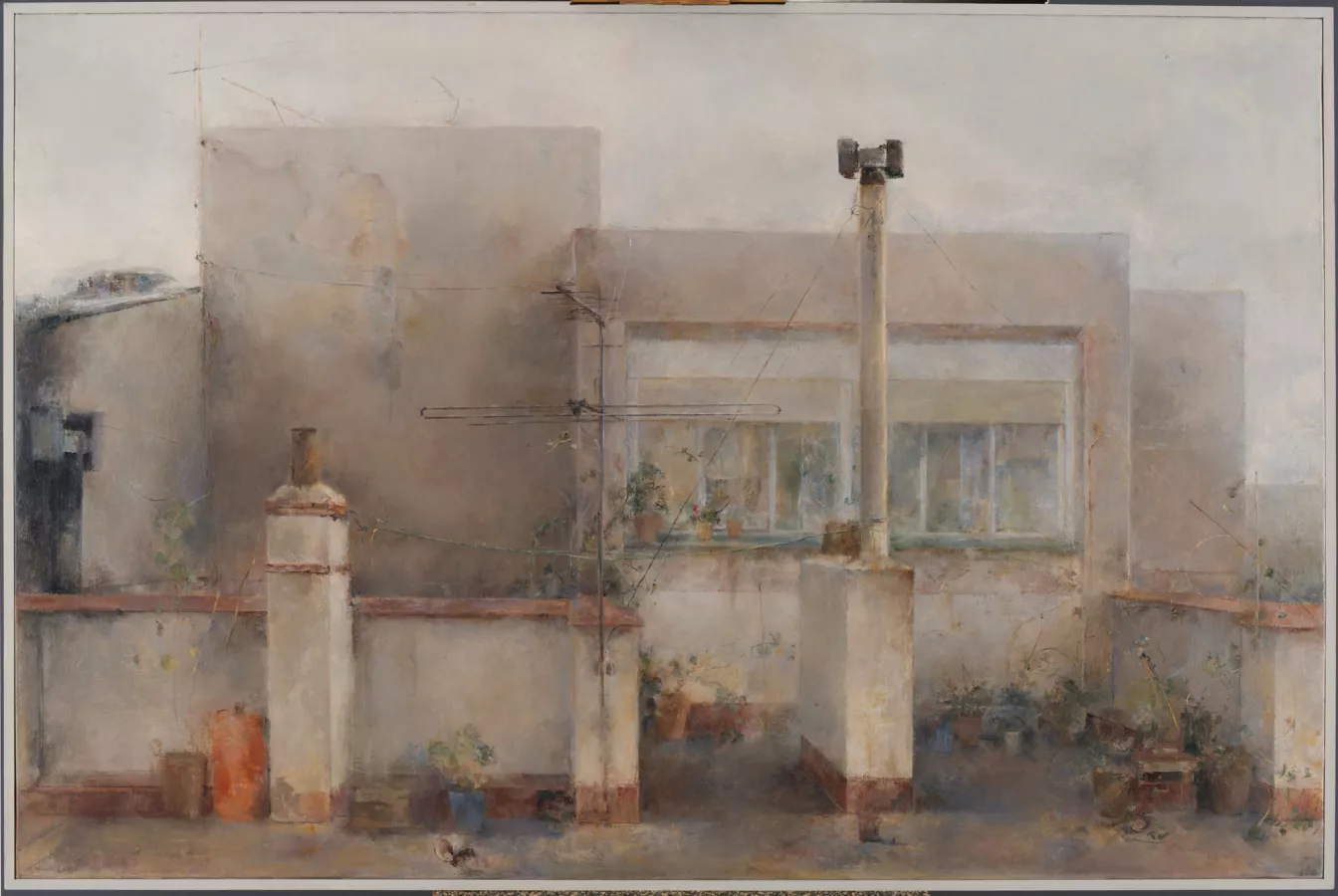
“The Terrace” by Carmen Laffón
Restoration and preventive conservation treatment
The Conservation and Restoration Department of the Museo Nacional Thyssen-Bornemisza has carried out a series of conservation and restoration treatments on Carmen Laffón’s The Terrace, one of the works included in the temporary exhibition Carmen Laffón. Variations.
Preventive conservation measures were also taken to ensure it was displayed in optimal condition and to facilitate its long-term preservation.
The Terraces
In the 1960s and 1970s, Carmen Laffón painted a series of urban landscapes featuring terraces or rooftops and the views from them in Seville and Madrid – the two big cities she lived in – as a prelude to the views of Sanlúcar de Barrameda that she later depicted from her studio on a central street in the town.
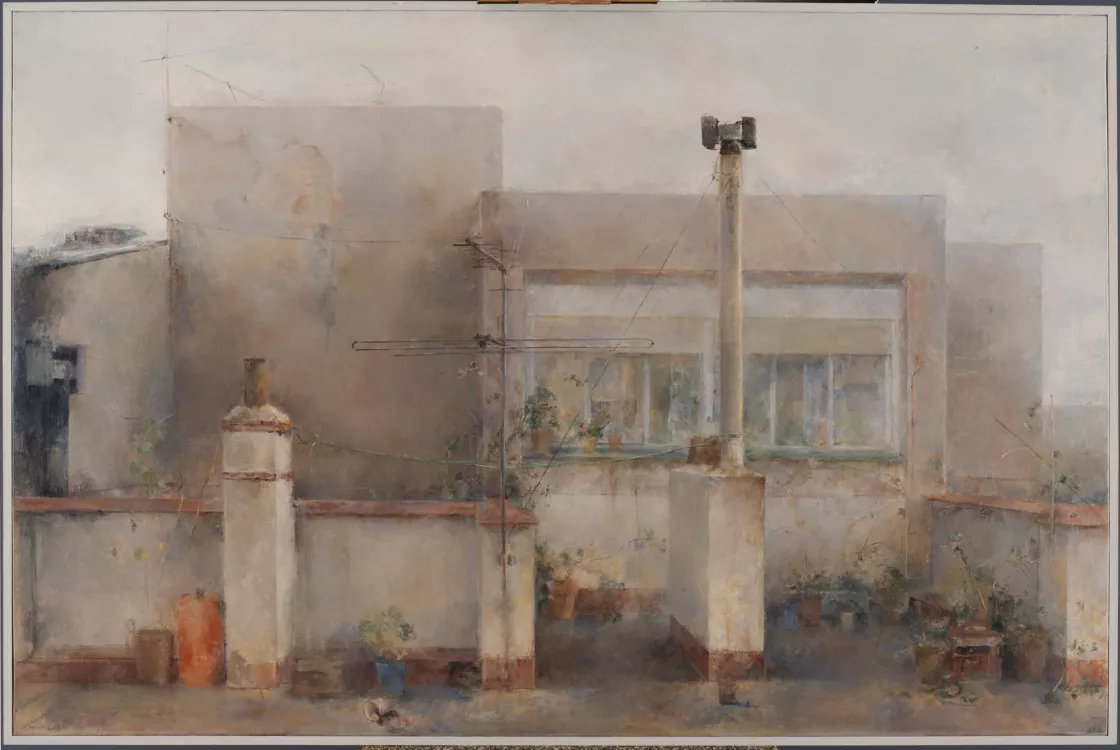
A good example is The Terrace, Madrid (1973–75), where the main subject is a neglected rooftop terrace which is nonetheless bathed in warm light and has an enveloping atmosphere that gives the image a familiar and nostalgic feel.
The intervention process
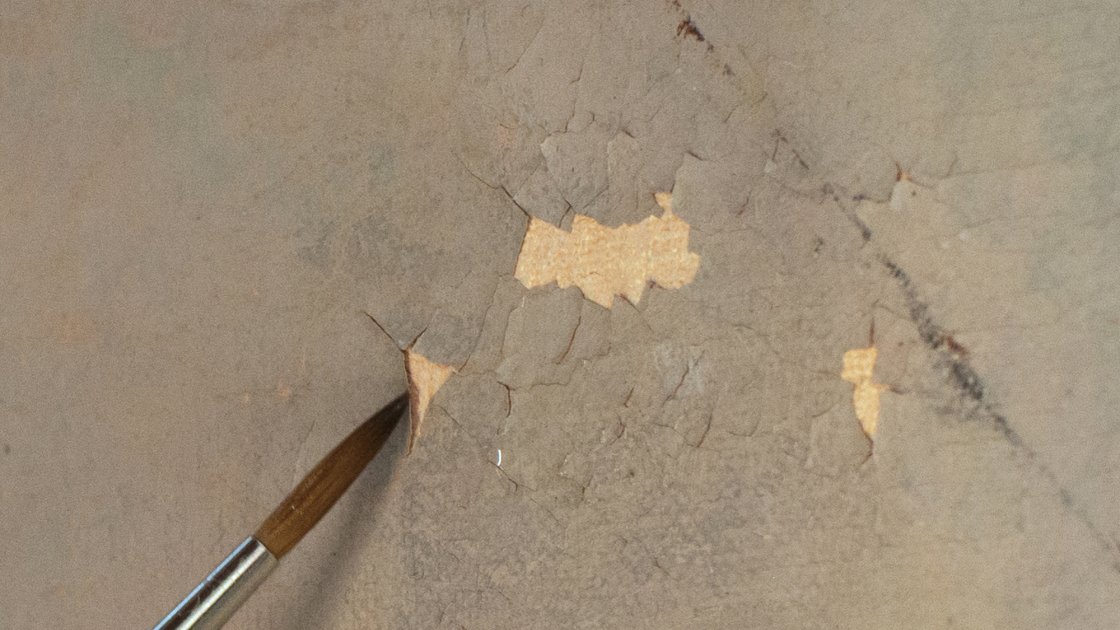
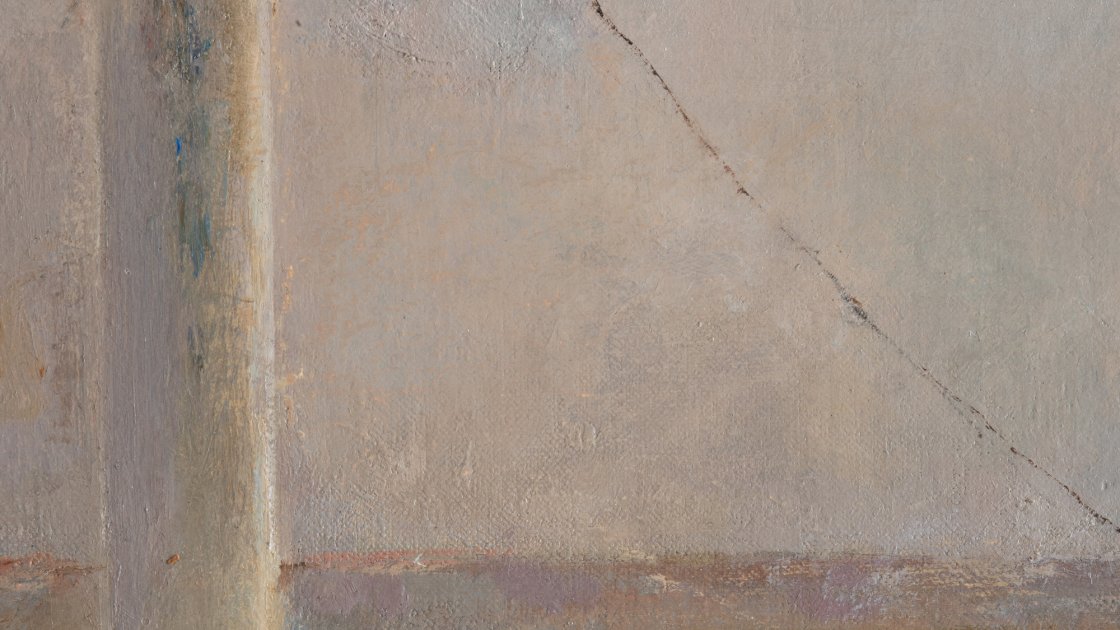
A particular area of the work displayed very pronounced lifting of the paint layer, with some losses. This was due to poor adhesion between the ground and the paint layer. The ground is what serves as a base for the paint.
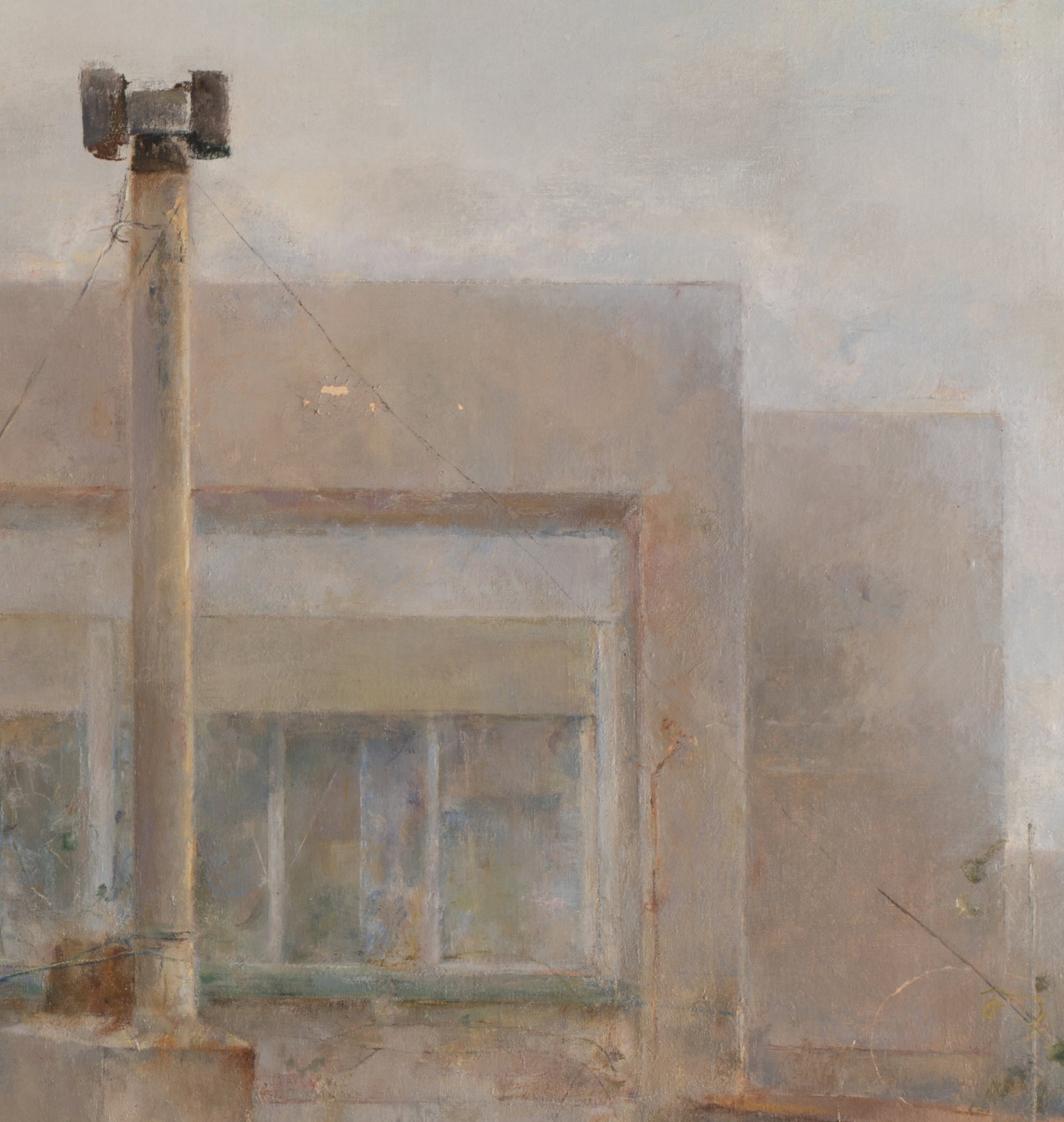
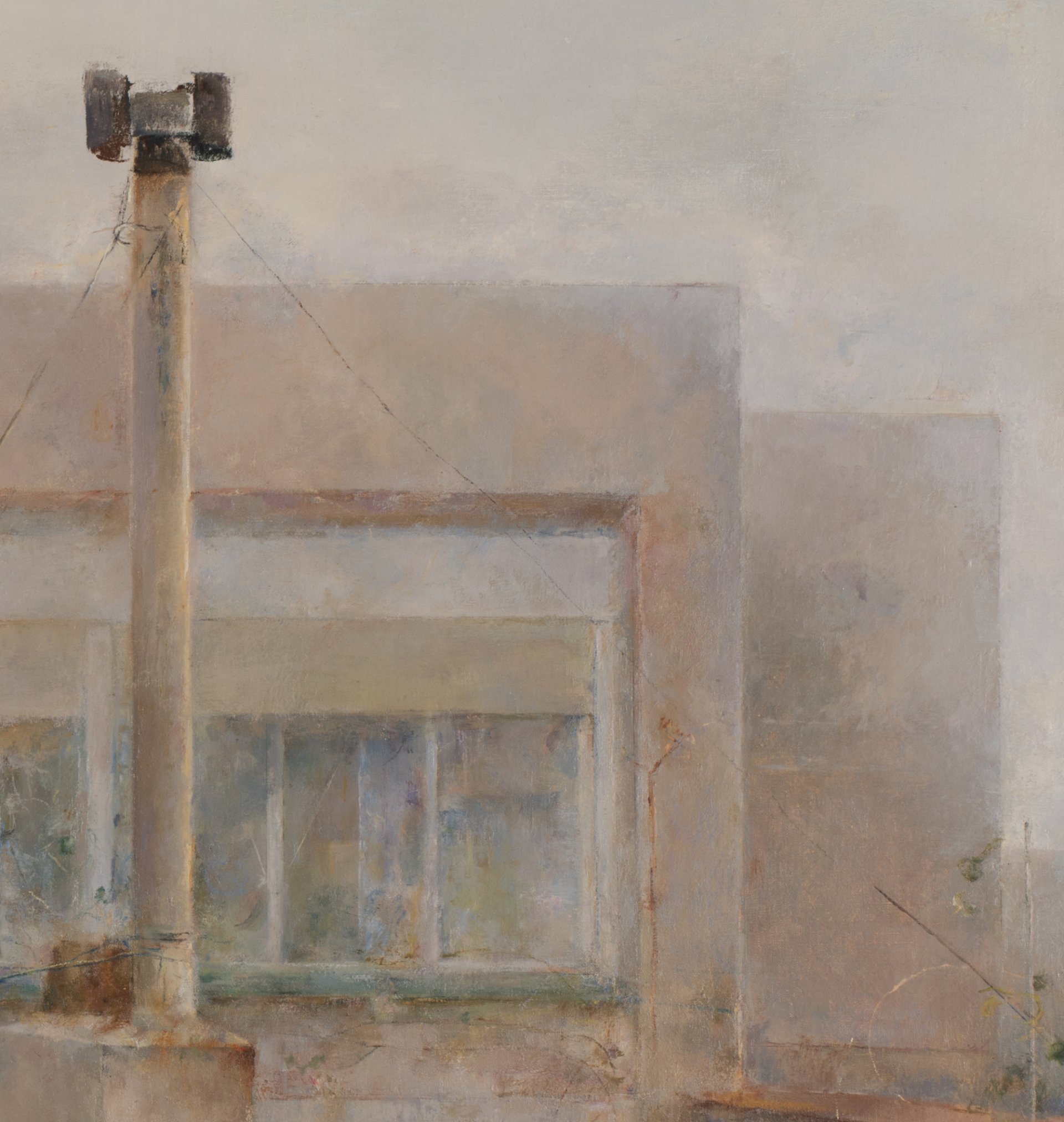
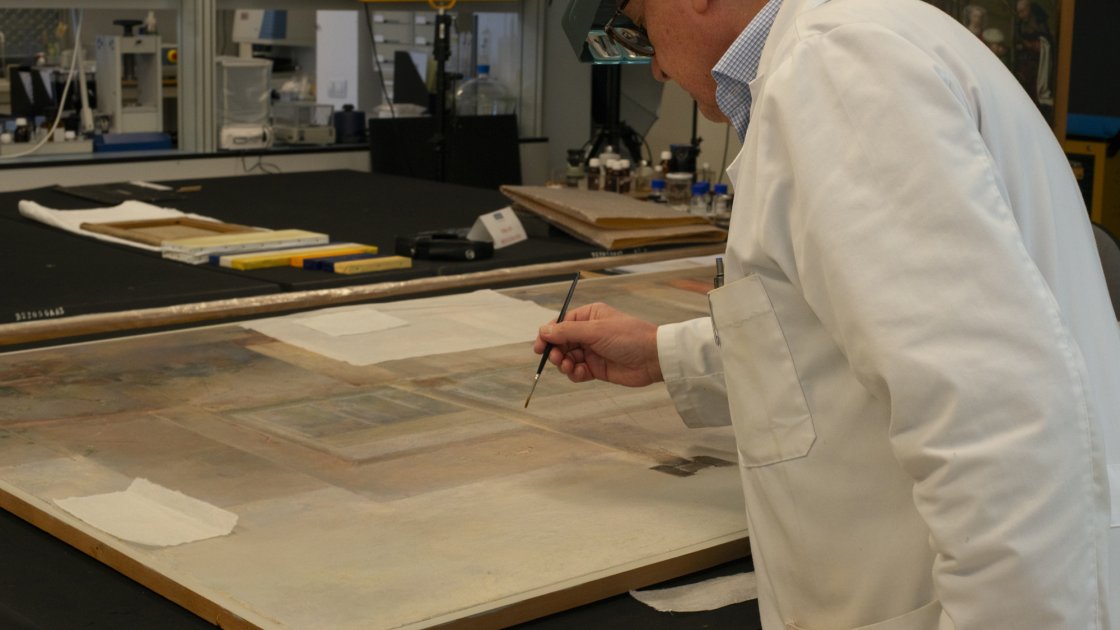
The work carried out involved reattaching the paint layer to the ground using a natural animal glue and applying controlled pressure and heat.
The porosity of the ground and the use of a relatively high-density adhesive facilitated the success of this treatment.
The final result
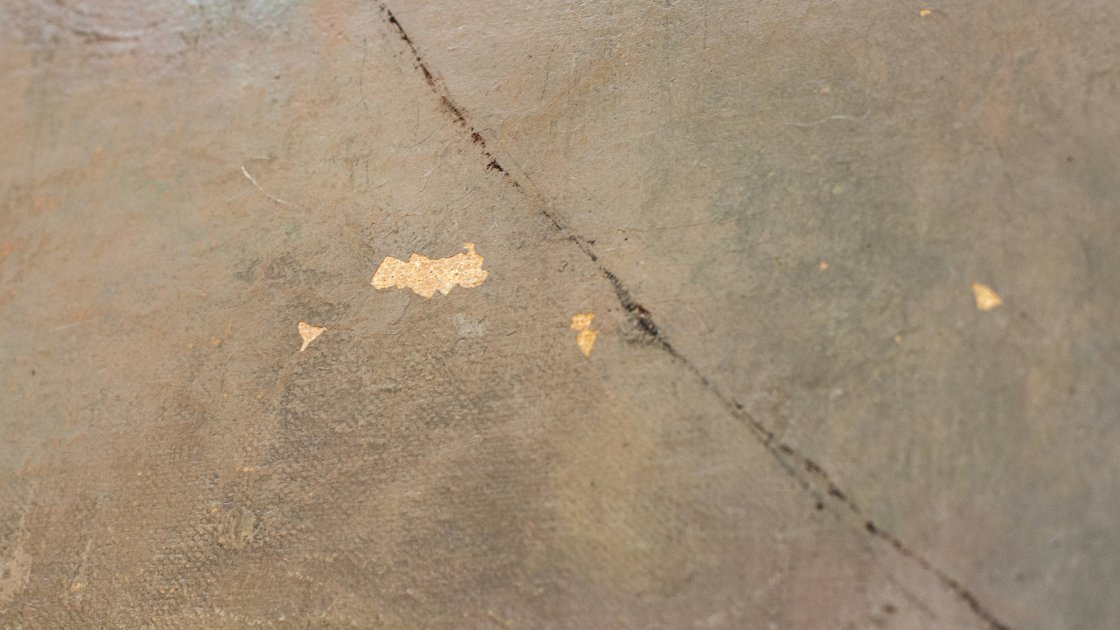
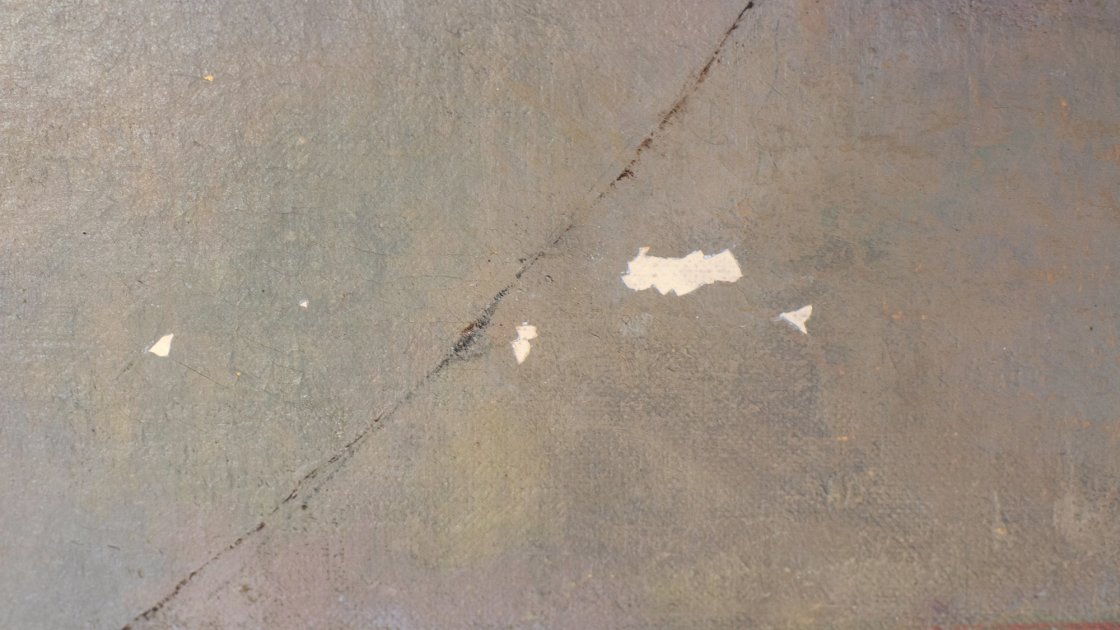
Once the paint layers had been consolidated, it was possible to make an accurate assessment of the extent of the paint losses. The next step involved filling the gaps left by the paint losses and levelling the filler. After the losses had been filled, inpainting was performed in watercolours using an illusionistic technique to restore the visual continuity of the image, respecting the original appearance of the work.