Salvador Dalí. Study of a genius’s technique
El vídeo de arriba es para uso exclusivamente decorativo dentro de está página.
Technical study
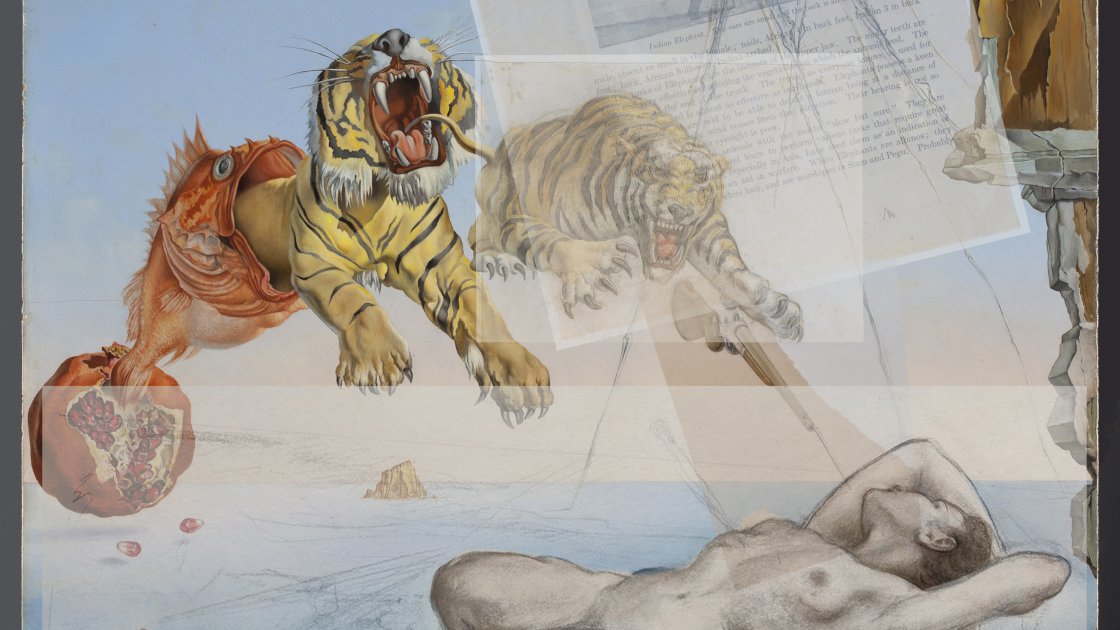
The Conservation and Restoration Department at the Museo Nacional Thyssen-Bornemisza has conducted an in-depth study of One Second Before the Awakening from a Dream Provoked by the Flight of a Bee around a Pomegranate, a picture painted by the Surrealist artist Salvador Dalí in 1947.
Dalí created it a hotel room in Monterey, California, which he used as a studio while writing his famous he wrote his famous book 50 Secrets of Magic Craftsmanship, published in the United States in 1948. His book is a theoretical and artistic treatise on painting, in which the genius reveals all the ‘secrets’ of his technique. In Dalí’s own words, his aim was 'to make translucent the most obscure'.
The studies carried out on this picture clearly demonstrate the technical complexity and perfection of Salvador Dalí's work, as well as his great skill as a painter.
A Complex Composition
The Golden Ratio
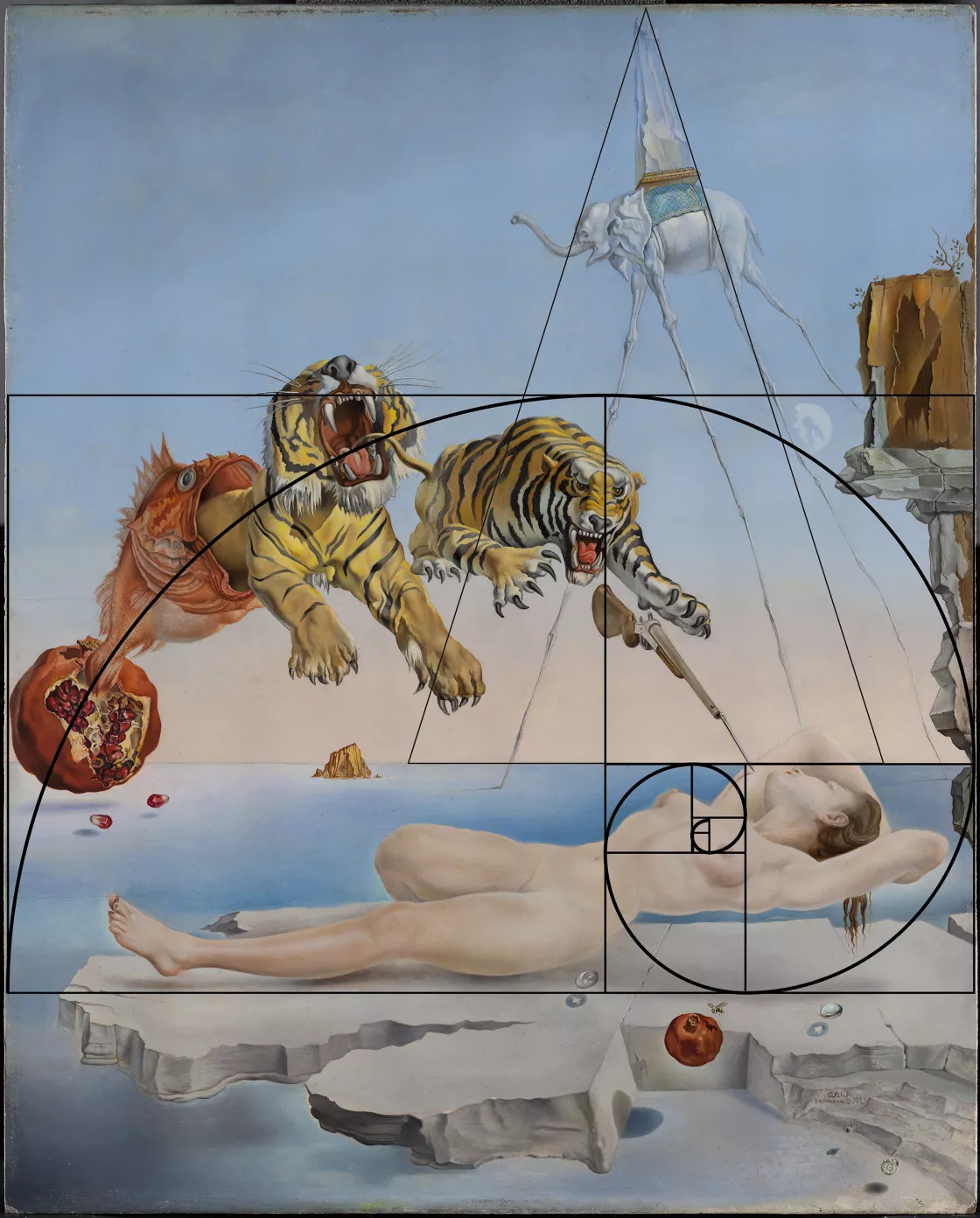
Fascinated by the mathematics and geometry used by the great masters to create some of the most important works in history, Dalí applied the golden ratio to this painting in two ways, with the help of the mathematician Matila Ghyka: he relied on the golden rectangle and golden triangle to position and organise the main elements of this film-like scene.
This divine proportion appears in the golden spiral formed inside the rectangle, which is based on the mathematical ratio of the segments in its horizontal side to its vertical side. The result is 1.618033, known as the golden number or Phi (φ).
This spiral winds its way through the composition, passing through strategic points where various elements are situated and invisibly guiding our gaze.
Starting at the pomegranate, it passes through the middle of the scorpion and the tiger's mouth. It touches the rock's most protruding and recessed areas on the right, reaches Gala’s elbow, limits the length of her hair, passes through her hips, delimits the position of the horizon and finally ends at his muse’s heart.
In contrast, Dalí used the golden triangle to position the figure of the elephant. He created it by taking half the width of the horizon as his measurement and strategically placing it in such a way that the obelisk coincides with the apex of the triangle.
Creative process
Beneath the surface of the paint
In his treatise on painting, Dalí wrote: ‘I want you to paint your first work on a … wood panel… which is the most difficult surface to handle, but which … will enable you to attain the highest degree of perfection’.
During his time in America, Dalí produced eight paintings on wood. Three of these – The Basket of Bread (1945), Three Apparitions of the Visage of Gala (1946) and Leda Atomica (unfinished) (1947) – belong to the Fundación Gala-Salvador Dalí and have the same type of support as our painting.
This suggests that the artist may have had some sort of relationship with a timber company that supplied him with these panels, cut to the exact size required for his works.
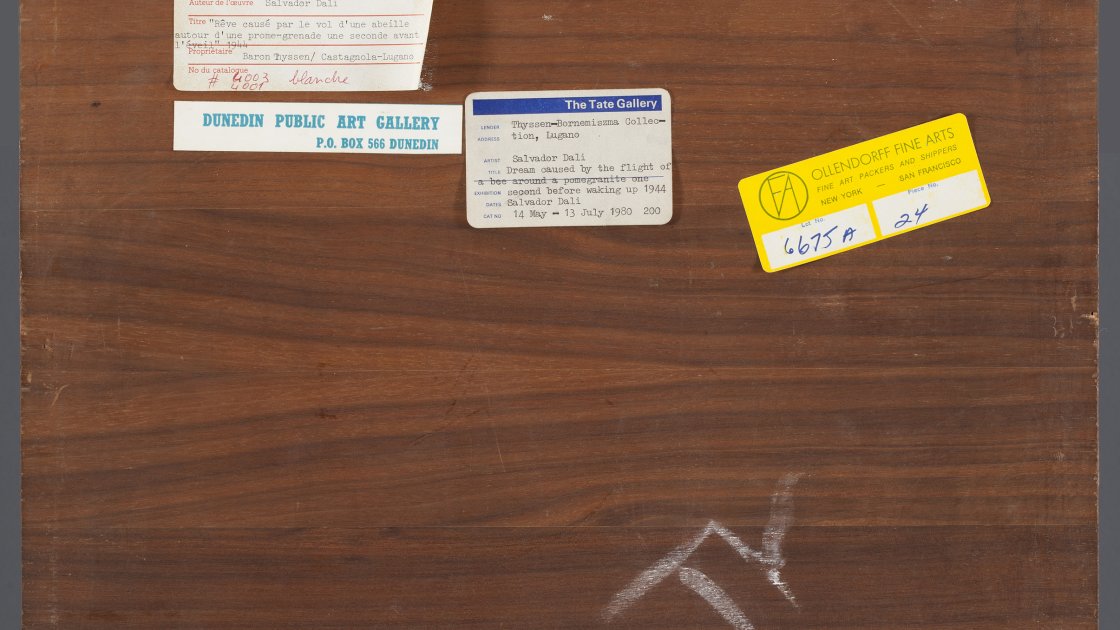
The support for this work is a plywood panel consisting of three layers. The back layer is a thin veneer of American mahogany made up of several pieces with a horizontal grain. In the centre is a thicker wooden core with a vertical grain. On top of this core is the face veneer, which consists of several vertically joined panels that can be seen in the X-ray.
Dalí applied two preparatory layers to the wooden support: a ground and an imprimatura..
Ground. In his treatise, Dalí tells us that the panel must be ‘…gesso-covered’ (i.e. with calcium sulphate) and ‘non-absorbent’. However, laboratory analyses reveal that he actually used a commercial gesso product made of calcium carbonate, which was widely available in the United States at that time.
It is unclear whether Dalí was aware that this ground did not contain calcium sulphate or whether he simply adapted to the materials available on the US market.
Imprimatura. Interestingly, although in his book Dalí describes the ‘imprimatura’ as the first layer of colour, our studies did not identify an initial ‘veil’ of the kind he refers to. What they found instead was a thin, uniform white coating composed of various pigments – chiefly barium white, talc and titanium white – with a very small proportion of lead white.
With the exception of lead white, Dalí’s treatise makes no mention of any of the other white pigments identified in the work as part of his palette.
Dalí painted directly onto this white layer to make the colours applied over it appear more luminous and intense, creating the impression that light is emanating from within the painting.
The paint layer
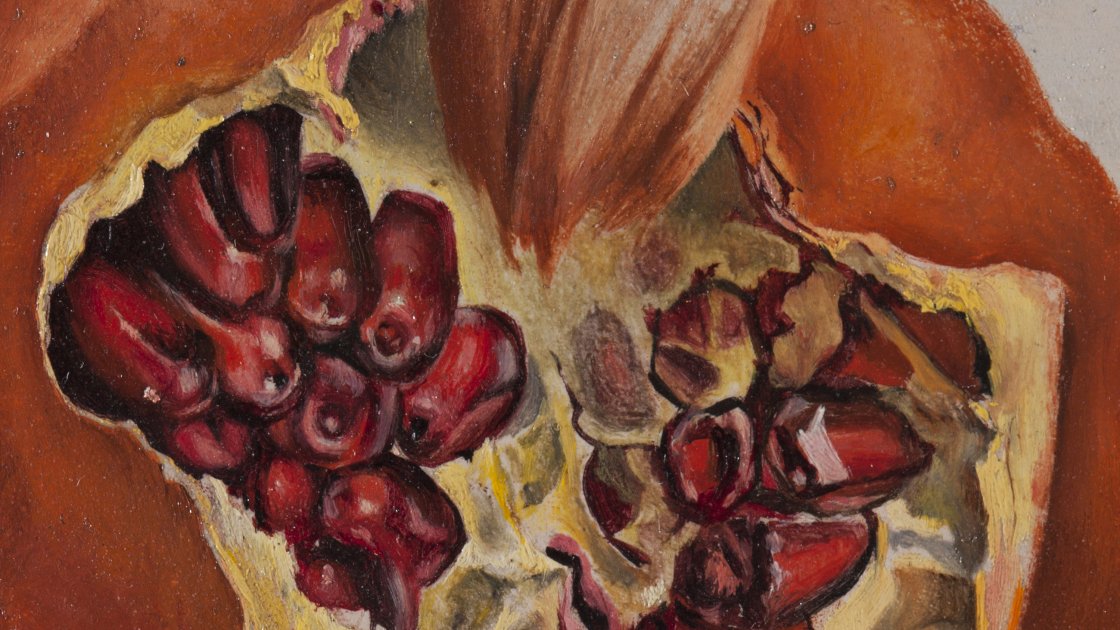
The paint layer was applied with great precision by mixing oil paint and rosin in varying proportions to achieve different degrees of thickness, transparency and fluidity. Although Dalí recommended amber resin, analyses reveal that he used rosin.
The artist distinguished between an 'underpainting', consisting of the underlying layers, and an 'overpainting', corresponding to the final layers. In this work, however, the distinction is not so clear, although the use of very thin layers and a wide variety of colours and shades is evident.
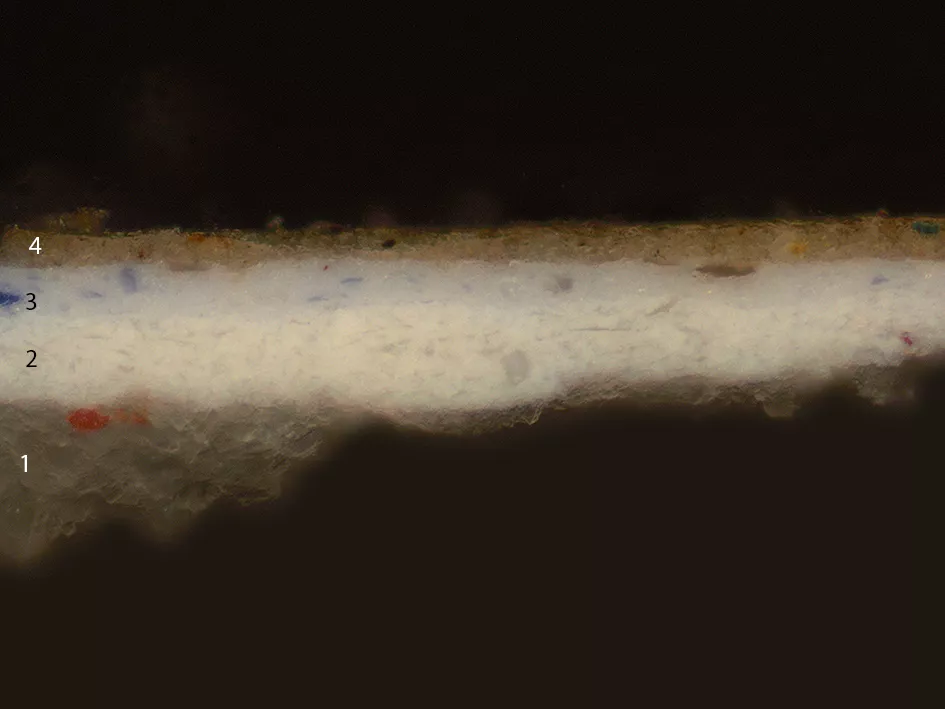
The micro-samples have provided a better understanding of the painting process. For example, the figures in the upper section were painted onto the sky, which had already been completed. This can be seen in micro-sample No. 1, where the brown layer representing the rock (layer 4) overlaps the blue layer of the sky (layer 3).
The creative universe behind the painting
Sketches, studies and studio material
The Fundación Gala-Salvador Dalí holds numerous preparatory works that provide an insight into the creative process of this painting. They show how Dalí started with specific references and carefully transformed them to construct the dreamlike universe depicted in his picture.
Notable among these is a pencil and charcoal general study on tracing paper, in which Dalí defines the composition. Although the composition is laid out quite clearly at this stage, certain details were altered in later versions, such as the position of the needle in relation to Gala’s body.
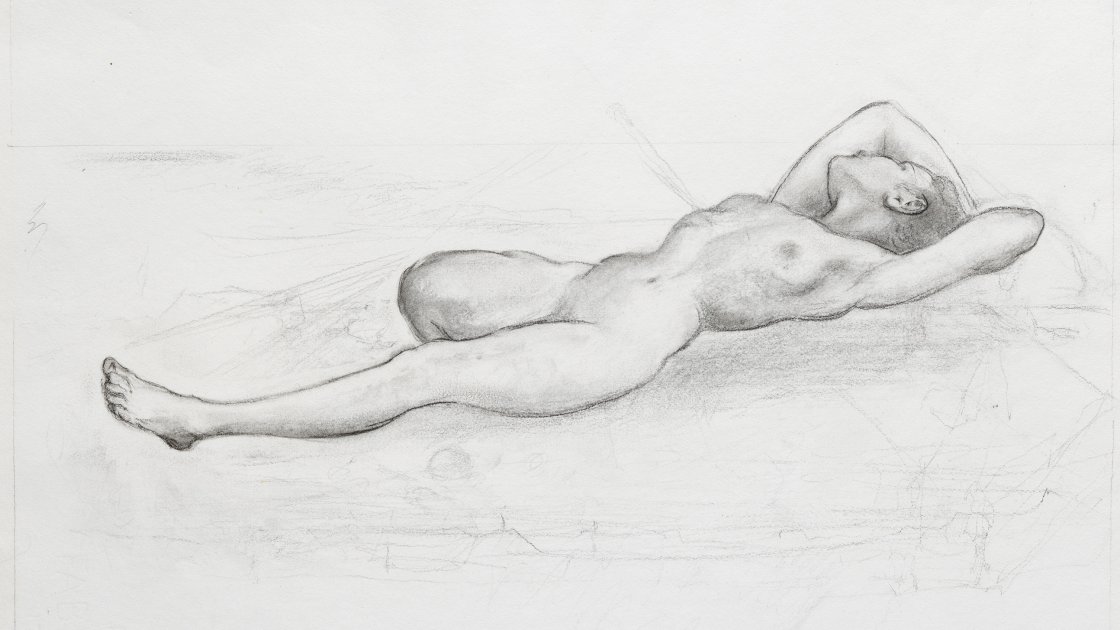
There are also two studies of Gala’s figure. The first, a quick pencil sketch, shows how Dalí adjusted the size and position of her breasts. The second, executed in Conté crayon, fully matches the final painting. Only a few details, such as one of her breasts and her big toe, were modified later.
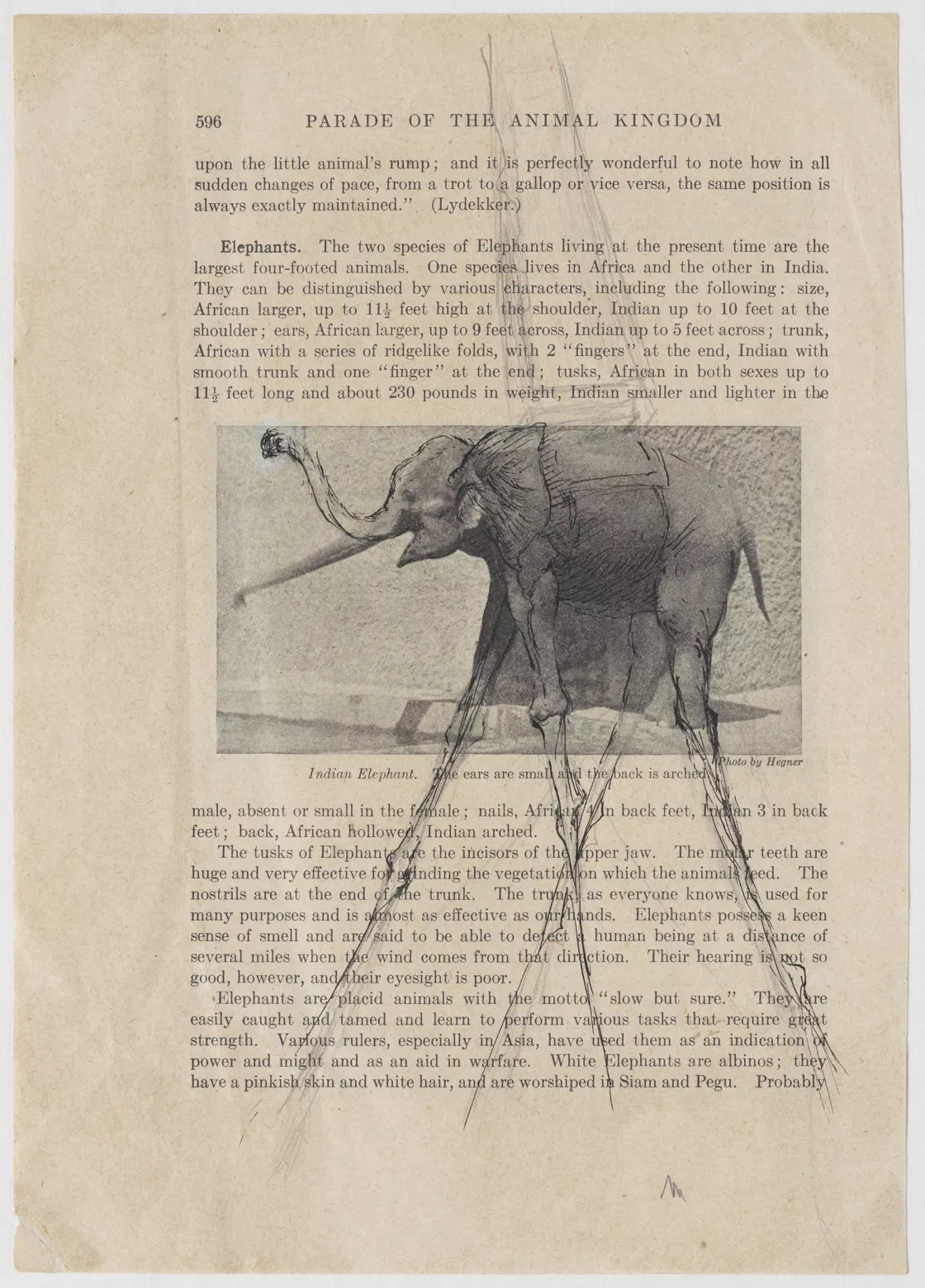
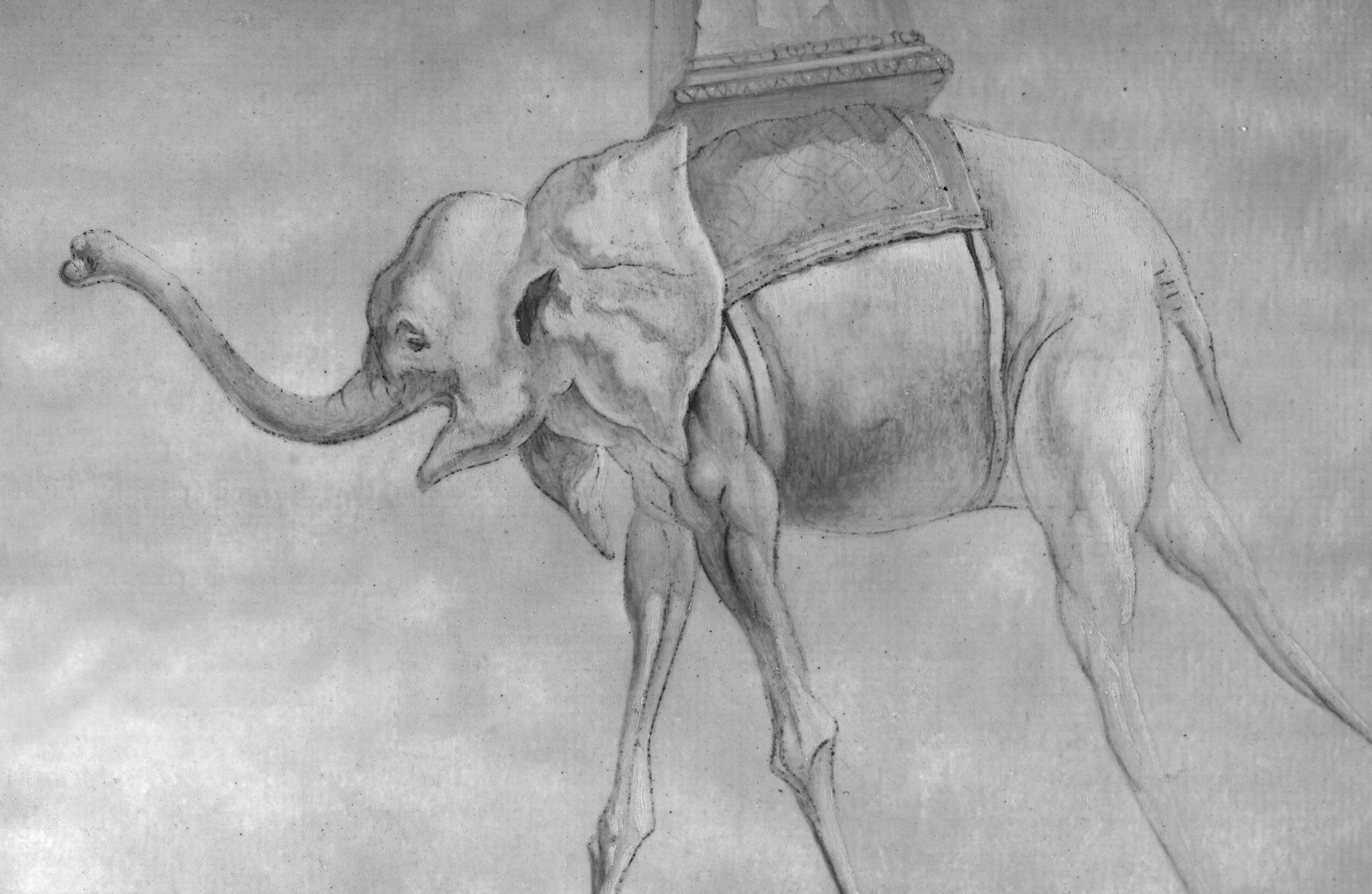
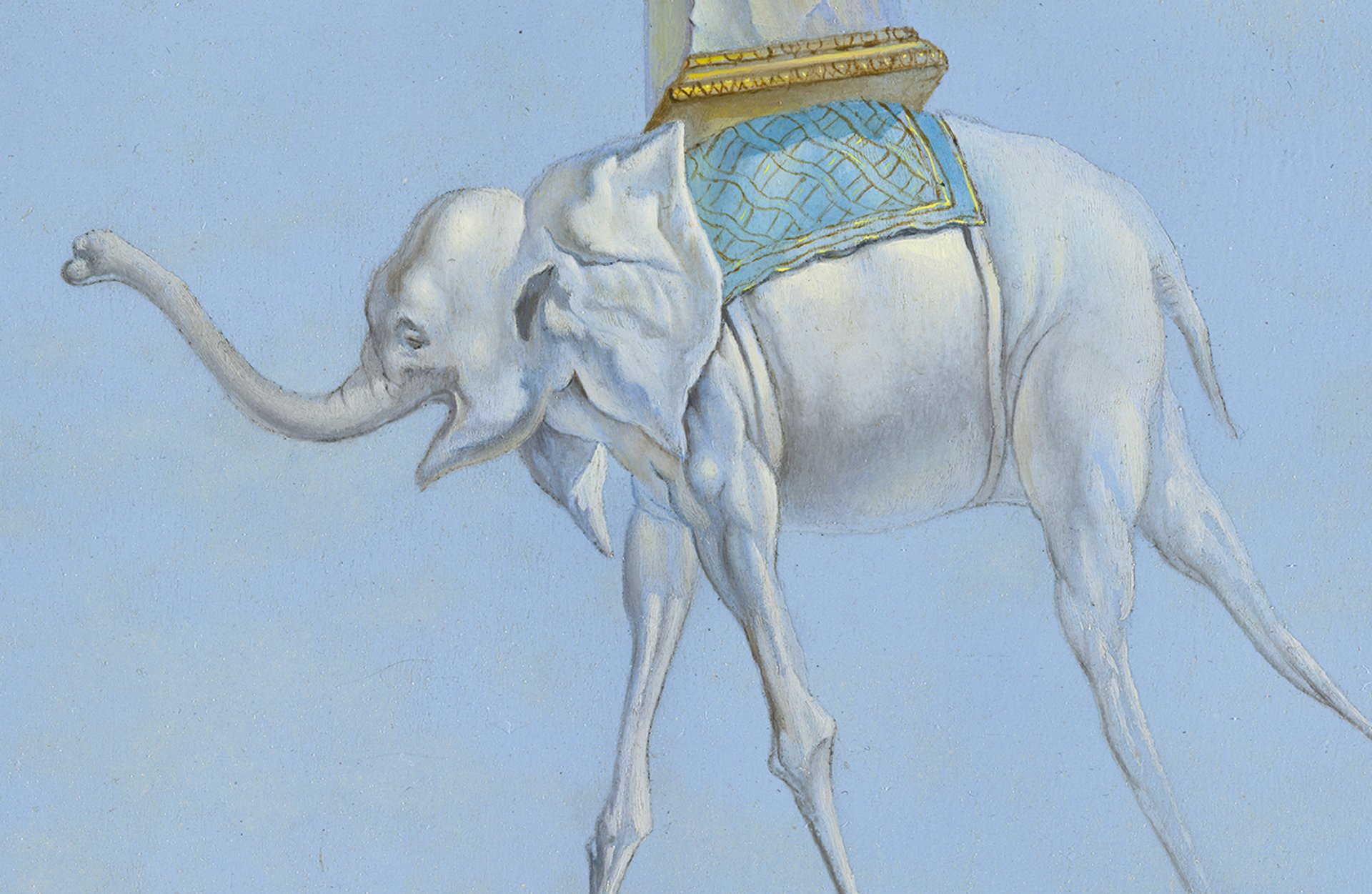
The Foundation also has a page from Parade of the Animal Kingdom, on which Dalí drew his characteristic insect-legged animal, based on a photograph of an elephant. The drawing matches the painting, except for one of the hind legs, which the artist altered.
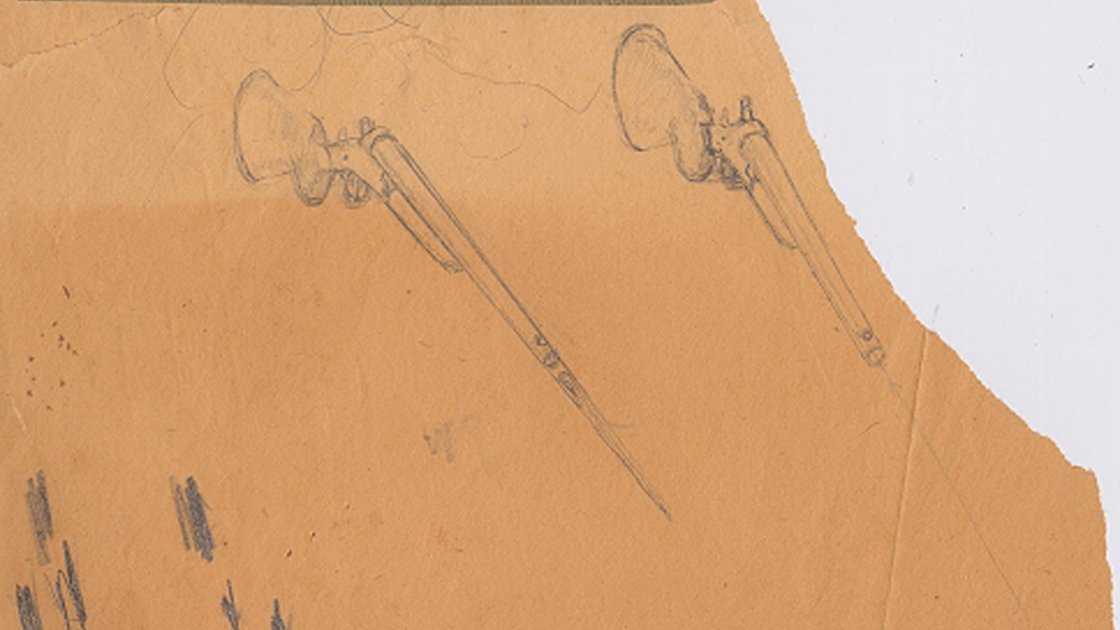
Another of the studies features the rifle. Dalí produced two versions of the same object, and the one on the right is the one that appears in the painting. The drawing also has a curious feature: the pressure of the very hard pencil used left a deep indentation in the paper, which is visible when viewed in raking light.
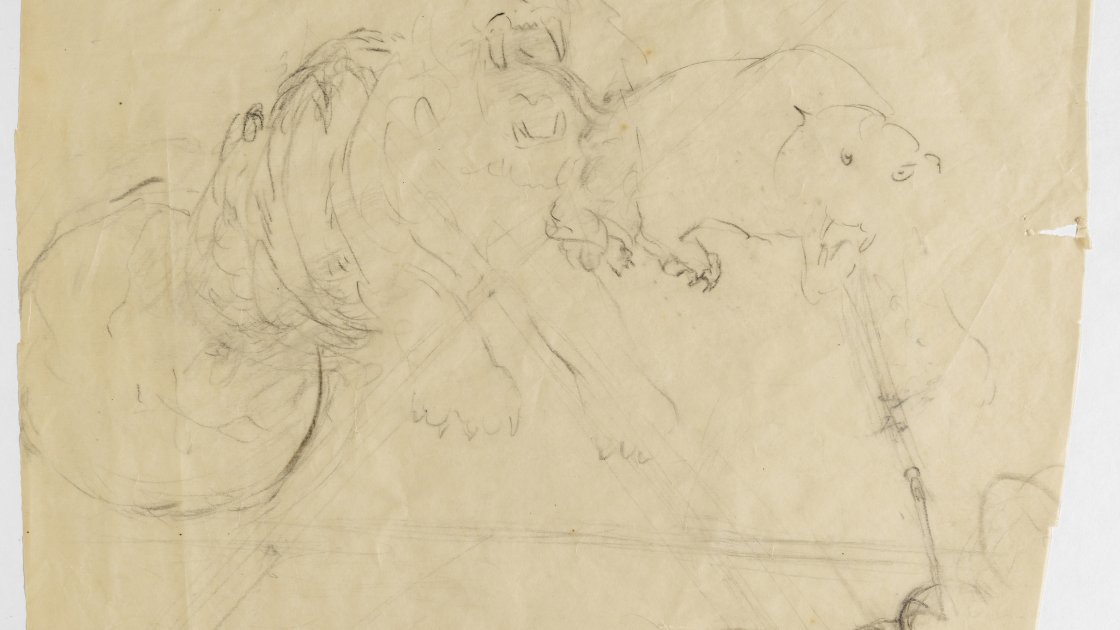
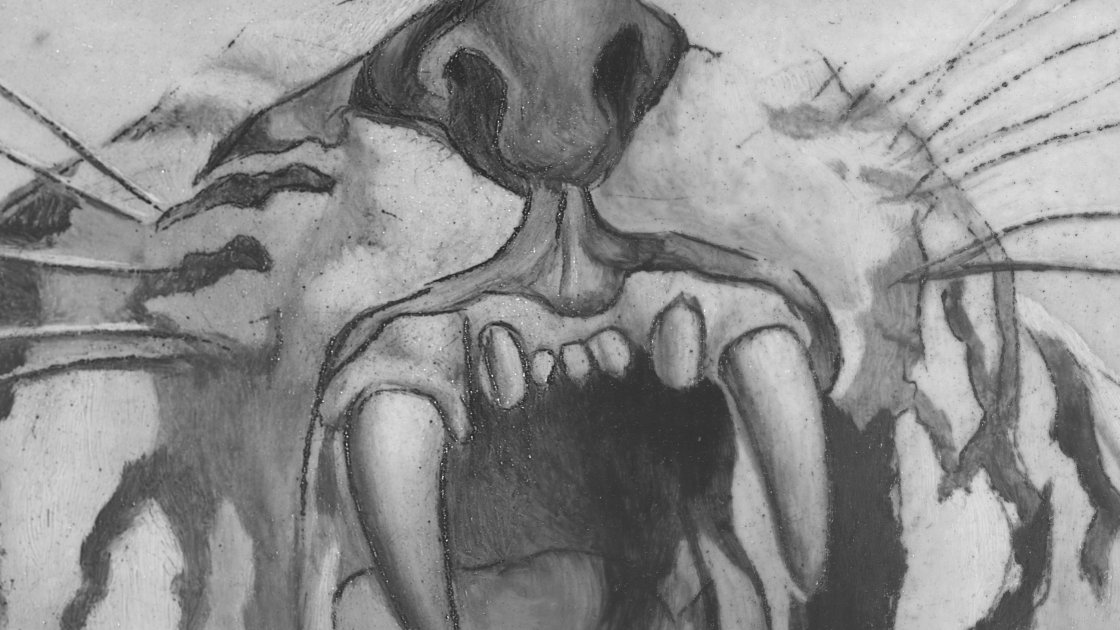
For one of the famous tigers, Dalí took the head and front legs of an animal on a Ringling Bros and Barnum & Bailey circus poster as his reference. While the resemblance is clear, the artist altered details such as the fur, stripes, fangs, whiskers, ears and back.
Working method
In his book, Dalí explains various methods for transferring a preparatory drawing to the final work.
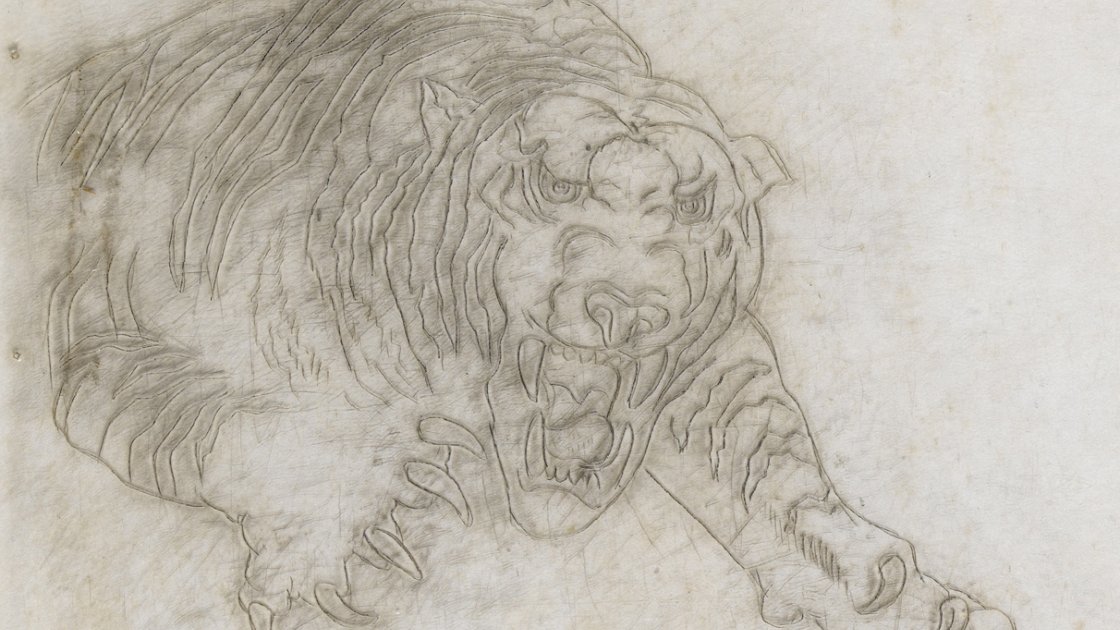
The one that particularly interests us is ‘Secret Number 24’, as this is the one he applied to our painting: ‘You will proceed as do the engravers… you will engrave your drawing by means of a needle… on a sheet of cellophane…’
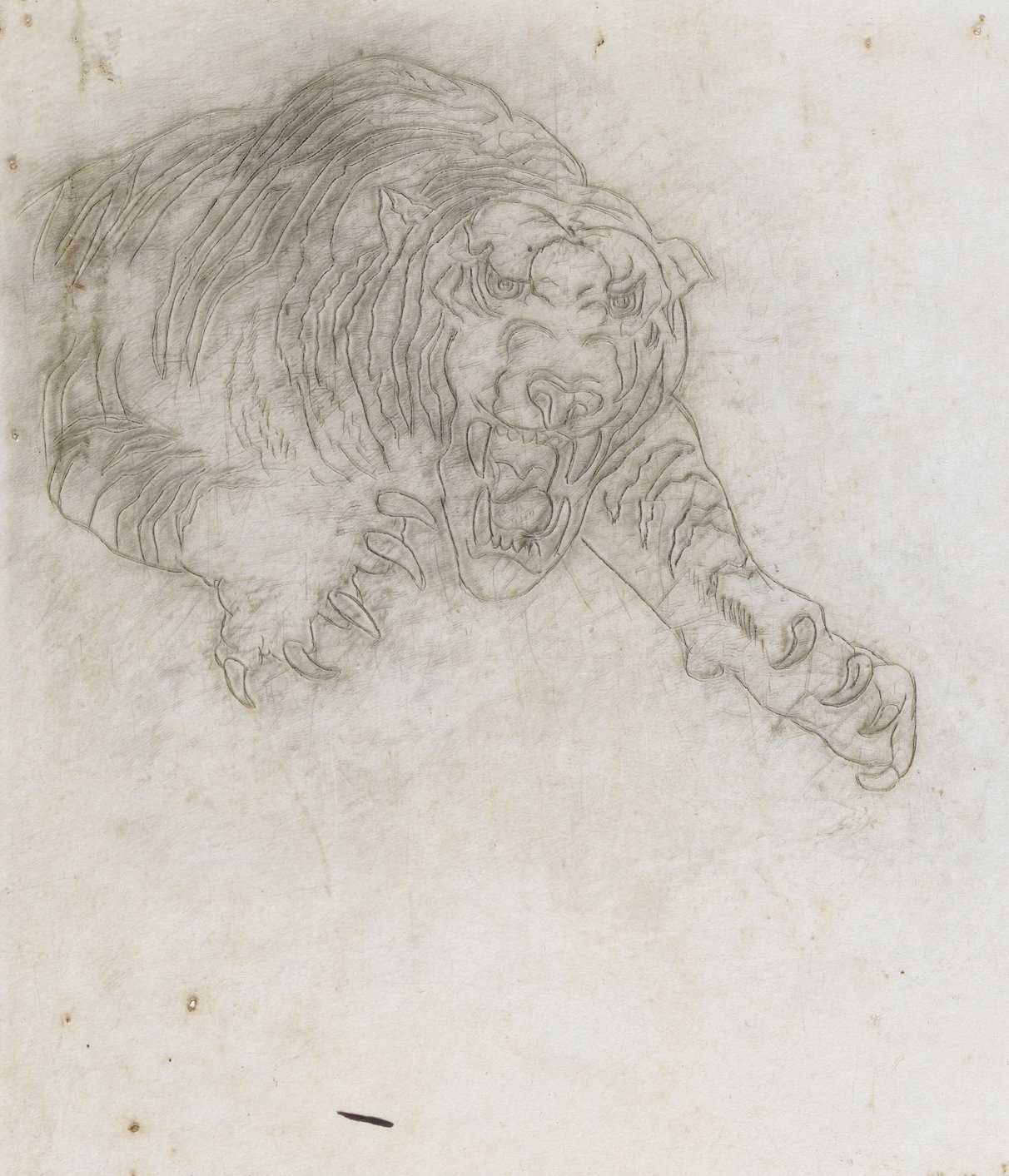
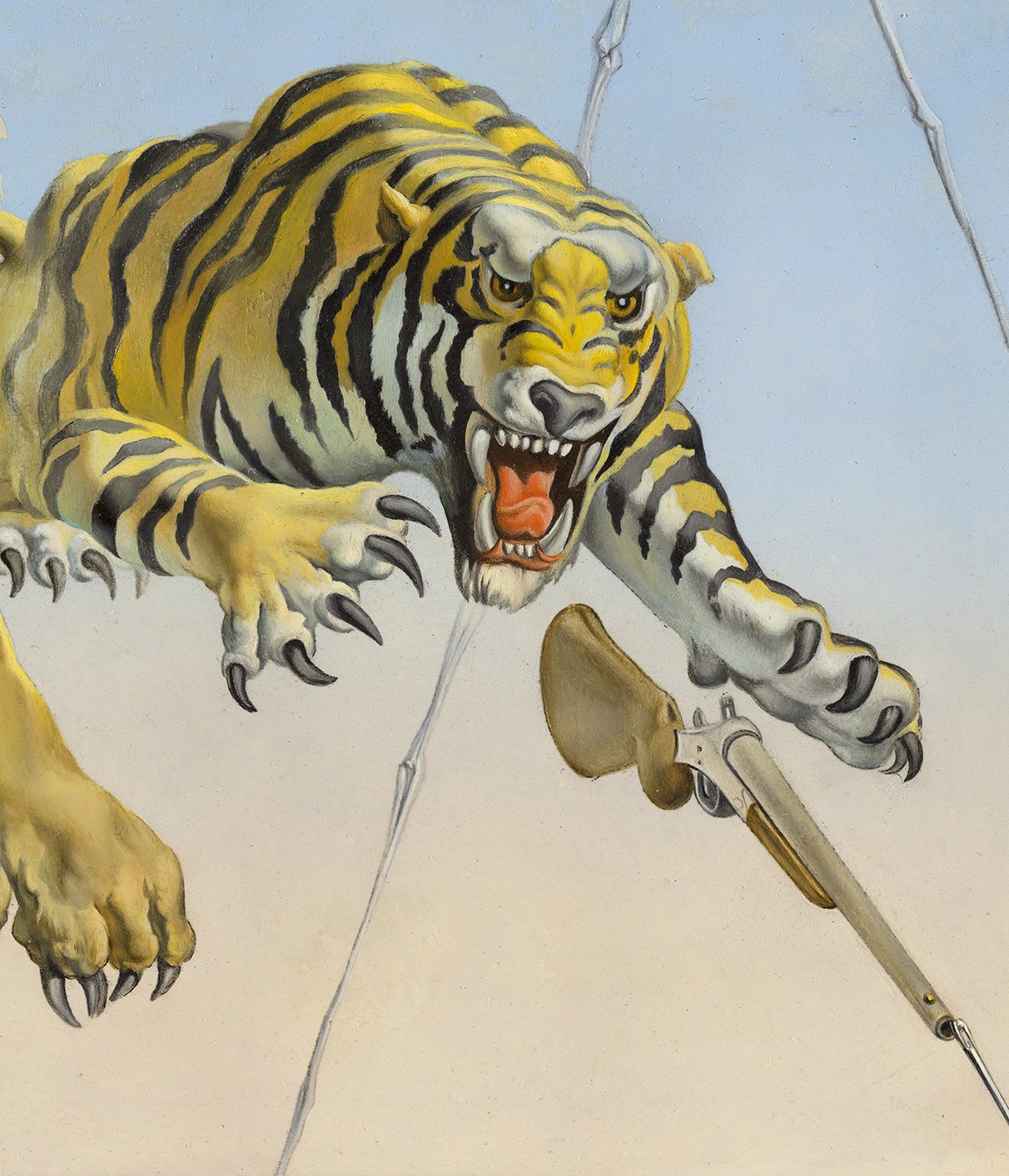
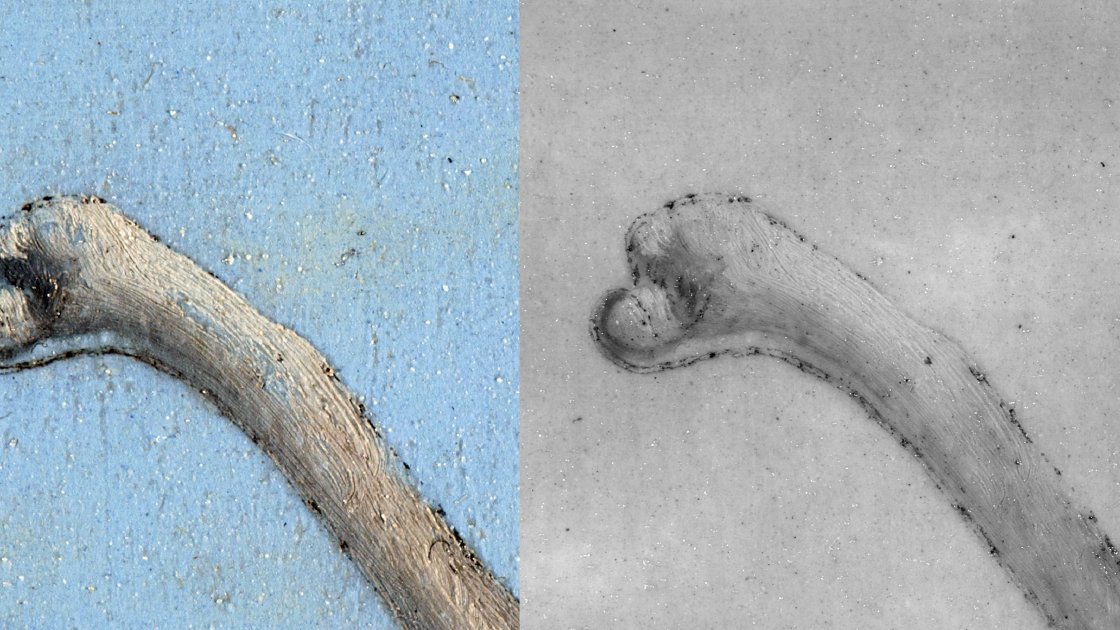
To accurately transfer his drawings, Dalí used a technique similar to drypoint engraving. He placed a sheet of transparent plastic over the drawing and traced it with a metal needle to create fine incisions. The small burrs on either side of the incisions then trapped the water-based ink prepared by the artist, enabling the drawing to be transferred by applying pressure to the surface and creating the characteristic double line. The Fundación Gala-Salvador Dalí holds two of these sheets: those used for the elephant and the attacking tiger. Both display incisions on both sides, which allowed the motifs to be transferred in different directions.
The hidden traces of the creative process
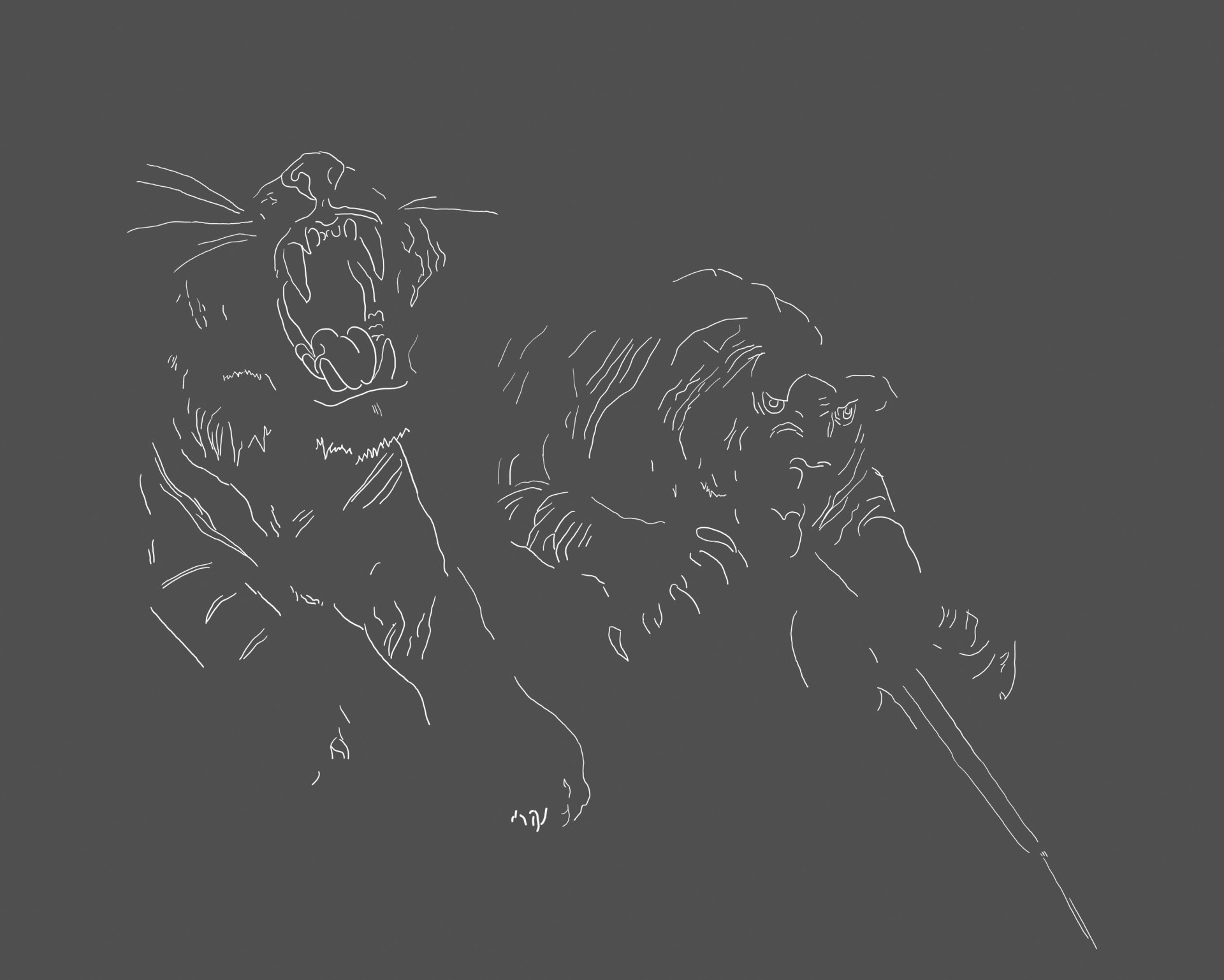
Infrared reflectography has enabled us to discover the existence of this double-line drawing, not only in the bodies of the elephant and the attacking tiger, but also in the rifle and the figure of Gala. This demonstrates that Dalí used the same technique for these elements, even though the related sheets are no longer extant.
The artist probably regarded these plastic sheets as mere studio materials and therefore considered them disposable. Those that have survived may have been kept because there was still space on them for new tracings.
In other parts of the painting, however, we find pencil lines drawn directly onto the paint, such as the whiskers of the roaring tiger and the horizon line.
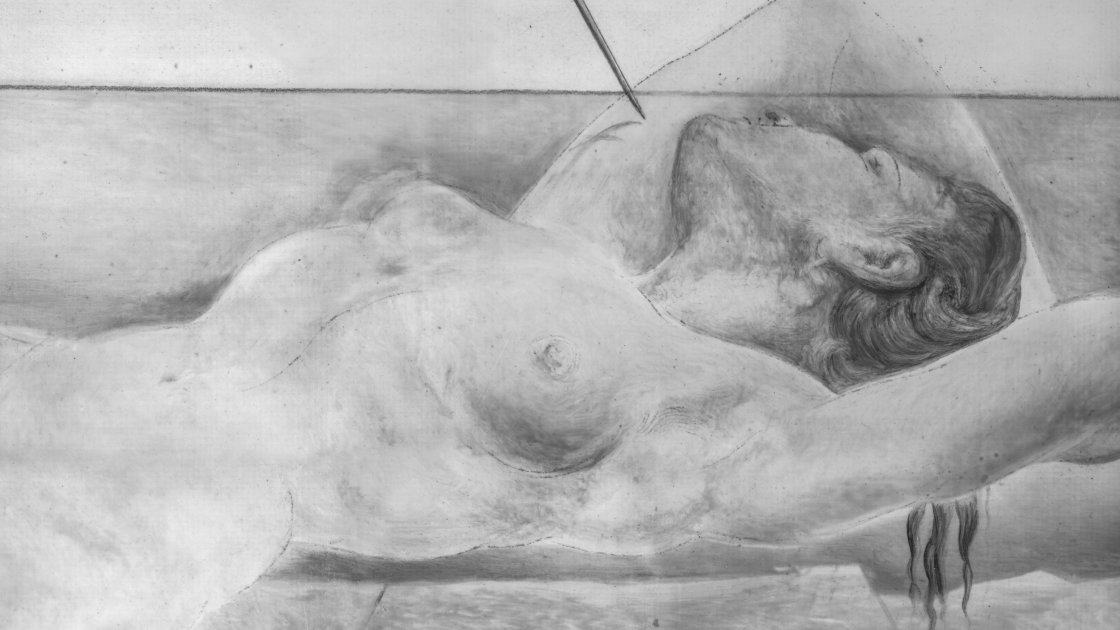
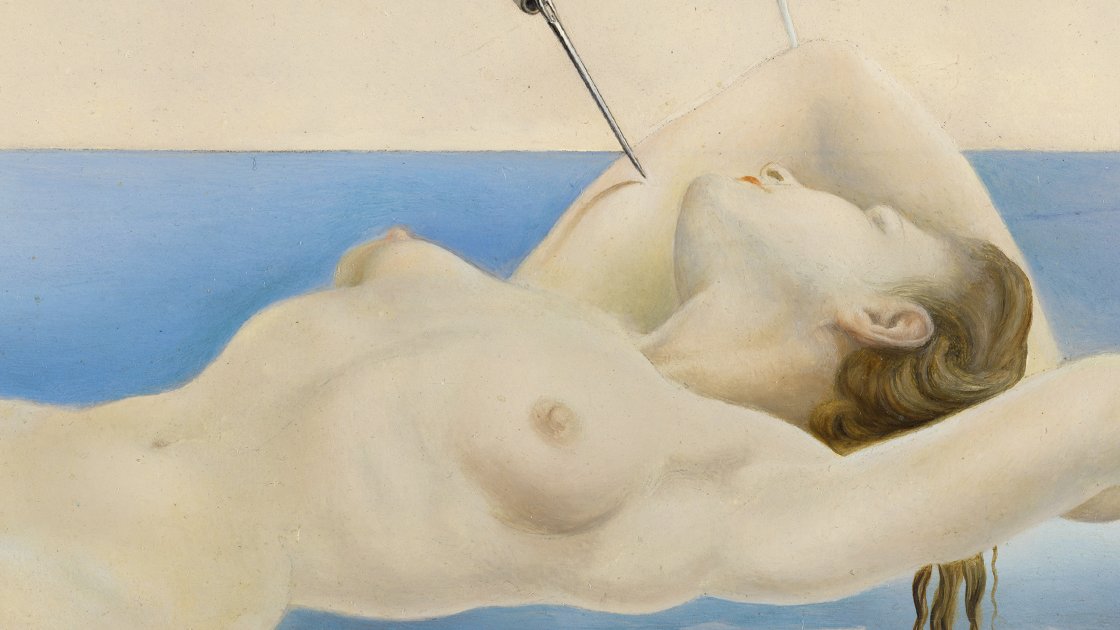
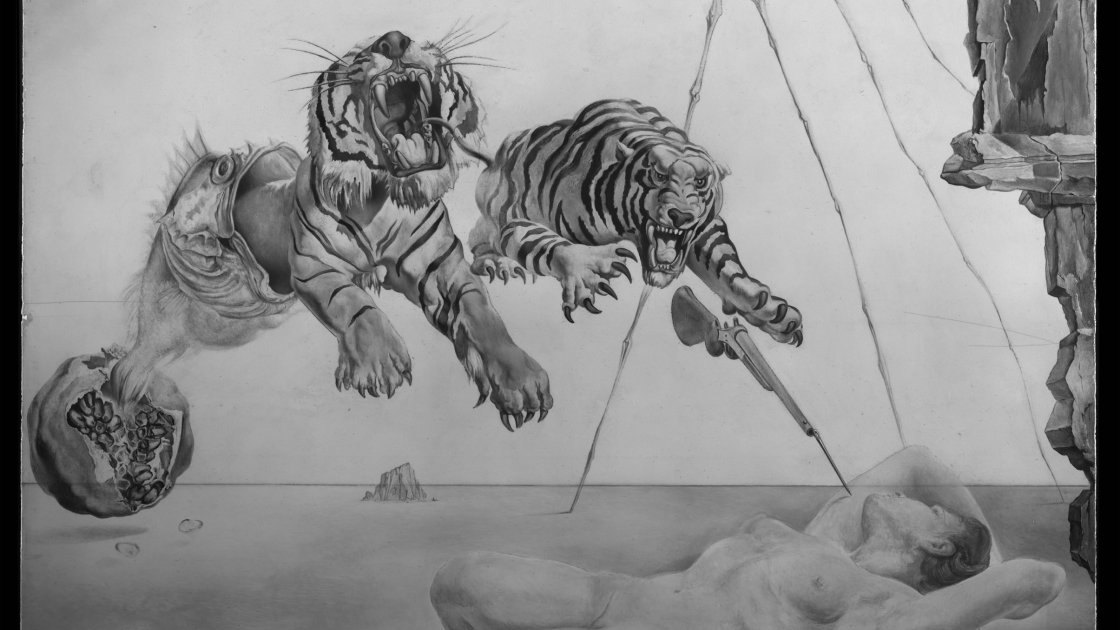
Dalí sometimes even incorporated the background colour into the composition, as in the case of the tiger’s eyes or the fish’s tail, which make use of the blue of the sky.
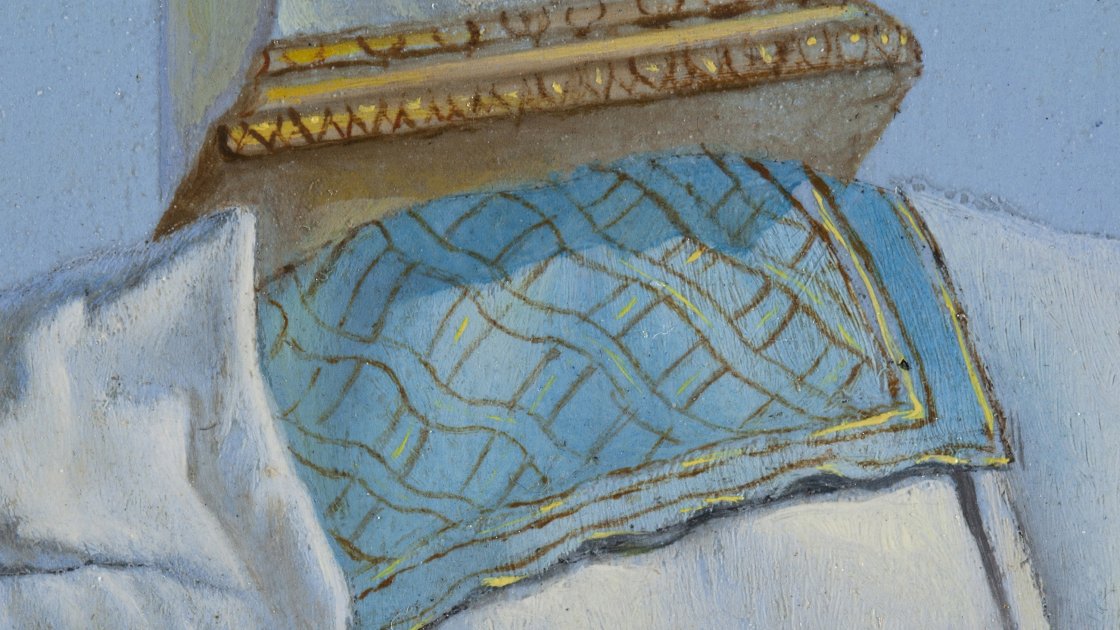
The sky is composed of cobalt blue and lead white, a combination which, together with the white imprimatura, gives it luminosity and depth. For the water he used ultramarine blue, whereas cerulean blue – which he recommended for skies in his book – is only found in the elephant’s saddle.
Dalí also chose the pigments according to the effect he wished to achieve. In particular, he employed earth pigments such as red earth, yellow earth and umber, as well as those rich in iron, alongside yellows such as cobalt yellow – used in areas of light – and cadmium yellow to achieve more orange-tinged tones. Reds such as vermilion appear very sparingly, for example, in the pomegranate seeds and the tigers’ tongues.
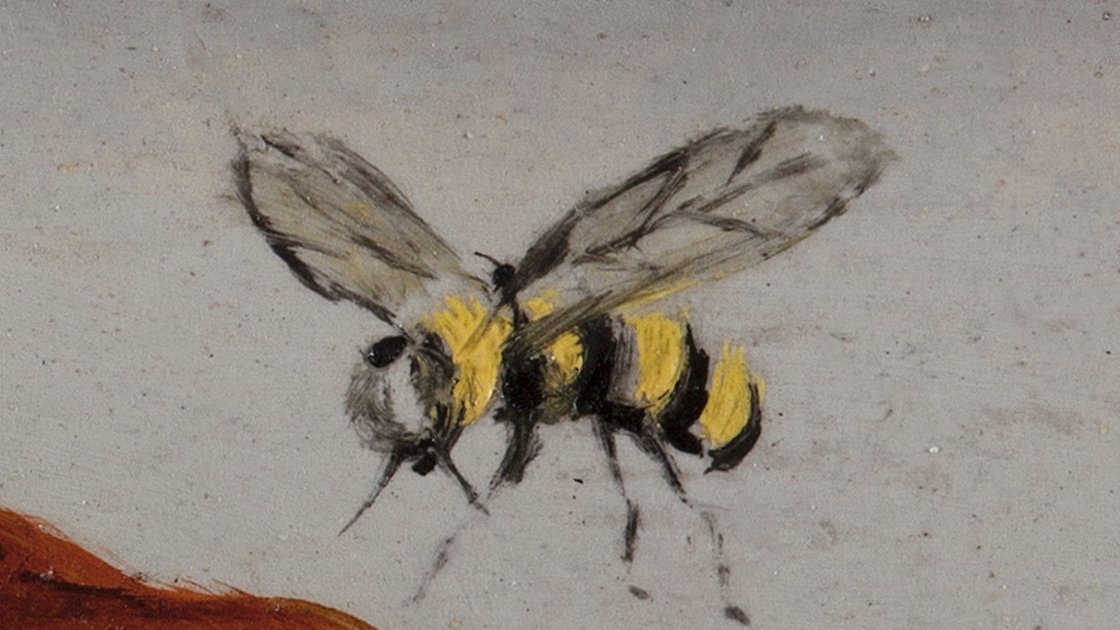
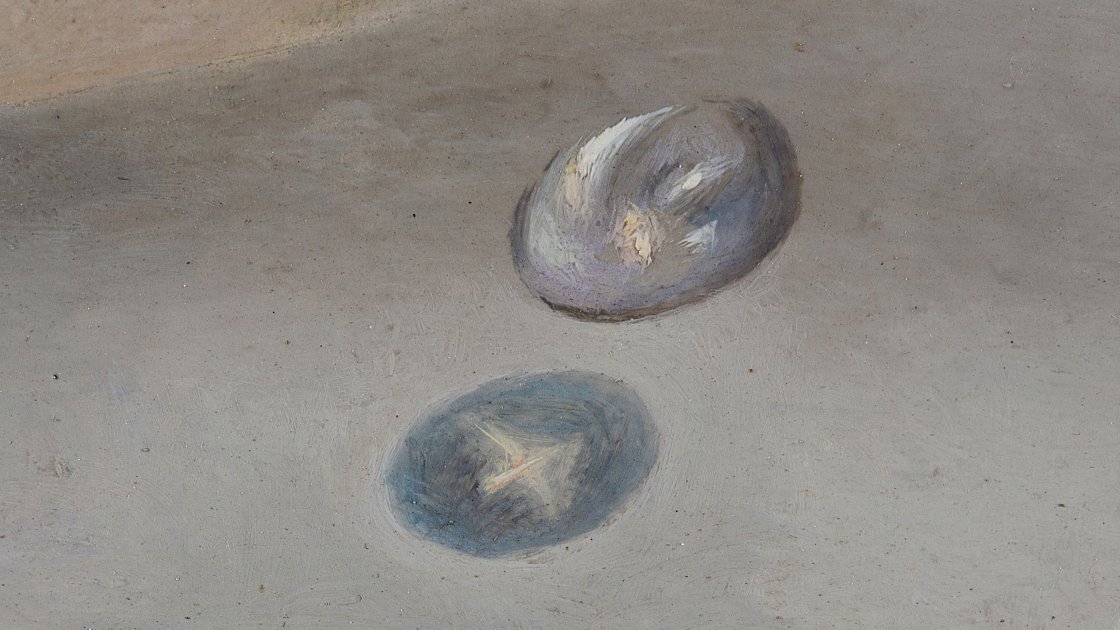
Finally, there are elements that appear to have been painted directly onto the surface, without a preliminary sketch, such as the levitating pomegranate seeds, the drops of water and the bee.
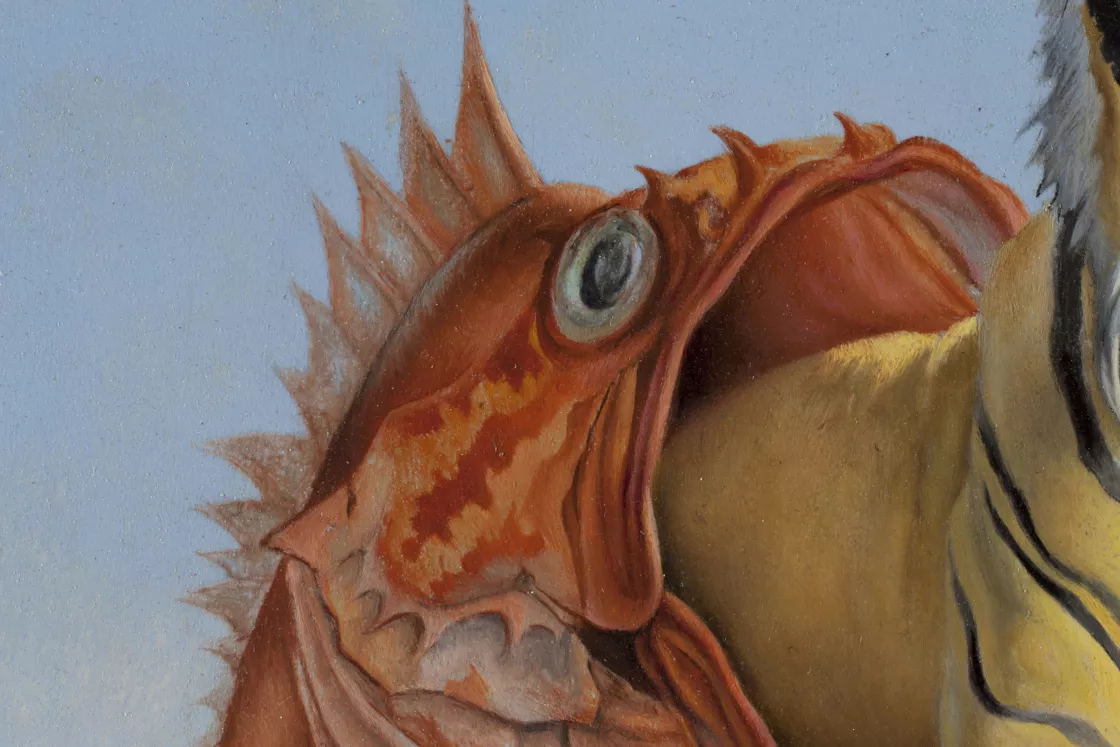
The incised lines
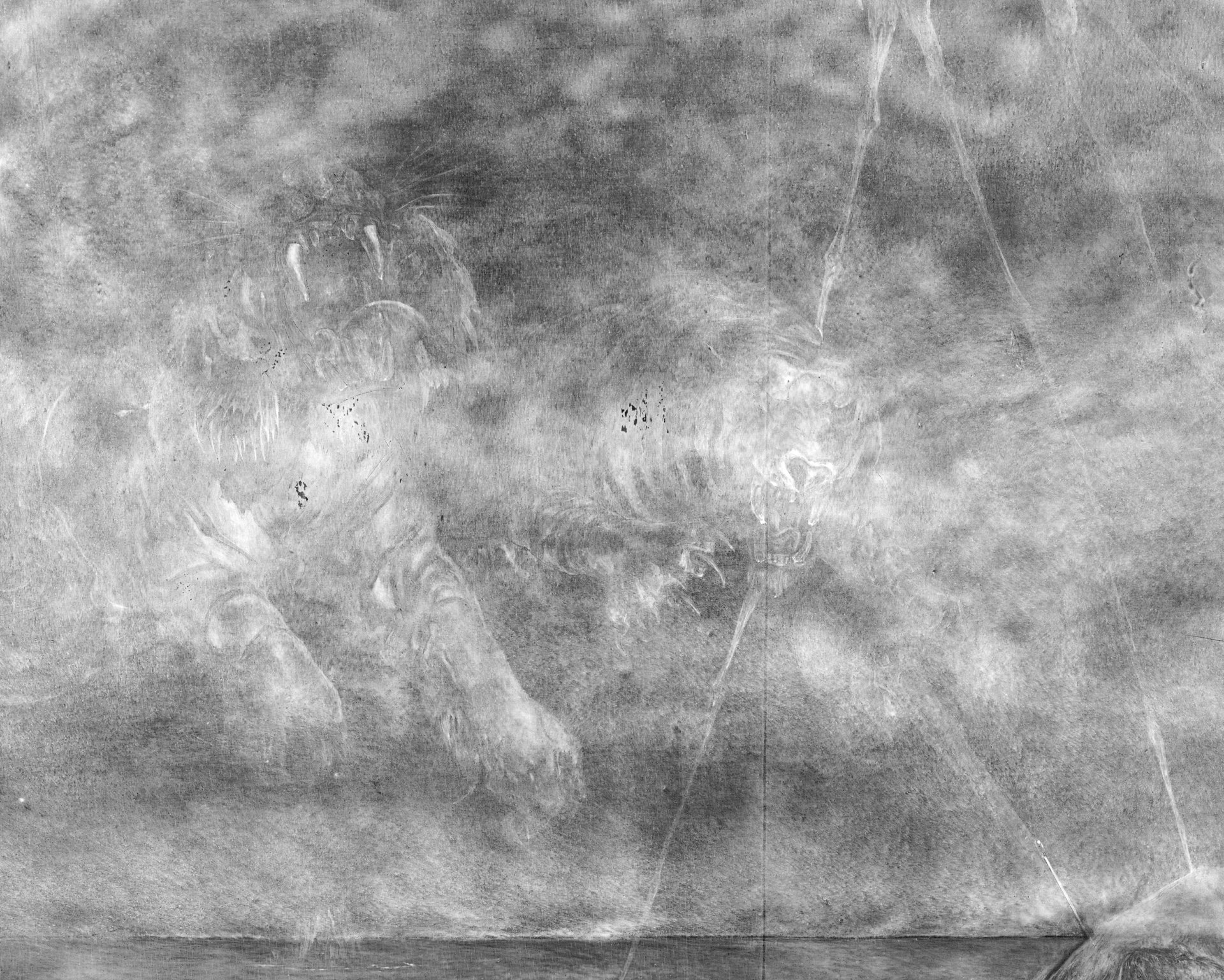
There are also incisions in the imprimatura, made with a very fine instrument to mark out the figures of the tigers, the rifle and the needle.
These marks, made while the preparatory layer was still fresh, are visible in the macrophotographs taken under raking light and have been confirmed by X-radiography.
An essential tool for Dalí
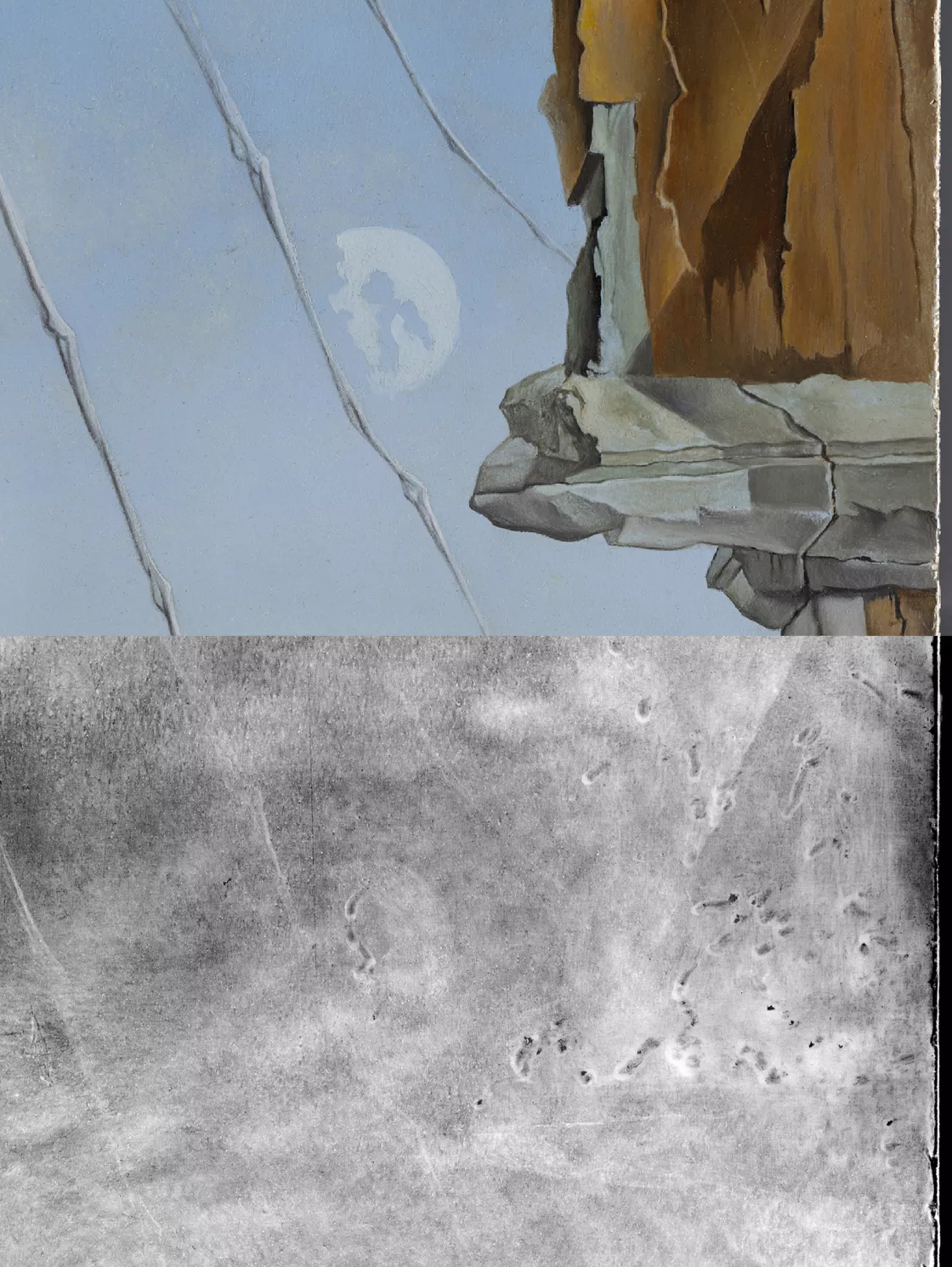
Finally, X-radiography revealed the imprint left by the mahlstick Salvador Dalí used to create this painting.
This tool has been employed by artists since the Renaissance. It provides a stable support, enabling them to keep a steady hand and paint the most delicate details with great precision.
Dalí rested the mahlstick against the sky while the paint was still wet, resulting in its imprint being left on the painting. This demonstrates just how quickly Dalí worked while the colours were still wet and how he subsequently concealed the imprint with other elements of the composition, such as the rock and the moon.